Wednesday Edition

The Ecological and Anthropological Tapestry of Bhitarkanika National Park, Odisha, India: An Estuarine Conservation Analysis

The Ecological and Anthropological Tapestry of Bhitarkanika National Park, Odisha, India: An Estuarine Conservation Analysis

Geographical and Hydrological Architecture

Bhitarkanika National Park, nestled in the Kendrapara district of northeastern Odisha, represents one of the most complex estuarine wetland networks in the Indian subcontinent. Covering a core national park area of 145 square kilometres, the system is situated within the broader Bhitarkanika Wildlife Sanctuary, which extends over 672 square kilometres. This geographical configuration sits in the deltaic region formed by the confluence of major seasonal river systems, specifically the Brahmani, Baitarani, Dhamra, and Pathsala rivers, before they discharge into the Bay of Bengal.

The Ecological and Anthropological Tapestry of Bhitarkanika National Park, Odisha, India: An Estuarine Conservation Analysis Read More »

The Architecture of Human Societies: A Comparative Analysis of Extinct and Extant Civilisations

The Architecture of Human Societies: A Comparative Analysis of Extinct and Extant Civilisations

To construct a robust comparative analysis of human societies, a precise sociological distinction must be established between the concepts of culture and civilisation. Etymologically, the word civilisation is derived from the French civilisé, which ultimately traces its lineage to the Latin civilis (civil), civis (citizen), and civitas (city). Historically, the concept emerged in 18th-century Europe as a marker of behavioural refinement, actively contrasted with “barbarism” or “rudeness” to reflect the teleological ideals of progress characteristic of the Age of Enlightenment. In modern historical sociology, however, this evaluative dichotomy has been abandoned in favour of structural definitions. Sociologist R.M. MacIver clarified this conceptual division by formulating that civilisation represents what human societies possess, whereas culture defines what human societies are. Culture encompasses the organic, internal, and subjective dimensions of a society, such as its values, religious frameworks, linguistic nuances, artistic expressions, and moral codes. Civilisation, conversely, constitutes the external, mechanical, and utilitarian systems—including technology, codified laws, physical infrastructure, administrative bureaucracies, and economic networks—that humans design to manage and control the material conditions of life.

The Architecture of Human Societies: A Comparative Analysis of Extinct and Extant Civilisations Read More »

Bhojshala Image Source: https://upload.wikimedia.org/wikipedia/commons/a/ad/Bhoj_Shala_7_September_2021.jpg

The Bhoj Shala Temple Complex: Historical Evolution, Epigraphic Legacy, and the Judicial Recarving of Sacred Space

The Bhojshala monument in Dhar, Madhya Pradesh, occupies a singular and highly contested position in the cultural, architectural, and legal history of India. Originally established in the eleventh century as an imperial Sanskrit academy and a temple dedicated to the goddess Vagdevi (Saraswati) under the patron monarch Raja Bhoja of the Paramara dynasty, the complex underwent substantial structural alterations during the medieval period. These changes culminated in its dual identity as the Kamal Maula Mosque, named after the fourteenth-century Sufi saint Hazrat Maulana Kamaluddin Chishti.

The Bhoj Shala Temple Complex: Historical Evolution, Epigraphic Legacy, and the Judicial Recarving of Sacred Space Read More »

The Rise and Fragmentation of Modern National Pride: A Global Sociological Study

The Rise and Fragmentation of Modern National Pride: A Global Sociological Study

National identity remains the primary cohesive force holding sovereign nation-states together and shaping their relationships within the broader international system. At its core, national pride represents the positive affect that individuals feel toward their country as a result of this identity. However, as the geopolitical and economic landscape undergoes profound transformations, the nature, expression, and intensity of national pride are fracturing along distinct partisan, generational, and geographic lines.

The Rise and Fragmentation of Modern National Pride: A Global Sociological Study Read More »

The Sun Temple of Konark: A Lithic Apotheosis of Solar Cosmology and Kalingan Engineering

The Sun Temple of Konark: A Lithic Apotheosis of Solar Cosmology and Kalingan Engineering

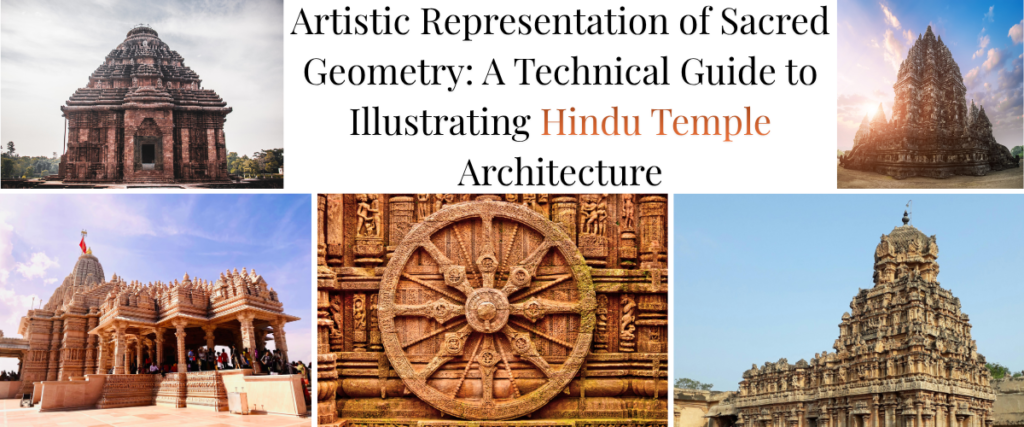
The Sun Temple at Konark, situated on the eastern littoral of the Indian subcontinent in the state of Odisha, represents the definitive climax of the Kalinga school of architecture and stands as one of the most sublime monuments of medieval South Asian artistic achievement. Conceived in the 13th century as a monumental stone chariot for the Hindu solar deity, Surya, the temple is more than a mere site of worship; it is an intricate fusion of theological symbolism, sophisticated astronomical timekeeping, and royal political assertion. Its name, derived from the Sanskrit Kona (corner) and Arka (sun), denotes its location in the “Corner of the Sun,” a region historically revered as Ark Kshetra. Designated as a UNESCO World Heritage site in 1984, the temple complex, even in its partially ruined state, continues to captivate researchers and pilgrims alike through its grand scale, the precision of its solar alignments, and a sculptural program that encompasses the entirety of human and divine experience.

The Sun Temple of Konark: A Lithic Apotheosis of Solar Cosmology and Kalingan Engineering Read More »

The Great Barrier Reef: A Comprehensive Report on the World’s Largest Coral Ecosystem

The Great Barrier Reef: A Comprehensive Report on the World’s Largest Coral Ecosystem

The Great Barrier Reef represents the most expansive and intricate coral reef system on the planet, serving as a singular icon of natural grandeur and biological complexity. Extending over 2,300 kilometres along the northeastern coast of Australia, this massive living structure is not merely a geographic feature but a dynamic entity composed of billions of individual organisms known as coral polyps. To comprehend the scale of this natural wonder, one must look beyond its visibility from outer space—a distinction shared by few other biological features—and consider its status as a mosaic of nearly 3,000 individual reefs and 900 islands. The reef covers an area of approximately 344,400 square kilometres, a footprint that exceeds the terrestrial landmass of nations such as New Zealand, Italy, or the United Kingdom. Recognised as a UNESCO World Heritage site since 1981, the Great Barrier Reef is celebrated for its “Outstanding Universal Value,” a term that encapsulates its ecological integrity, evolutionary history, and the profound cultural connection held by the Aboriginal and Torres Strait Islander peoples, who have served as its custodians for more than 60,000 years.

The Great Barrier Reef: A Comprehensive Report on the World’s Largest Coral Ecosystem Read More »

Scroll to Top