March 2026

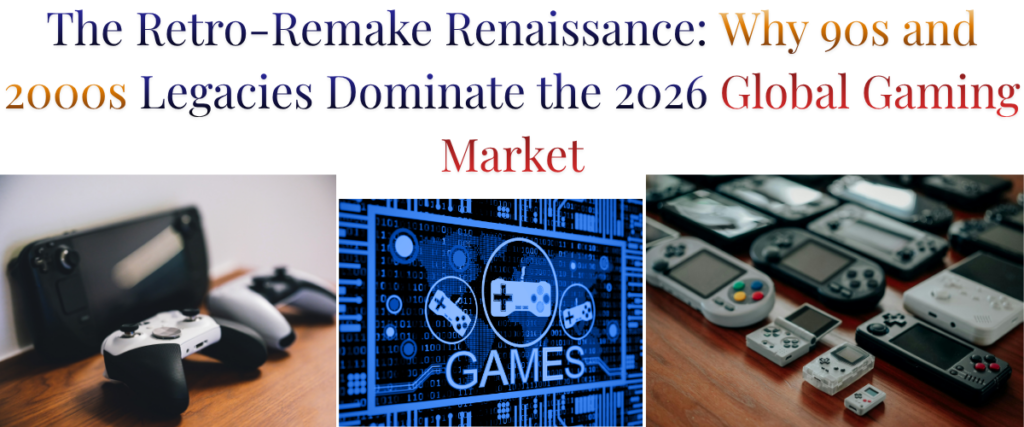
The Retro-Remake Renaissance: Why 90s and 2000s Legacies Dominate the 2026 Global Gaming Market

The Retro-Remake Renaissance: Why 90s and 2000s Legacies Dominate the 2026 Global Gaming Market

The video game industry in early 2026 has transitioned into an era defined by a profound paradox: while technological capabilities have reached unprecedented heights with the advent of neural rendering and generative artificial intelligence, the commercial heart of the market is beating firmly in the past. As of the first quarter of 2026, the retail and digital landscape across the major ecosystems—PlayStation 5, Xbox Series X|S, the high-performance PC handheld market, and the newly launched Nintendo Switch 2—is being dominated by reimagined versions of titles from the 1990s and 2000s. This phenomenon, often termed the “Retro-Remake Boom,” has seen titles like Resident Evil: Requiem, Dragon Quest VII: Reimagined, and Final Fantasy VII: Remake not only top the charts but also outperform the launch metrics of their contemporary predecessors.

The Retro-Remake Renaissance: Why 90s and 2000s Legacies Dominate the 2026 Global Gaming Market Read More »

Information-Technology-Industry

Global Information Technology Industry Intelligence Report: Week Ending 27 March 2026

The final week of March 2026 has witnessed a fundamental restructuring of the global information technology landscape, transitioning from the hype-driven “generative era” into a disciplined “agentic epoch.” This week has been defined by the convergence of trillion-parameter frontier models, the deployment of inference-optimised hardware architectures, and a landmark shift in the regulatory oversight of algorithmic management, particularly within the Australian jurisdiction. As enterprise software valuations undergo a significant bifurcation based on AI integration, the industry is grappling with the dual pressures of massive capital expenditure and the urgent need to demonstrate tangible return on investment. This report provides an exhaustive analysis of the technological breakthroughs, geopolitical shifts, and corporate movements that have shaped the IT sector during this pivotal week.

Global Information Technology Industry Intelligence Report: Week Ending 27 March 2026 Read More »

Weekly-Financial-Review-

The Geopolitical Risk Premium and Global Equity Volatility: A Comprehensive Report on the Week Ending 27 March 2026

The final week of March 2026 was a watershed moment for global financial markets, as the precarious balance between diplomatic hope and military escalation in the Middle East finally tilted toward the latter. For market participants in the United States, Europe, Asia, India, and Oceania, the week ending 27 March 2026 was defined by a brutal “hangover” following a brief period of borrowed tranquillity. The overarching narrative was the tightening grip of a geopolitical risk premium, as the direct conflict between the United States-Israel alliance and Iran systematically choked global supply chains and sent energy prices to levels not seen in years.

The Geopolitical Risk Premium and Global Equity Volatility: A Comprehensive Report on the Week Ending 27 March 2026 Read More »

The Verdant Spectre: A Comprehensive Inquiry into Green Pigments, Materiality, and Artistic Application

The Verdant Spectre: A Comprehensive Inquiry into Green Pigments, Materiality, and Artistic Application

The colour green occupies a unique and often paradoxical position within the history of fine art. While it is the most prevalent hue in the natural terrestrial environment, representing life, growth, and renewal, it has historically been one of the most difficult colours for artists to capture with stability, safety, and brilliance. For centuries, the quest for a permanent, vibrant green led painters through a landscape of toxic minerals, unstable botanical dyes, and complex alchemical reactions. The transition from the earth-based minerals of antiquity to the synthetic innovations of the nineteenth century, and finally to the sustainable, high-performance pigments of the modern era, reflects broader shifts in chemistry, industrialisation, and environmental consciousness. This article provides an exhaustive examination of green in art, detailing the chemical properties of its pigments, the evolution of its use across cultures, the psychological and symbolic weight it carries, and the practical methodologies required to master its application in various media.

The Verdant Spectre: A Comprehensive Inquiry into Green Pigments, Materiality, and Artistic Application Read More »

The Celestial Mandala of Central Java: A Comprehensive Analysis of the Prambanan Temple Compound

The Celestial Mandala of Central Java: A Comprehensive Analysis of the Prambanan Temple Compound

The central plains of Java, Indonesia, serve as a silent witness to one of the most sophisticated spiritual and architectural endeavours of the first millennium. Rising from the volcanic soil of the Prambanan Plain, the 9th-century Hindu temple compound of Prambanan, also known locally as Candi Prambanan or Loro Jonggrang, stands as a monumental testament to the Sanjaya dynasty’s religious devotion and political authority. Dedicated to the Trimurti—the expression of the divine as the Creator (Brahma), the Preserver (Vishnu), and the Destroyer (Shiva)—the complex is not merely a collection of stone structures but a physical manifestation of Hindu cosmology, designed to mirror the sacred Mount Meru, the abode of the gods. As the largest Hindu temple site in Indonesia and the second-largest in Southeast Asia after Angkor Wat, Prambanan represents a pinnacle of classical Javanese art and architecture, reflecting a period where spiritual philosophy and advanced engineering converged to create an enduring legacy of stone.

The Celestial Mandala of Central Java: A Comprehensive Analysis of the Prambanan Temple Compound Read More »

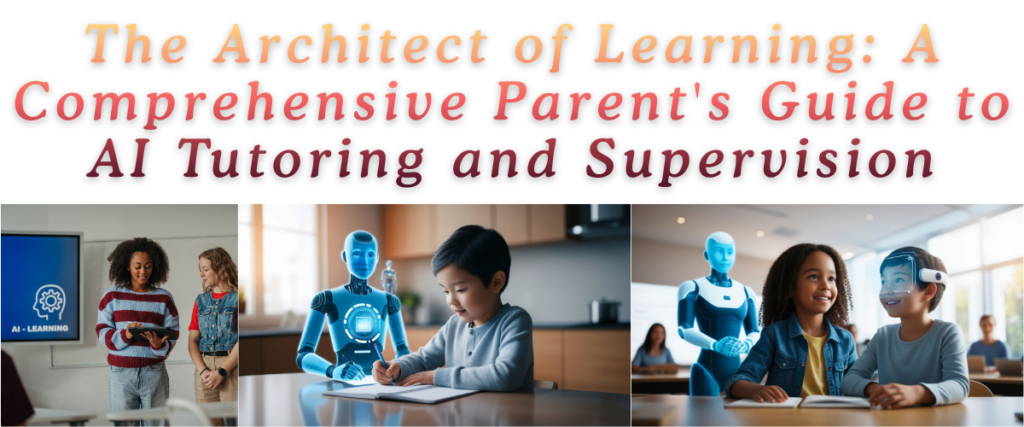
The Architect of Learning: A Comprehensive Parent's Guide to AI Tutoring and Supervision

The Architect of Learning: A Comprehensive Parent’s Guide to AI Tutoring and Supervision

The educational landscape in 2026 is undergoing a paradigm shift that is fundamentally redefining the relationship between students, knowledge, and technology. As generative artificial intelligence transitions from a novelty to an essential pedagogical tool, parents find themselves at the forefront of a digital revolution. The emergence of AI tutors—sophisticated, natural-language platforms capable of delivering personalised instruction—promises to democratise elite education by providing every child with a 24/7 private tutor. However, this technological leap brings with it a complex set of responsibilities for parents, who must now serve as the primary supervisors and ethical guides for their children’s AI-driven learning journeys.

The Architect of Learning: A Comprehensive Parent’s Guide to AI Tutoring and Supervision Read More »

Scroll to Top