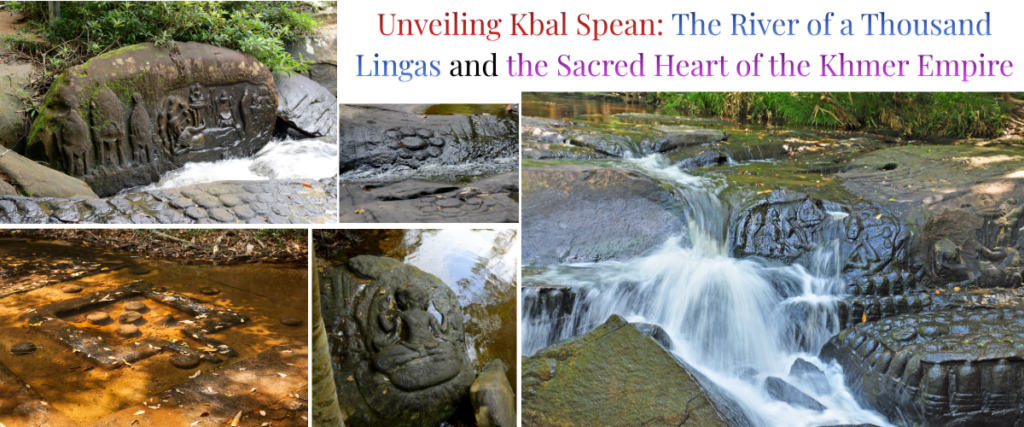
Unveiling Kbal Spean: The River of a Thousand Lingas and the Sacred Heart of the Khmer Empire
Deep within the verdant embrace of the Phnom Kulen National Park in northwestern Cambodia lies an archaeological marvel that defies traditional architectural boundaries. Kbal Spean, widely known as the “River of a Thousand Lingas,” is not a soaring temple of laterite and sandstone reaching toward the heavens. Instead, it is a monument carved directly into the living bedrock of a flowing river. Located in the Banteay Srei district of Siem Reap Province, approximately fifty kilometres northeast of the monumental Angkor Wat, Kbal Spean represents a profound synthesis of natural geography, hydraulic engineering, and deep religious devotion.