Health & Wellness

The Technological Renaissance of At-Home Fitness: An Analysis of Connected Systems and Virtual Training (2015-2026)

The Technological Renaissance of At-Home Fitness: An Analysis of Connected Systems and Virtual Training (2015-2026)

The trajectory of at-home fitness is not a modern phenomenon but rather the culmination of over a century of mechanical and media evolution. The historical roots of domestic exercise can be traced back to the nineteenth century, where Swedish orthopedic physician Gustav Zander developed rudimentary fitness equipment after conducting in-depth studies of the human body, its movements, and muscle structures. Zander’s machines were designed to correct physical difficulties, treat spinal deformities, and strengthen muscles, marking the first real turning point in the industry during the 1850s. This mechanical foundation was further refined in the mid-twentieth century by innovators such as Harold Zinkin, who created the Universal Gym, and Arthur Jones, the inventor of Nautilus machines. These inventions established the public’s confidence in fitness equipment as the primary method for achieving a toned physique, transitioning from simple dumbbells and stationary cycles to sophisticated weight stacks and selectorized resistance.

The Technological Renaissance of At-Home Fitness: An Analysis of Connected Systems and Virtual Training (2015-2026) Read More »

A Comprehensive Analysis of “Tea” Camellia sinensis and Botanical Infusions: Phytochemical Profiles, Processing Methodologies, and Clinical Efficacy

A Comprehensive Analysis of “Tea” Camellia sinensis and Botanical Infusions: Phytochemical Profiles, Processing Methodologies, and Clinical Efficacy

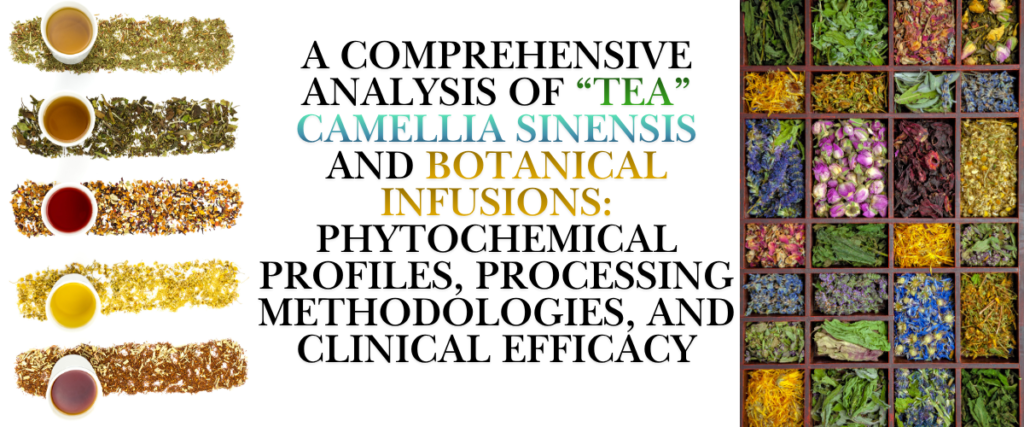
The global narrative of tea is an intricate tapestry woven from nearly five millennia of history, botanical evolution, and increasingly sophisticated nutritional science. Surpassed only by water as the most consumed beverage on the planet, tea serves as both a cultural cornerstone and a primary source of dietary phytonutrients for billions of individuals. While common parlance often uses the term “tea” to describe any plant matter steeped in hot water, the rigorous botanical definition restricts the term to the leaves, buds, and stems of the Camellia sinensis plant. This evergreen shrub, a member of the Theaceae family, is the singular source of white, green, yellow, oolong, black, and pu-erh teas. The remarkable diversity found within these categories is not the result of different species, but rather a consequence of meticulous variations in cultivation, the timing of the harvest, and the complex biochemical transformations induced during processing.

A Comprehensive Analysis of “Tea” Camellia sinensis and Botanical Infusions: Phytochemical Profiles, Processing Methodologies, and Clinical Efficacy Read More »

Nutritional and Clinical Analysis of Kiwifruit Bioactives in Human Health and Disease Mitigation

Nutritional and Clinical Analysis of Kiwifruit Bioactives in Human Health and Disease Mitigation

Botanical Evolution and Global Agricultural History

The kiwifruit, historically categorised within the genus Actinidia, represents a singular success story in modern horticulture, transitioning from an indigenous wild fruit of the Yangtze River valley in China to a globally dominant commercial crop. Originally recognised as the Chinese gooseberry, the fruit was highly valued in its native territories for both its unique flavour and its application in traditional medicinal practices, where it was often used to address digestive ailments and inflammatory conditions. The species most commonly associated with global trade, Actinidia deliciosa (green kiwifruit) and Actinidia chinensis (golden kiwifruit), owe their international proliferation to the early twentieth-century transport of seeds. In 1904, Mary Isabel Fraser brought the first seeds from China to New Zealand, initiating a period of domestic cultivation that would eventually redefine the fruit’s identity.

Nutritional and Clinical Analysis of Kiwifruit Bioactives in Human Health and Disease Mitigation Read More »

Air Quality Hacks: The best plants and tech for purifying indoor air

Air Quality Hacks: The best plants and tech for purifying indoor air

The atmospheric integrity of the Australian indoor environment has emerged as a primary concern for public health experts, architects, and residents alike. In an era defined by fluctuating climatic conditions, including the catastrophic “Black Summer” bushfire events and increasing urban density, the quality of the air breathed within homes and workplaces is no longer a secondary consideration but a fundamental component of structural safety and personal well-being. Historically, the Australian building tradition favoured high natural ventilation, but the shift towards energy-efficient, airtight constructions has created a unique set of challenges regarding the accumulation of indoor pollutants. This article provides an exhaustive analysis of the biological and technological mechanisms available to purify indoor air, synthesising botanical solutions with cutting-edge mechanical filtration to offer a comprehensive guide for the Australian context.

Air Quality Hacks: The best plants and tech for purifying indoor air Read More »

Screen-Time Boundaries: Scientific Approaches to Healthy Tech Habits

Screen-Time Boundaries: Scientific Approaches to Healthy Tech Habits

In the span of a single generation, the human experience has undergone a radical transformation mediated by the ubiquitous presence of digital technology. The integration of high-definition screens into the fabric of daily life—from the moment of waking to the final moments before sleep—has fundamentally altered the biological and psychological landscape of the human species. As we navigate the mid-2020s, the discourse surrounding “screen time” has matured from early alarmist reactions to a sophisticated, multidisciplinary field of study encompassing neuroscience, optometry, developmental psychology, and behavioural economics. The question is no longer whether we should use screens, but how we can establish boundaries that align with our evolutionary biology while navigating an increasingly digitised existence.

Screen-Time Boundaries: Scientific Approaches to Healthy Tech Habits Read More »

The Crimson Nail: An Exhaustive Monograph on the Botany, History, Chemistry, and Utility of Clove (Syzygium aromaticum)

The Crimson Nail: An Exhaustive Monograph on the Botany, History, Chemistry, and Utility of Clove (Syzygium aromaticum)

In the vast and aromatic lexicon of global spices, few entries possess the historical gravity, the chemical potency, or the enduring cultural ubiquity of the clove. Scientifically designated as Syzygium aromaticum, this dried flower bud has, for nearly four millennia, served as a catalyst for human interaction, a driver of economic warfare, and a cornerstone of traditional and modern medicine. To the uninitiated, the clove is merely a pantry staple—a small, dark, nail-shaped spice often relegated to the back of a cabinet, awaiting the winter holidays to perfume a ham or spice a pumpkin pie. However, a deeper examination reveals that this unassuming bud is a botanical powerhouse that has shaped the geopolitical map of the world and continues to offer profound therapeutic benefits to modern science.

The Crimson Nail: An Exhaustive Monograph on the Botany, History, Chemistry, and Utility of Clove (Syzygium aromaticum) Read More »

Scroll to Top