Food

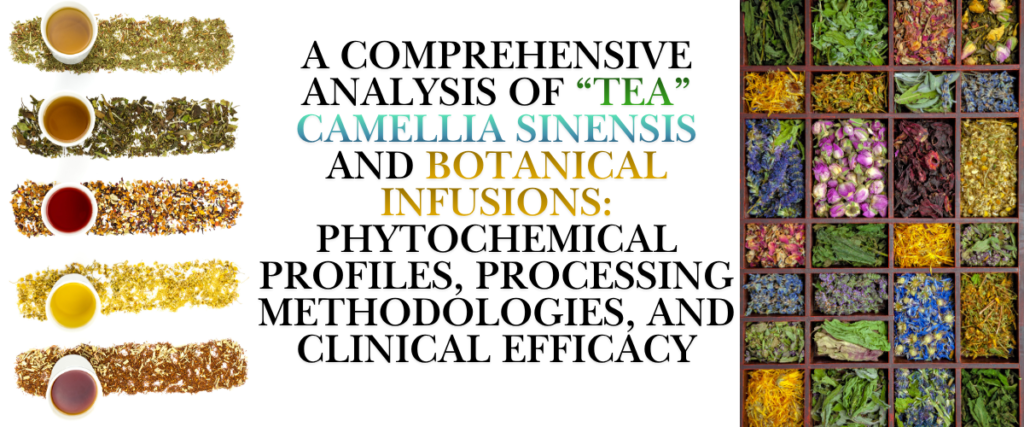
A Comprehensive Analysis of “Tea” Camellia sinensis and Botanical Infusions: Phytochemical Profiles, Processing Methodologies, and Clinical Efficacy

A Comprehensive Analysis of “Tea” Camellia sinensis and Botanical Infusions: Phytochemical Profiles, Processing Methodologies, and Clinical Efficacy

The global narrative of tea is an intricate tapestry woven from nearly five millennia of history, botanical evolution, and increasingly sophisticated nutritional science. Surpassed only by water as the most consumed beverage on the planet, tea serves as both a cultural cornerstone and a primary source of dietary phytonutrients for billions of individuals. While common parlance often uses the term “tea” to describe any plant matter steeped in hot water, the rigorous botanical definition restricts the term to the leaves, buds, and stems of the Camellia sinensis plant. This evergreen shrub, a member of the Theaceae family, is the singular source of white, green, yellow, oolong, black, and pu-erh teas. The remarkable diversity found within these categories is not the result of different species, but rather a consequence of meticulous variations in cultivation, the timing of the harvest, and the complex biochemical transformations induced during processing.

A Comprehensive Analysis of “Tea” Camellia sinensis and Botanical Infusions: Phytochemical Profiles, Processing Methodologies, and Clinical Efficacy Read More »

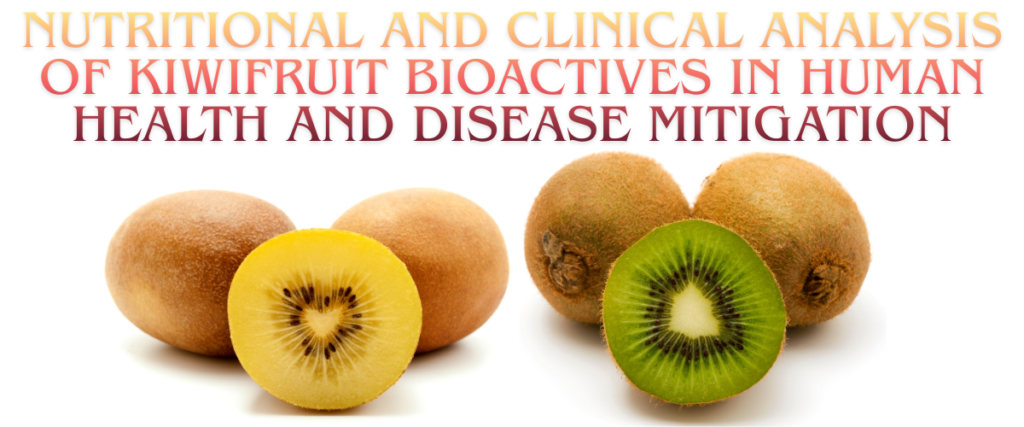
Nutritional and Clinical Analysis of Kiwifruit Bioactives in Human Health and Disease Mitigation

Nutritional and Clinical Analysis of Kiwifruit Bioactives in Human Health and Disease Mitigation

Botanical Evolution and Global Agricultural History

The kiwifruit, historically categorised within the genus Actinidia, represents a singular success story in modern horticulture, transitioning from an indigenous wild fruit of the Yangtze River valley in China to a globally dominant commercial crop. Originally recognised as the Chinese gooseberry, the fruit was highly valued in its native territories for both its unique flavour and its application in traditional medicinal practices, where it was often used to address digestive ailments and inflammatory conditions. The species most commonly associated with global trade, Actinidia deliciosa (green kiwifruit) and Actinidia chinensis (golden kiwifruit), owe their international proliferation to the early twentieth-century transport of seeds. In 1904, Mary Isabel Fraser brought the first seeds from China to New Zealand, initiating a period of domestic cultivation that would eventually redefine the fruit’s identity.

Nutritional and Clinical Analysis of Kiwifruit Bioactives in Human Health and Disease Mitigation Read More »

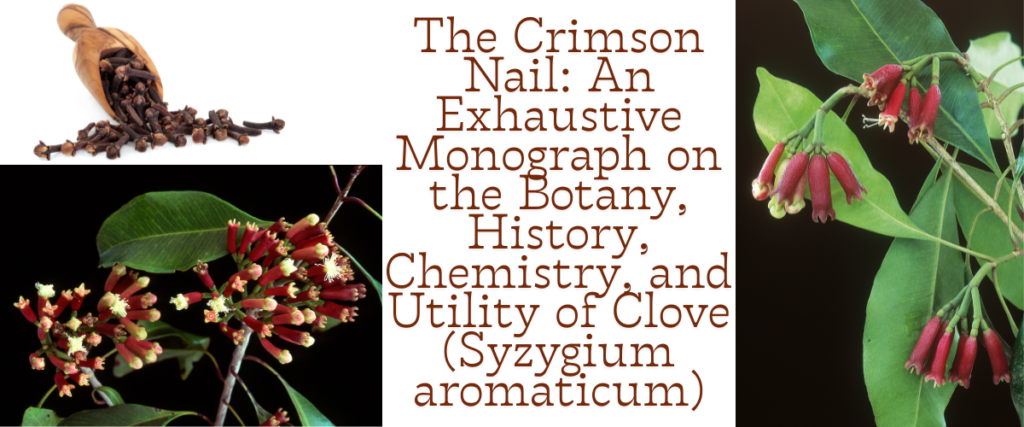
The Crimson Nail: An Exhaustive Monograph on the Botany, History, Chemistry, and Utility of Clove (Syzygium aromaticum)

The Crimson Nail: An Exhaustive Monograph on the Botany, History, Chemistry, and Utility of Clove (Syzygium aromaticum)

In the vast and aromatic lexicon of global spices, few entries possess the historical gravity, the chemical potency, or the enduring cultural ubiquity of the clove. Scientifically designated as Syzygium aromaticum, this dried flower bud has, for nearly four millennia, served as a catalyst for human interaction, a driver of economic warfare, and a cornerstone of traditional and modern medicine. To the uninitiated, the clove is merely a pantry staple—a small, dark, nail-shaped spice often relegated to the back of a cabinet, awaiting the winter holidays to perfume a ham or spice a pumpkin pie. However, a deeper examination reveals that this unassuming bud is a botanical powerhouse that has shaped the geopolitical map of the world and continues to offer profound therapeutic benefits to modern science.

The Crimson Nail: An Exhaustive Monograph on the Botany, History, Chemistry, and Utility of Clove (Syzygium aromaticum) Read More »

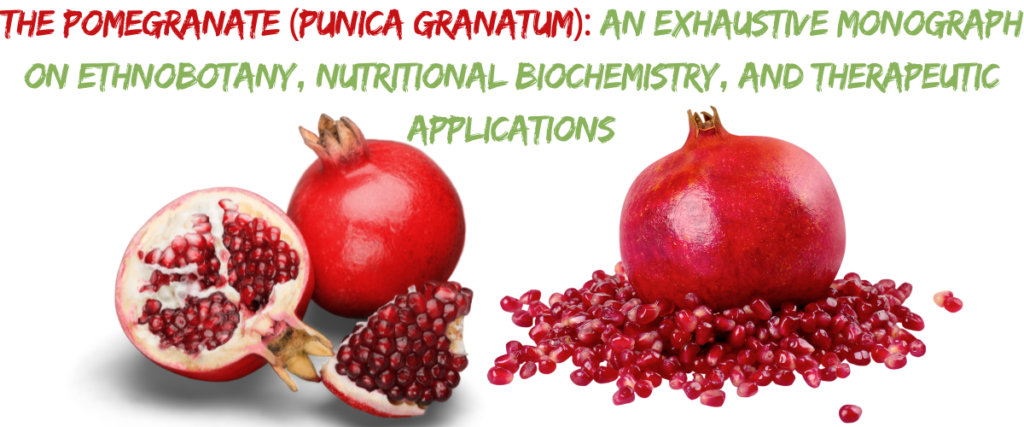
The Pomegranate (Punica granatum): An Exhaustive Monograph on Ethnobotany, Nutritional Biochemistry, and Therapeutic Applications

The pomegranate (Punica granatum L.) represents a convergence of ancient agricultural history and cutting-edge nutritional science. For millennia, this fruit has served as a potent symbol of fertility, abundance, and resilience across diverse civilisations, from the arid plateaus of Iran to the Mediterranean basin. In the contemporary era, the pomegranate has transcended its mythological status to become a subject of rigorous clinical investigation. This report provides a comprehensive analysis of the fruit’s botanical characteristics, its complex phytochemical profile—dominated by unique hydrolyzable tannins and conjugated fatty acids—and its multifaceted role in the management of chronic human diseases. Through an examination of cardiovascular, metabolic, neurological, and oncological pathways, we elucidate the mechanisms by which this “seeded apple” acts as a functional food. Furthermore, we explore the practicalities of its consumption, culinary integration, and the critical safety considerations regarding pharmaceutical interactions.

The Pomegranate (Punica granatum): An Exhaustive Monograph on Ethnobotany, Nutritional Biochemistry, and Therapeutic Applications Read More »

The Golden Pharmacopeia: An Exhaustive Analysis of Turmeric’s Biochemical Mechanisms, Clinical Applications, and Therapeutic Potential

The Golden Pharmacopeia: An Exhaustive Analysis of Turmeric’s Biochemical Mechanisms, Clinical Applications, and Therapeutic Potential

The Ancient Rhizome in the Modern Laboratory

The history of medicine is, in many ways, the history of botany. Long before the synthesis of aspirin or the discovery of antibiotics, humanity relied on the complex chemical factories found in nature. Among these botanical allies, few have commanded as much reverence across time and geography as Turmeric (Curcuma longa). Known in Sanskrit as Haridra and often referred to as “Indian Saffron” due to its brilliant golden hue, this rhizomatous perennial of the ginger family (Zingiberaceae) has been a cornerstone of Vedic culture and Ayurvedic medicine for over 4,000 years.

The Golden Pharmacopeia: An Exhaustive Analysis of Turmeric’s Biochemical Mechanisms, Clinical Applications, and Therapeutic Potential Read More »

The Stinking Rose: Unearthing the Science-Backed Health Benefits of Garlic

The Stinking Rose: Unearthing the Science-Backed Health Benefits of Garlic

More Than Just a Flavouring

For more than five millennia, garlic has held a unique and dual identity in human culture. It is at once a humble kitchen staple, the secret to a flavour-packed pasta sauce, and a legendary folk remedy, celebrated in history as a powerful healing plant. Known by many evocative names, from “the stinking rose” to the “plant of immortality,” its pungent aroma has permeated not just our culinary traditions but also our medicinal lore, with a reputation for enhancing health and warding off illness that spans continents and centuries. This ancient reverence was not misplaced; modern science is now beginning to confirm many of the beliefs held by our ancestors, unearthing the complex biochemistry behind the bulb’s purported powers.

The Stinking Rose: Unearthing the Science-Backed Health Benefits of Garlic Read More »

Scroll to Top