The Technical and Artistic Execution of Mountain Range Portraiture: A Comprehensive Guide to Geomorphological Draftsmanship
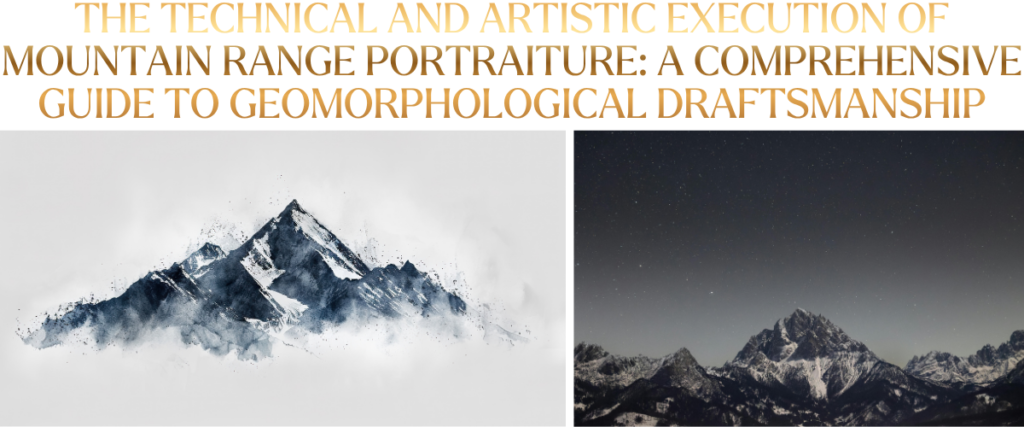
The drawing of mountain ranges represents one of the most compelling challenges in landscape draftsmanship. A successful mountain portrait does not merely replicate a jagged outline; it captures the structural anatomy of the earth, the physical impact of geological erosion, and the optical phenomena dictated by the atmosphere. To render these immense structures with authenticity, an artist must synthesise a firm understanding of three-dimensional geometry, structural geology, and the physics of light. By treating mountains as complex, multi-planed solids rather than flat, triangular silhouettes, the artist can transition from simplistic representation to mature, high-fidelity draftsmanship.