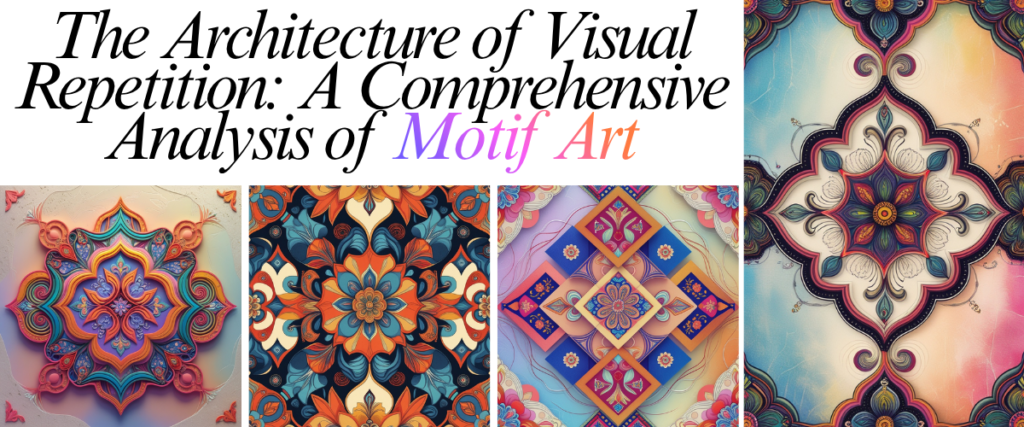
The Architecture of Visual Repetition: A Comprehensive Analysis of Motif Art
In the study of art history, iconography, and decorative design, a motif is a foundational structural element that establishes composition, visual rhythm, and thematic depth. Derived from the French word for a dominant or driving idea, a motif is defined as a recurring visual fragment, shape, subject, or conceptual device that unifies a single artwork or connects a broader body of creative work. Rather than acting as mere surface embellishment, motifs are visual anchors. They bridge the gap between simple formal elements—such as line, shape, and colour—and the abstract thematic inquiries that define human expression.
An examination of motif art reveals its role in how artists across cultures and eras impose order on spatial environments, preserve sacred myths, and articulate complex psychological states.
The Architecture of Visual Repetition: A Comprehensive Analysis of Motif Art Read More »