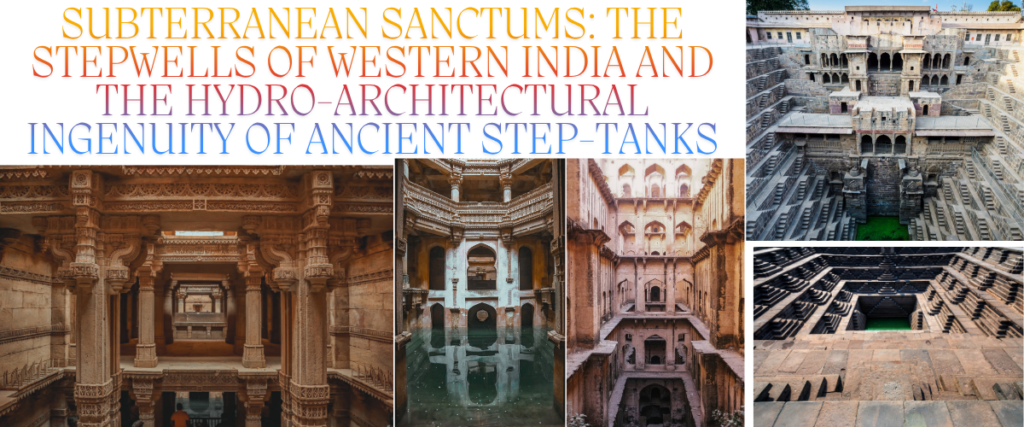
Subterranean Sanctums: The Stepwells of Western India and the Hydro-Architectural Ingenuity of Ancient Step-Tanks
The Paradox of Water in Arid Landscapes
In the arid and semi-arid expanses of the Indian subcontinent—most notably within the modern geographical boundaries of Gujarat and Rajasthan—water is simultaneously an existential necessity and a profoundly scarce commodity. The climatological reality of this region is defined by extreme seasonal fluctuations, characterised by blistering summer temperatures that rapidly evaporate surface water, followed by highly erratic and concentrated monsoon precipitation. For millennia, the socio-economic and biological survival of communities in these regions has depended entirely upon mastering the capture, preservation, and judicious management of groundwater. To address this severe environmental vulnerability, ancient and medieval Indian civilisations conceptualised and engineered a unique class of subterranean hydro-architectural edifices known universally as stepwells, or ancient step-tanks.