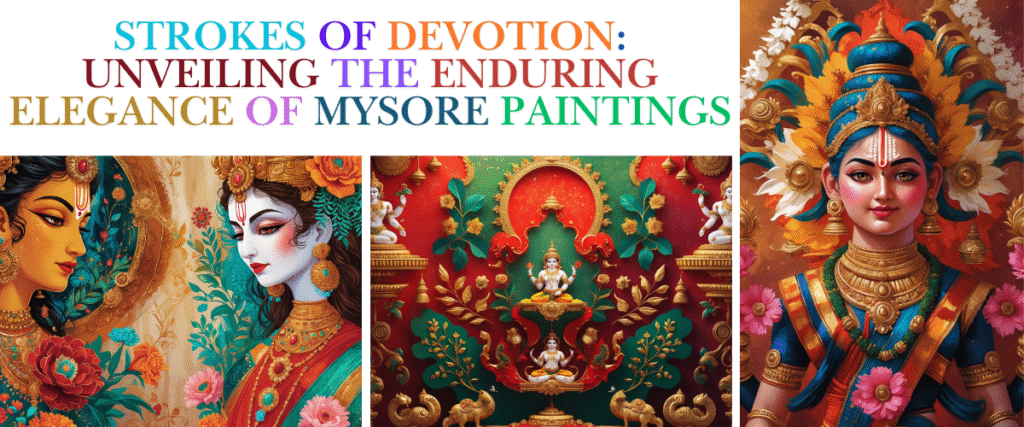
Strokes of Devotion: Unveiling the Enduring Elegance of Mysore Paintings
Mysore painting, a classical South Indian art form, stands as a testament to centuries of artistic evolution, royal patronage, and profound spiritual expression. Originating in and around the historic city of Mysore in Karnataka, these artworks are celebrated for their distinctive blend of delicate lines, intricate brush strokes, and a characteristic use of gesso work overlaid with pure gold leaf. The elegance of Mysore paintings lies not only in their meticulous craftsmanship but also in their capacity to evoke feelings of devotion and humility, often depicting Hindu deities and mythological narratives with a serene grace.
Strokes of Devotion: Unveiling the Enduring Elegance of Mysore Paintings Read More »