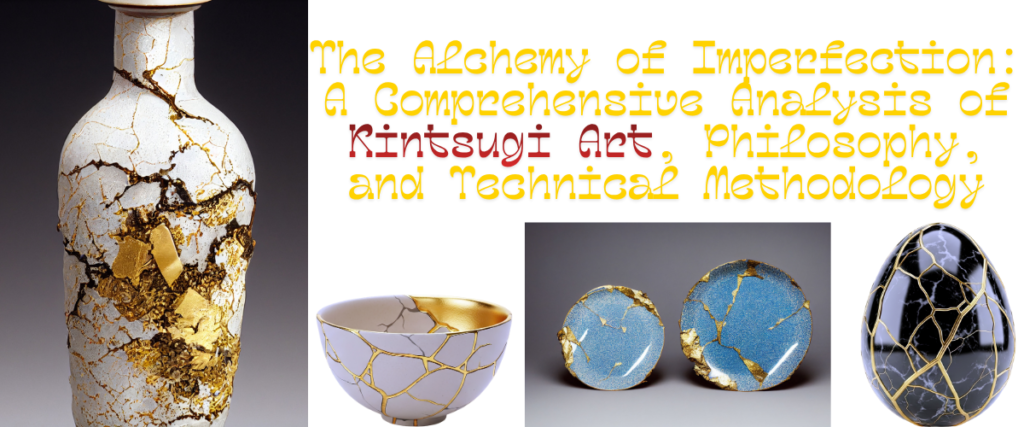
The Alchemy of Imperfection: A Comprehensive Analysis of Kintsugi Art, Philosophy, and Technical Methodology
The Japanese art of Kintsugi, often translated as “golden joinery,” represents a profound departure from conventional Western approaches to restoration and material conservation. While the prevailing ethos of many global restoration traditions seeks to erase the evidence of damage and return an object to a state of pristine, pre-fractured perfection, Kintsugi embraces the break as a pivotal moment in an object’s biography. By utilising urushi lacquer mixed with powdered precious metals—most commonly gold, but also silver or platinum—this technique illuminates the scars of existence, transforming a once-broken vessel into a unique masterpiece that possesses greater aesthetic and historical value than the original, undamaged piece. This meticulous practice, which treats breakage and repair as an essential part of an object’s history rather than something to be disguised, is deeply intertwined with the Japanese worldview, bridging the gap between functional craft and metaphysical contemplation.