August 2026

The Life, Art, and Legacy of Katsushika Hokusai

The Life, Art, and Legacy of Katsushika Hokusai

The history of art contains few figures as restless, prolific, and globally influential as Katsushika Hokusai. Born in 1760 in Edo (modern-day Tokyo), Japan, Hokusai emerged as a towering figure of the Edo period, mastering the ukiyo-e (pictures of the floating world) genre and eventually pushing it beyond its traditional boundaries to capture the majesty of the Japanese landscape, the daily lives of commoners, and the intricate details of the natural world. While his contemporaries focused on the ephemeral pleasures of kabuki actors and courtesans, Hokusai turned his gaze outward, revolutionising the medium and ensuring its global relevance.
The Life, Art, and Legacy of Katsushika Hokusai Read More »

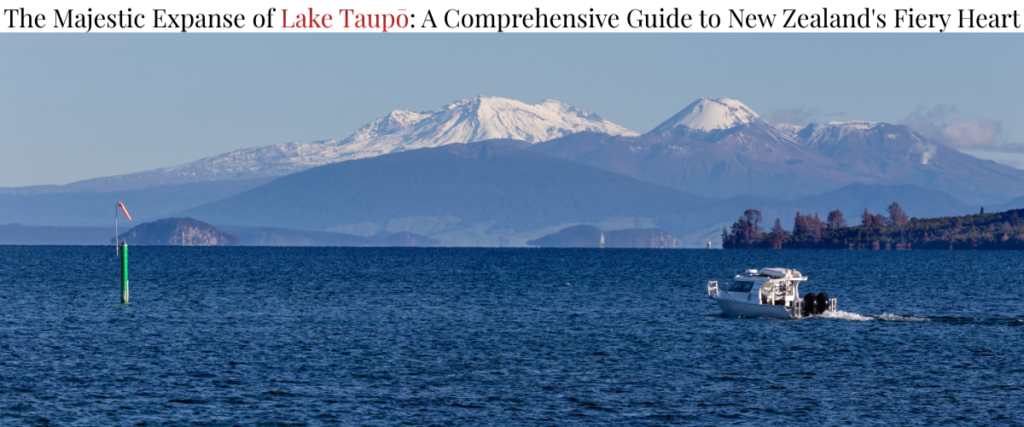
The Majestic Expanse of Lake Taupo A Comprehensive Guide to New Zealand's Fiery Heart

The Majestic Expanse of Lake Taupō: A Comprehensive Guide to New Zealand’s Fiery Heart

Situated in the geographical centre of New Zealand’s North Island, Lake Taupō is a breathtaking expanse of deep, clear water that acts as the ecological and cultural crown jewel of the Waikato region. Covering a surface area of approximately 616 square kilometres and reaching maximum depths of 165 metres, it holds the distinction of being the largest freshwater lake in Australasia. However, beneath this serene and picturesque surface lies an exceptionally violent and dynamic geological history. Lake Taupō is not merely a topographical basin filled with water; it is the flooded caldera of one of the world’s most active, productive, and dangerous rhyolitic supervolcanoes.

The Majestic Expanse of Lake Taupō: A Comprehensive Guide to New Zealand’s Fiery Heart Read More »

Geopolitics

Global Geopolitical and Macroeconomic Stability Report: August 4–August 11, 2026

The seven-day period between August 4 and August 11, 2026, has been characterised by a convergence of severe geopolitical, military, and macroeconomic crises, marking one of the most volatile and transformative periods in contemporary diplomatic history. The global system is currently absorbing simultaneous, compounding shocks across multiple strategic theatres, fundamentally testing the resilience of the post-war international order. In the Middle East, the ongoing conflict involving the United States, Israel, and Iran has irreversibly altered the paradigm of global maritime trade. The Strait of Hormuz remains effectively blockaded, subjected to unprecedented diplomatic negotiations that seek to replace the foundational principle of freedom of navigation with a sovereign, fee-based transit regime. The depletion of critical United States munitions, particularly defensive interceptors, alongside the rapid drawdown of the Strategic Petroleum Reserve to its lowest level since 1983, has laid bare the industrial and economic constraints of Western hegemony.

Global Geopolitical and Macroeconomic Stability Report: August 4–August 11, 2026 Read More »

Information-Technology-Industry

Exhaustive Analysis of the Global Information Technology Industry: Week of 1–8 August 2026

The global IT industry has reached a critical inflection point, shifting from theoretical AI to hyperscale infrastructure and kinetic autonomous systems. Driven by massive capital expenditure, firms are pivoting toward orbital compute to bypass terrestrial energy constraints amid tightening global regulations.

Exhaustive Analysis of the Global Information Technology Industry: Week of 1–8 August 2026 Read More »

Weekly-Financial-Review-

Global Market Dynamics: An Exhaustive Review of Equities, Capital Expenditures, and Macroeconomic Shifts

During the week ending 7 August 2026, global markets faced major sector rotations and geopolitical shifts. While hyperscalers projected an unprecedented $725 billion in AI infrastructure spending, rising concerns over return on investment triggered a sharp repricing of risk across technology benchmarks, prompting capital flows into defensive sectors.

Global Market Dynamics: An Exhaustive Review of Equities, Capital Expenditures, and Macroeconomic Shifts Read More »

The Life, Legacy, and Visual Revolution of Raja Ravi Varma

The Life, Legacy, and Visual Revolution of Raja Ravi Varma

Raja Ravi Varma (29 April 1848 – 2 October 1906) stands as one of the most transformative figures in the history of Indian art. Widely recognised as the father of modern Indian art, Varma executed a pivotal cultural transition during the nineteenth century by bridging the structural aesthetics of European academic realism with the iconography and narrative depth of traditional Indian mythology. Prior to his emergence, Indian visual traditions were predominantly localised, characterised by flat dimensionalities, stylised forms, and courtly miniature styles. Varma disrupted these traditional conventions by introducing oil painting, realistic perspective, and dramatic chiaroscuro to portray sacred Hindu scriptures, classical literature, and contemporary socio-cultural life.

The Life, Legacy, and Visual Revolution of Raja Ravi Varma Read More »

Scroll to Top