Wednesday Edition

Tanjore Paintings: A Gilded Legacy of South Indian Art

Tanjore Paintings: A Gilded Legacy of South Indian Art

Step into a world where divinity radiates in shimmering gold, where vibrant colours tell ancient stories, and where art transcends mere decoration to become an object of profound devotion. This is the realm of Tanjore painting, a classical art form hailing from the historic city of Thanjavur (formerly Tanjore) in the southern Indian state of Tamil Nadu. Instantly recognisable by their opulent depictions of Hindu deities, these artworks captivate the eye with their glittering gold foil, embedded gemstones, and a unique, tactile relief effect achieved through a technique called gesso work. Traditionally crafted on wooden planks, earning them the local name ‘Palagai Padam’ (meaning ‘picture on a wooden plank’), Tanjore paintings are more than just aesthetically stunning pieces; they are deeply embedded in the cultural and religious fabric of South India, serving as cherished icons of faith and heritage. This article delves into the rich history, distinctive characteristics, intricate creation process, profound significance, and enduring legacy of these gilded masterpieces.

Tanjore Paintings: A Gilded Legacy of South Indian Art Read More »

A Universe in the Palm of Your Hand: Exploring the Intricate World of Miniature Painting

A Universe in the Palm of Your Hand: Exploring the Intricate World of Miniature Painting

There is an undeniable magic in things made small. From intricately detailed dollhouses to ships seemingly impossibly built within bottles, miniature objects possess a unique power to captivate our imagination. They draw us closer, demanding our focused attention, promising hidden worlds revealed only through careful observation. Among the most fascinating of these small wonders is the art of miniature painting, a diverse and enduring tradition characterised by its diminutive scale and breathtaking detail. Spanning centuries and continents, this art form has graced the pages of sacred texts, adorned the lockets of European royalty, chronicled the lives of Mughal emperors, illustrated the epics of Persian poets, and continues to inspire artists today.

A Universe in the Palm of Your Hand: Exploring the Intricate World of Miniature Painting Read More »

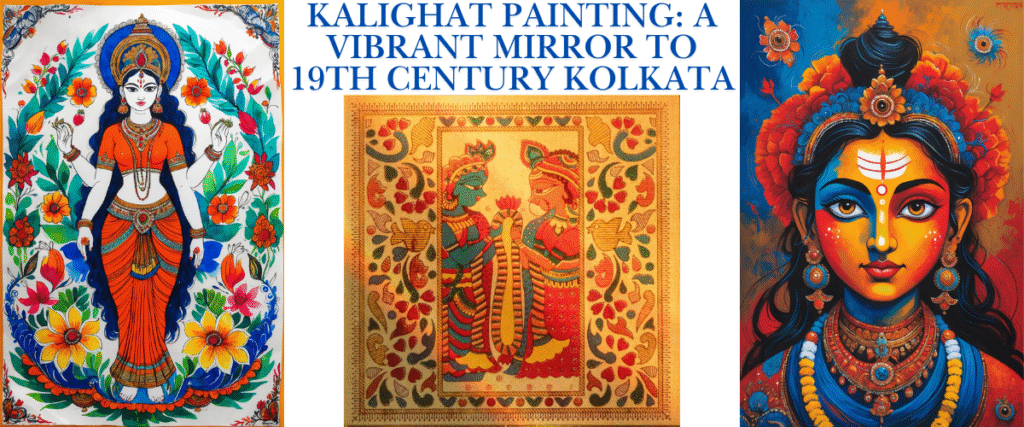
Kalighat Painting: A Vibrant Mirror to 19th Century Kolkata

Kalighat Painting: A Vibrant Mirror to 19th Century Kolkata

The Vibrant Art of Kolkata’s Temple Steps

Amidst the bustling energy of 19th-century Kolkata (formerly Calcutta), a unique and influential style of Indian folk art emerged from the vicinity of the famed Kalighat Kali Temple.1 Known as Kalighat painting, or Kalighat Patachitra, this art form quickly captured the imagination of locals, pilgrims, and even foreign visitors.2 It stands out for its distinctive visual language: bold, sweeping outlines executed with masterful brushstrokes, vibrant watercolour pigments applied on paper, and strikingly minimal backgrounds that make the central figures pop.1 The subjects depicted were as diverse as the city itself, ranging from revered Hindu gods and goddesses and scenes from ancient epics to sharp social satire, depictions of everyday life, and commentary on contemporary events.2

Kalighat Painting: A Vibrant Mirror to 19th Century Kolkata Read More »

Rajasthan's Artistic Soul: A Journey Through Colour, Craft, and Culture

Rajasthan’s Artistic Soul: A Journey Through Colour, Craft, and Culture

The Vibrant Heart of Indian Art

Rajasthan, the “Land of Kings,” conjures images of majestic forts, vast deserts, and tales of royalty.1 Located in northwestern India, this region is a cultural tapestry woven with history, tradition, and unique artistic expression, its heritage stretching back millennia.4 At its core lies Rajasthani art – a diverse array encompassing intricate paintings, vibrant textiles, enduring sculptures, and skilful crafts.1

Rajasthan’s Artistic Soul: A Journey Through Colour, Craft, and Culture Read More »

Whispers in Dots: An Exploration of Bhil Art

Whispers in Dots: An Exploration of Bhil Art

The Vibrant World of Bhil Art

Imagine a canvas alive with startlingly bright colours, populated by figures both familiar and mythical, their forms filled not with solid blocks of paint but with a constellation of meticulously placed, multi-hued dots.1 This is the captivating world of Bhil art, a unique and deeply expressive tradition belonging to the Bhil tribe, one of India’s largest and oldest indigenous communities.3 More than mere decoration, Bhil art is intricately woven into the fabric of the community’s life, serving as a visual language that communicates their profound connection to the natural world, their spiritual beliefs, their history, and their daily existence.1 This art form, traditionally adorning the mud walls of their homes, has journeyed through time, adapting and evolving while retaining its core essence. This article delves into the origins of the Bhil people and their cultural landscape, explores the art’s fundamental role in ritual and storytelling, deciphers the rich symbolism embedded in its themes and signature dots, details its traditional techniques and modern adaptations, celebrates the key artists who have shaped its contemporary identity and examines its place in the world today. Through this exploration, we gain an appreciation for Bhil art not only as an aesthetically striking tradition but also as a vital expression of cultural identity and a testament to the enduring spirit of its creators.3 The continued practice and evolution of this art, particularly its successful transition into new mediums and markets, stands as a powerful symbol of cultural resilience for a community that has navigated historical marginalisation and the pressures of change, ensuring their stories and worldview continue to resonate.2

Whispers in Dots: An Exploration of Bhil Art Read More »

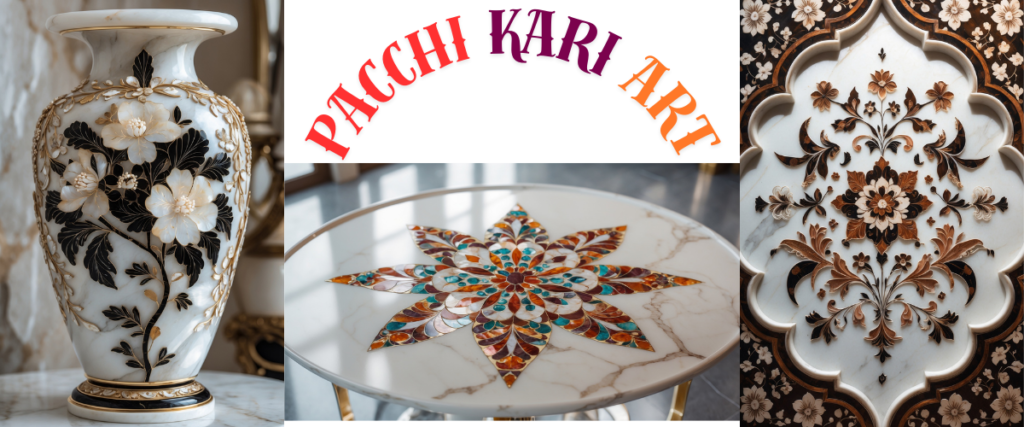
Pacchi-Kari-Art

PacchiKari: The Mughal Art of Painting with Stone

Among the many artistic legacies bequeathed by the Mughal Empire in India, few capture the imagination quite like Parchin Kari. Known more recently also as Pacchikari, this exquisite art form represents a pinnacle of decorative craftsmanship, a technique where hard, coloured stones are transformed into intricate designs inlaid seamlessly into marble.1 It is a method of “painting with stone,” where slivers of semi-precious and sometimes precious gems – lapis lazuli, agate, carnelian, jasper, turquoise, and more – are meticulously cut, shaped, and embedded into a base, most famously, pristine white marble.3 The result is a surface where the inlaid patterns, often depicting delicate floral scrolls or complex geometric arrangements, appear almost to have grown organically from the stone itself, the joints between the tiny pieces rendered practically invisible to the naked eye – a testament to the artisan’s extraordinary skill.2

PacchiKari: The Mughal Art of Painting with Stone Read More »

Scroll to Top