Author name: Swapnil Bhatnagar

The Lithic Chronicles of Vatapi: An Exhaustive Analysis of the Badami Cave Temples

The Lithic Chronicles of Vatapi: An Exhaustive Analysis of the Badami Cave Temples

The Red Sandstone Escarpment

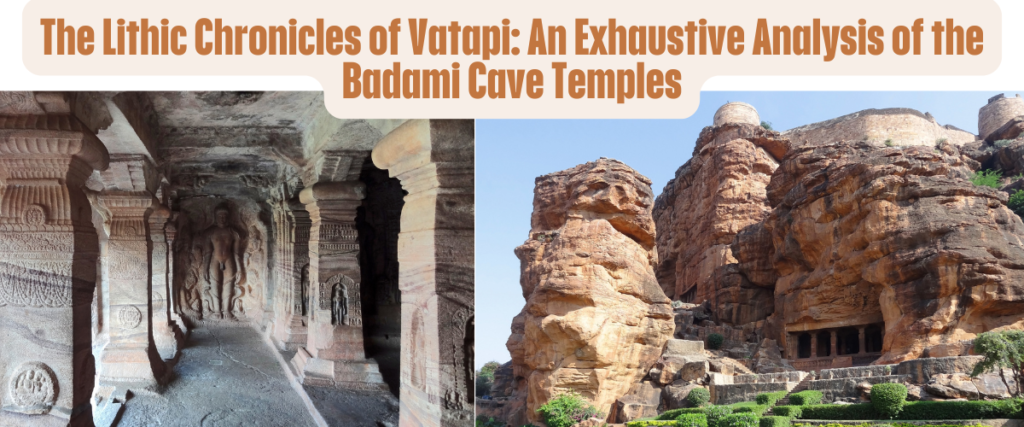
In the geological heart of the Deccan Plateau, where the arid landscape of northern Karnataka fractures into dramatic ravines and precipitous cliffs, lies the ancient settlement of Badami. Known in antiquity as Vatapi or Vatapipuri, this site represents one of the most significant confluences of geology, theology, and political ambition in the history of the Indian subcontinent. Carved into the amygdaloidal red sandstone of the Kaladgi basin—a geological formation that imbues the landscape with a vibrant, ruddy hue reminiscent of almonds (badam), from which the modern name is likely derived—the Badami Cave Temples stand as the foundational monuments of the Early Western Chalukya dynasty.

The Lithic Chronicles of Vatapi: An Exhaustive Analysis of the Badami Cave Temples Read More »

The Phygital Classroom: Augmented Reality and the Transformation of Historical Education in Public Spaces

The Phygital Classroom: Augmented Reality and the Transformation of Historical Education in Public Spaces

The landscape of modern education is undergoing a profound metamorphosis as the physical boundaries of the classroom dissolve into the digital infrastructure of the 21st century. This evolution is best encapsulated by the emergence of “phygital” learning, an instructional model defined by the seamless interaction between a physical space and a digital environment. By leveraging connected virtual and augmented reality tools, educators are creating immersive experiences where physical sensors and digital outputs operate in a continuous feedback loop, ensuring that the movements of a learner—such as interacting with a historical hologram—trigger meaningful educational responses. This shift represents more than just a technological upgrade; it is a fundamental reimagining of the educational space, moving away from static, four-walled environments toward dynamic, situated learning ecosystems that encompass local parks and heritage sites.

The Phygital Classroom: Augmented Reality and the Transformation of Historical Education in Public Spaces Read More »

Information-Technology-Industry

The Global Information Technology Landscape: Comprehensive Analysis of the Week Ending January 30, 2026

The final week of January 2026 stands as a definitive period of transition for the global information technology industry, marking the end of the speculative era for generative artificial intelligence and the onset of what market analysts have termed the “Year of Delivery.” Throughout this week, the industry was defined by a massive divergence in the financial fortunes of the “Magnificent Seven” technology giants, the commercial release of autonomous AI agents capable of direct computer interaction, and a significant escalation in geopolitical trade controls governing the semiconductors that fuel these advancements. This article provides an exhaustive synthesis of the economic, technological, regulatory, and security developments that occurred during this pivotal timeframe.

The Global Information Technology Landscape: Comprehensive Analysis of the Week Ending January 30, 2026 Read More »

Weekly-Financial-Review-

Weekly Financial Markets Review: Analysis of the Period Ending January 30, 2026

The final trading week of January 2026 was defined by a confluence of monumental leadership transitions, landmark international trade agreements, and a historic correction in the commodities sector that sent shockwaves through global portfolios. As the month drew to a close, market participants were forced to recalibrate their expectations for inflation, interest rates, and geopolitical stability. While the beginning of the week saw a continuation of the bullish momentum that had pushed several indices to all-time highs earlier in the month, the concluding sessions were marked by intense volatility as a result of policy shifts in Washington and anticipatory caution in major emerging markets like India.

Weekly Financial Markets Review: Analysis of the Period Ending January 30, 2026 Read More »

The Prism of Modernity: An Exhaustive Analysis of the Cubist Revolution

The Prism of Modernity: An Exhaustive Analysis of the Cubist Revolution

The Shattered Mirror of the Twentieth Century

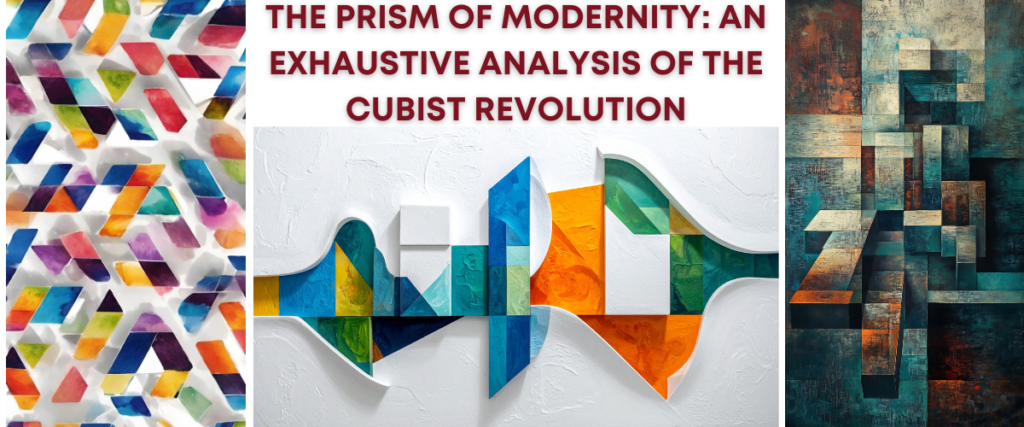
The history of Western representation can be viewed as a long, steady march toward the perfection of illusion. For nearly five centuries, ever since Brunelleschi and Alberti codified the laws of linear perspective in the Italian Renaissance, the canvas was understood as a window. It was a transparent plane through which a viewer, standing in a fixed position, could peer into a coherent, three-dimensional world. This “Renaissance window” dictated that space was static, time was frozen, and the observer was the singular centre of the universe. In the first decade of the 20th century, amidst the soot and steam of industrialising Paris, a small cadre of artists took a hammer to that window. They did not merely crack it; they shattered it entirely, and in the shards of that destruction, they found a new language for the modern world. This movement, which began as a derisive insult and ended as the bedrock of modernism, was Cubism.

The Prism of Modernity: An Exhaustive Analysis of the Cubist Revolution Read More »

The Organic Revolution: An Exhaustive Analysis of Art Nouveau

The Organic Revolution: An Exhaustive Analysis of Art Nouveau

The Shock of the New

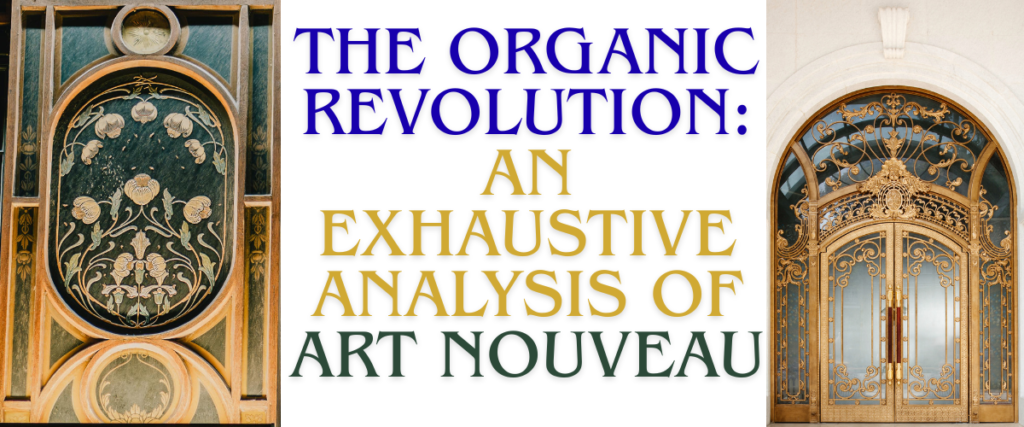
In the waning years of the nineteenth century, Western civilisation stood at a precipice. The Industrial Revolution had irrevocably altered the landscape of daily life, shrouding cities in the soot of progress and flooding markets with mass-produced commodities that many critics found soulless and devoid of character. The rigid academicism of the Victorian era, with its incessant recycling of historical styles—Neo-Classical, Neo-Gothic, Neo-Renaissance—felt increasingly exhausted, a tired echo of the past rather than a voice for the future.1 It was in this climate of aesthetic fatigue and social upheaval that Art Nouveau exploded onto the scene.

The Organic Revolution: An Exhaustive Analysis of Art Nouveau Read More »

Scroll to Top