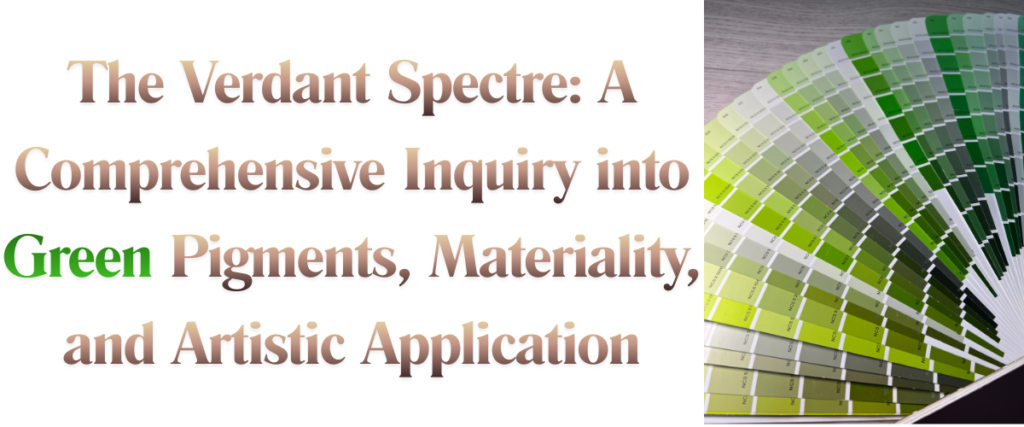
The Verdant Spectre: A Comprehensive Inquiry into Green Pigments, Materiality, and Artistic Application
The colour green occupies a unique and often paradoxical position within the history of fine art. While it is the most prevalent hue in the natural terrestrial environment, representing life, growth, and renewal, it has historically been one of the most difficult colours for artists to capture with stability, safety, and brilliance. For centuries, the quest for a permanent, vibrant green led painters through a landscape of toxic minerals, unstable botanical dyes, and complex alchemical reactions. The transition from the earth-based minerals of antiquity to the synthetic innovations of the nineteenth century, and finally to the sustainable, high-performance pigments of the modern era, reflects broader shifts in chemistry, industrialisation, and environmental consciousness. This article provides an exhaustive examination of green in art, detailing the chemical properties of its pigments, the evolution of its use across cultures, the psychological and symbolic weight it carries, and the practical methodologies required to master its application in various media.