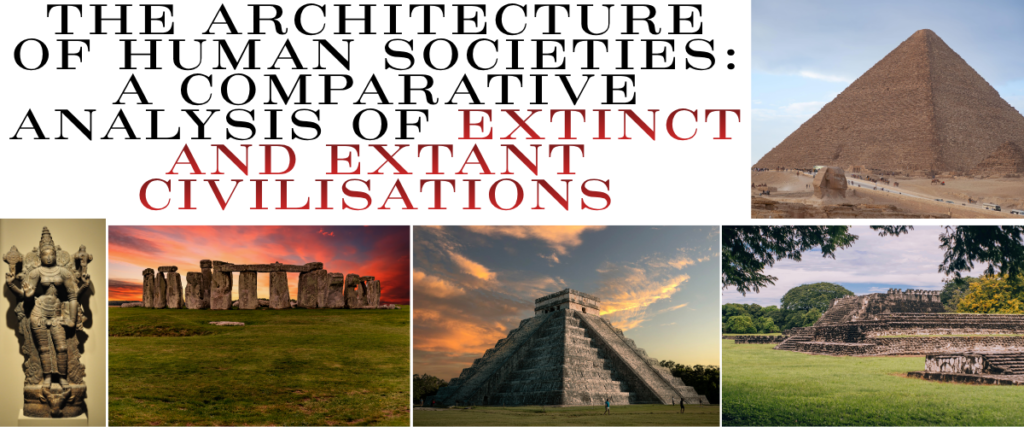
The Foundations of Civilizational Theory
The Etymological and Sociological Framework
To construct a robust comparative analysis of human societies, a precise sociological distinction must be established between the concepts of culture and civilisation. Etymologically, the word civilisation is derived from the French civilisé, which ultimately traces its lineage to the Latin civilis (civil), civis (citizen), and civitas (city).1 Historically, the concept emerged in 18th-century Europe as a marker of behavioural refinement, actively contrasted with “barbarism” or “rudeness” to reflect the teleological ideals of progress characteristic of the Age of Enlightenment.1 In modern historical sociology, however, this evaluative dichotomy has been abandoned in favour of structural definitions.2 Sociologist R.M. MacIver clarified this conceptual division by formulating that civilisation represents what human societies possess, whereas culture defines what human societies are.4 Culture encompasses the organic, internal, and subjective dimensions of a society, such as its values, religious frameworks, linguistic nuances, artistic expressions, and moral codes.4 Civilisation, conversely, constitutes the external, mechanical, and utilitarian systems—including technology, codified laws, physical infrastructure, administrative bureaucracies, and economic networks—that humans design to manage and control the material conditions of life.1
Under this structural framework, the transition of a sedentary society into a mature civilisation is traditionally recognised by the development of several distinct socio-political markers. These include dense urbanisation organised around cities, the emergence of a centralised political state, the generation of agricultural food surpluses, a highly stratified division of labour, and the establishment of standardised symbolic communication systems, most notably writing.1 Historically, urbanisation acts as the critical catalyst, as the construction of permanent, non-nomadic settlements forces the centralisation of political authority and the institutionalisation of social hierarchies.1 However, modern historical analyses demonstrate that these criteria are not universally rigid.2 The Inca civilisation, for instance, operated a highly advanced, expansive imperial state with sophisticated agricultural terrace systems and complex demographic engineering, yet completely lacked a phonetic writing system.2 Instead, they utilised the khipu system—a complex recording mechanism consisting of knotted, multi-colored textile cords—to encode, store, and transmit vital mathematical, administrative, and narrative data across the Andes.6
The Lifecycle Theories of Rise and Decline
The structural lifecycles of human societies have generated extensive theoretical discourse, with scholars seeking universal patterns of genesis, expansion, and eventual decay.8 Oswald Spengler proposed a highly deterministic, biological model of historical development, treating civilisations as distinct organic entities bound to an immutable lifecycle of youth, maturity, senility, and death.9 Spengler posited that “civilisation” represents the final, sterile, and petrified stage of a “culture,” where the creative, spiritual soul of a society is completely replaced by raw materialism, imperial expansion, and dense, soul-crushing urbanisation.4
Arnold Toynbee offered a more dynamic, spiritually open alternative through his challenge-and-response theory of history.11 Toynbee argued that civilisations emerge when a creative minority successfully formulates an innovative response to physical, environmental, or geopolitical adversities.12 This initial success is sustained as long as the creative minority continues to address subsequent challenges, inspiring imitation, or mimesis, among the broader population.13 Disintegration occurs when the creative minority ceases to adapt, degenerating into a prideful “dominant minority” that rules by physical coercion rather than spiritual legitimacy.12 This loss of moral authority triggers a schism in the societal soul, leading to the formation of an alienated “internal proletariat” and an aggressive “external proletariat” that eventually dismantles the failing system.12
Pitirim Sorokin focused on cultural mentalities, explaining civilizational shifts as an irregular fluctuation between the ideational mentality, which prioritises spiritual and transcendental values, and the sensate mentality, which emphasises empirical reality, materialism, and sensory pleasure.8 Sorokin argued that civilisations decline when they overreach in either direction, triggering an inevitable pendular correction back toward an intermediate, idealistic state.8
Joseph Tainter introduced a highly influential, resource-based thermodynamic model, asserting that societies are problem-solving systems that address challenges by continuously escalating their socio-political complexity.17 This complexity—manifesting as expanded bureaucracies, military infrastructure, and specialised labour divisions—requires continuous and increasing energy inputs.17 However, investments in socio-political complexity are subject to diminishing marginal returns.17 Once a society crosses its optimal complexity threshold, additional investments in bureaucratic control yield progressively smaller benefits while incurring exponentially higher per capita maintenance costs.17 Under these conditions, the civilisation exhausts its surplus capacity and becomes structurally brittle.17 Consequently, minor environmental or military perturbations, which a younger society could easily absorb, inevitably trigger rapid, systemic collapse—defined as a rapid, profound reduction in socio-political complexity and scale.17
Tainter’s model has faced critique from scholars who argue that his theory is overly abstract and fails to account for the persistent rise of complexity in contemporary, fossil-fuel-driven societies.20 Critics also note that some historical systems survived systemic crises not by collapsing, but by deliberately embracing simplicity.20 For example, the Eastern Roman Empire successfully weathered the collapse of its western counterpart by radically simplifying its administrative and military structures, effectively shedding unsustainable complexity to preserve core functions.20 Furthermore, critics argue that excessive emphasis on abstract energy equations can overlook the role of class conflict and political decision-making, which frequently dictate how energy surpluses are distributed or withheld.21
The Six Cradles of Civilization
A “cradle of civilisation” refers to a distinct geographical locus where human society developed the complex structures of urbanism, statecraft, writing, and intensive agriculture independently, without external civilizational diffusion.22 Modern archaeological science recognises six pristine cradles of civilisation distributed across both hemispheres.7
The Early Afro-Eurasian Hubs
The earliest pristine civilisations emerged in Afro-Eurasia, developing along major river valley systems that provided fertile alluvial soils, freshwater, and geographic conditions suitable for generating large-scale agricultural surpluses.1
Mesopotamia, situated in the vast Tigris-Euphrates river basin, is widely recognised as the earliest urbanised society in human history.3 Emerging in the fourth millennium BCE during the Uruk period, the Sumerian culture pioneered the pristine transition to city-state living.6 The Sumerians invented cuneiform script around 3200 BCE, which evolved from simple pictographic clay tokens into a highly abstract, wedge-shaped writing system designed to record commerce, administrative decrees, laws, and literature.6 The Mesopotamians were master engineers, constructing extensive networks of gravity-fed canals, dikes, and levees to irrigate the highly arid plains of southern Iraq.6 They also built towering brick ziggurats dedicated to city deities, created some of the earliest formalised legal codes, and laid the mathematical foundations for modern timekeeping and astronomy, including discovering the principles of trigonometry and basic calculus on cuneiform tablets.6
Ancient Egypt developed along the narrow, highly predictable annual floodplains of the Nile River.6 This unique geography offered deep natural insulation, protecting the civilisation from frequent external invasions and fostering a highly stable, continuous political and religious system that endured for approximately 3,500 years.6 Unified under a single, divine pharaoh around 3100 BCE, Egypt established a highly centralised state apparatus that utilised hieroglyphic writing for administrative, religious, and historical documentation.6 During the Old Kingdom, specifically between 2600 and 2400 BCE, the Egyptian state demonstrated its unparalleled capacity to mobilise vast labour forces, constructing monumental public works such as the Great Pyramids of Giza and the Sphinx.6 This civilizational trajectory persisted until Egypt’s native religious and political structures were gradually replaced by Christianity under late Roman rule around 400 CE.6
The Indus Valley Civilisation (also known as the Harappan Civilisation) emerged around 3300 BCE across a vast geographic area spanning modern Pakistan, northwest India, and northeast Afghanistan.6 It was the geographically largest of all the pristine cradles, encompassing more than 1.25 million square kilometres.24 Archaeological excavations at major urban sites like Harappa and Mohenjo-Daro have revealed an extraordinary level of civic planning, characterised by highly standardised grid-iron street layouts, multi-story baked-brick architecture, and highly sophisticated covered municipal sewage and drainage networks that ran alongside major thoroughfares.6 The Harappans also utilised a highly precise, standardised system of weights and measures, engineered massive tidal dockyards such as the port city of Lothal, and engaged in extensive, long-distance maritime trade with Mesopotamia.6
Ancient China developed within the fertile, loess-rich basins of the Yellow and Yangtze rivers, which formed the core of the Chinese cultural sphere.26 While Neolithic regional cultures like the Liangzhu laid the agricultural groundwork, the first highly centralised state verified by both archaeology and written records was the Shang Dynasty (c. 1600–1046 BCE).6 The Shang period was distinguished by highly sophisticated bronze metallurgy, the construction of massive walled administrative capitals, and the invention of the oracle-bone script—the direct ancestor of modern Chinese characters.27 This non-phonetic, logographic writing system played a monumental role in uniting the diverse ethnic and linguistic groups of East Asia.28 Because characters conveyed semantic meaning directly, rather than phonetic sounds, literate elites across the subcontinent could communicate seamlessly through a shared written medium, establishing a continuous linguistic and cultural thread that persists into the modern era.27
The Pristine Societies of the Americas
In the Western Hemisphere, civilisations developed independently in highly diverse environments, proving that human complexity does not rely on a singular geographical or agricultural blueprint.7
The Caral-Supe Civilisation (also known as Norte Chico) is the oldest verified civilisation in the Americas, emerging along the hyper-arid north-central coast of Peru around 3500 BCE.7 Developing across thirty major urban centres along the Fortaleza, Pativilca, and Supe rivers, this society is highly unique because it did not rely on cereal agriculture for its initial dietary surplus.1 Instead, coastal fishing villages like Aspero harvested abundant marine resources from the Pacific Ocean, trading dried fish and shellfish to inland agricultural centres like Caral in exchange for cotton, which was used to manufacture industrial fishing nets.7 Caral-Supe entirely lacked ceramics and surviving visual art.30 Yet, they constructed massive earthen platform mounds, sunken circular plazas, and the Piramide Major (c. 2600 BCE), which is contemporary with the earliest Egyptian pyramids.7 They also developed sophisticated gravity-fed irrigation canals and utilised the world’s oldest known prototype of the khipu record-keeping system, dating to at least 4000 BCE.7
The Olmec Civilisation emerged around 900 BCE along the tropical, river-crossed lowlands of the Mexican Gulf Coast.6 Widely considered the “mother culture” of Mesoamerica, the Olmecs established major ceremonial centres at San Lorenzo and La Venta.22 They are famous for carving colossal basalt stone heads, weighing up to forty tons, depicting dynastic rulers.32 The Olmecs pioneered the intensive cultivation of maize, constructed large earthen pyramids, developed early writing and calendar systems, and established extensive, long-distance trade networks distributing jade and obsidian across Central America, setting the cultural and administrative template for all subsequent Mesoamerican civilisations.6
Great Extinct Civilisations and the Anatomy of Collapse
The historical record is populated by highly advanced, complex societies that collapsed, leaving behind massive architectural ruins that offer vital insights into the ecological, structural, and geopolitical vulnerabilities of human systems.32
The Fragility of Ecological Overreach
The Classic Maya Civilisation (c. 250–900 CE) achieved an extraordinary level of complexity in the tropical lowlands of Central America.32 The Maya constructed independent, highly competitive city-states featuring monumental limestone pyramids, developed a highly precise solar calendar, made foundational breakthroughs in mathematics, and created the most sophisticated logo-syllabic writing system in the pre-Columbian Americas.6
However, around 900 CE, the southern Maya lowlands underwent a dramatic, rapid collapse characterised by the complete depopulation of major cities.32 Academic consensus indicates that this was driven by a severe ecological crisis.36 To support populations of 60,000 to 100,000 in major centres, the Maya engaged in extensive, unchecked deforestation.36 Forests were cleared for agriculture and to provide wood fuel for the high-temperature kilns required to produce the lime plaster used to coat their monumental architecture.36 This deforestation severely disrupted the local microclimate, raising ground temperatures and reducing rainfall, which amplified a severe, regional drought cycle that struck the Yucatan Peninsula between 750 and 1150 CE.36 Having drained their natural wetlands and over-manipulated their reservoirs, the Maya had no adaptive buffers left.37 The resulting famine and water scarcity triggered intense, endemic warfare between rival city-states competing for dwindling resources, leading to internal peasant revolts, the collapse of political legitimacy, and a massive, irreversible exodus of the population.32
On the other side of the world, the Khmer Empire (c. 800–1400 CE) dominated mainland Southeast Asia from its massive capital at Angkor.32 Angkor was the largest pre-industrial city in the world, covering approximately 1,000 square kilometres and housing nearly one million residents.32 The Khmer built their success on highly advanced hydraulic engineering, constructing a massive network of artificial reservoirs (barays), canals, and dikes designed to capture monsoon rains for dry-season rice cultivation.32
This highly complex, rigid system ultimately became a structural liability.17 During the 14th century, severe environmental fluctuations—characterised by intense monsoon floods interspersed with multi-decade droughts—overwhelmed the rigid water network.38 Heavy siltation choked the canals, while violent floodwaters destroyed vital dikes, rendering the irrigation system inoperable.38 Faced with agricultural failure and severe water shortages, the highly overpopulated empire lost its defensive resilience, allowing the Ayutthaya Kingdom to successfully sack Angkor in 1431 and force its abandonment to the jungle.38
Several other extinct societies illustrate this ecological vulnerability. Çatalhöyük, located in modern south-central Turkey, was one of the world’s oldest proto-urban centres, flourishing between 9,000 and 7,000 years ago before suddenly disappearing.32 Its residents lived in densely packed, honeycomb-like mudbrick houses, but as regional resource depletion and local climate shifts occurred, the agricultural base fractured, forcing the population to permanently scatter.32
Easter Island (Rapa Nui) was settled by highly skilled Polynesian navigators around 700 CE.32 The islanders developed a complex, competitive society famous for carving and transporting massive stone heads (moai).32 However, severe deforestation and the depletion of natural resources, coupled with the introduction of European diseases, led to a catastrophic decline in their population and the collapse of their social and spiritual order.32
The Mississippians (c. 700 CE to European contact) built an expansive agrarian civilisation in the American Southeast and mid-continent.32 Their largest city, Cahokia, featured a massive central plaza, elaborate earthen pyramids like Monks Mound, and sophisticated wood circles designed to track stars.32 Cahokia’s population, estimated at 40,000, declined gradually prior to European contact, likely due to local environmental degradation, poor sanitation, and localised crop failures.32
Similarly, the Akkadian Empire of Mesopotamia experienced a sudden collapse between 2200 and 2500 BCE when a severe, 300-year regional drought decimated its agricultural heartland.39
The ancient Anasazi (Pueblo) people of North America constructed elaborate cliff dwellings and practised advanced astronomy, but abandoned their cities around 900 CE due to dropping temperatures, persistent warfare, and a divisive religious crisis that prompted a mass migration to the south.39
Catastrophic Conquistadors and Sudden Shocks
In contrast to the gradual, ecologically driven decline of the Maya and Khmer, the Aztec and Inca civilisations collapsed rapidly due to sudden, external shocks combined with deep-seated internal structural vulnerabilities. 34
The Aztec Empire, centred on the spectacular island city of Tenochtitlan, was a highly dominant military state ruling over millions of subjects in Mesoamerica.34 The Aztecs developed highly advanced irrigation networks and chinampas (floating gardens) that generated immense agricultural yields.35 However, their empire was highly extractive and coercive, demanding heavy tribute and capturing human sacrifices from conquered states, which created intense local resentment.34
When Spanish conquistador Hernán Cortés arrived in 1521, he exploited this structural weakness.34 Cortés forged military alliances with the Tlaxcalans and other subjugated tribes, gathering tens of thousands of indigenous allies to augment his forces.34 The Spanish possessed immense technological advantages, utilising steel armour, cavalry, and gunpowder weapons, which terrified the Aztec defenders.34 Crucially, the Spanish blocked Tenochtitlan’s vital causeways and aqueducts, cutting off the city’s freshwater supply and food imports, leading to widespread starvation.34 The final, devastating blow was biological: a smallpox epidemic, carried by Spanish ships, swept through the densely packed city, killing over half of the Aztec population and destroying their political and military leadership.34
The Inca Empire, which stretched over 4,000 kilometres along the Andes, collapsed in a remarkably similar manner.6 The Inca possessed a highly organised, state-controlled economy that managed terrace farming, monumental stone construction, and a vast road network that connected diverse ecological zones.2 However, immediately prior to the arrival of Francisco Pizarro in 1532, European smallpox had already swept through South America ahead of the conquerors, killing the Inca Emperor Huayna Capac and plunging the empire into a devastating civil war of succession between his sons, Atahualpa and Huáscar.34 Pizarro, with just 168 soldiers, exploited this chaos.34 Utilising tactical deception, steel swords, and horses, Pizarro captured and executed the victorious Atahualpa.34 Without the divine emperor—the absolute head of the highly centralised state bureaucracy—the structural cohesion of the Inca Empire dissolved, allowing the Spanish to seize control of the capital city of Cusco with minimal resistance.34
The Late Bronze Age Collapse and Regional Reorganisation
The Late Bronze Age Collapse (c. 1200 BCE) represents one of the most famous systemic failures in human history, characterised by the rapid collapse of several highly integrated Mediterranean civilisations, including the Hittite Empire and the Mycenaean kingdoms.40 This collapse provides a vital comparative case study, illustrating how the same regional crisis can trigger complete extinction in one area while fostering adaptive reorganisation in another.40
For centuries, Anatolia was dominated by the highly centralised, militaristic Hittite Empire.40 By 1200 BCE, however, the Hittite state was fragmenting under the compounding pressures of prolonged regional famine, plague, and civil war.40 The Hittite capital of Hattusa was burned to the ground and permanently abandoned, while nearby sites like Karaoğlan were destroyed, leaving unburied corpses in the ruins.40 The empire dissolved rapidly into extreme political decentralisation, leaving the region vulnerable to migrations by outside groups like the Phrygians.40
In stark contrast, the island of Cyprus demonstrated remarkable systemic resilience during the same collapse period.40 While King Suppiluliuma II of the Hittites had briefly invaded the island to secure its vital copper resources, Cyprus did not undergo the violent, destructive collapse witnessed in Anatolia.40 Archaeological excavations at major Cypriot cities like Kition and Enkomi reveal that while some structural rebuilding occurred, there was no evidence of violent, widespread burning or systemic destruction.40 Only the small coastal settlement of Maa Palaeokastro shows clear evidence of destruction, likely by sea-borne pirates or the enigmatic “Sea Peoples”.40 Several other Cypriot settlements, such as Pyla Kokkinokremmos and Alassa, were peacefully abandoned without violence as populations reorganised.40 Rather than collapsing, cities like Kition and Paphos actively flourished after 1200 BCE, absorbing regional refugees, adapting their trade networks, and successfully transitioning into a prosperous new era of iron metallurgy.40
Continuous and Adaptive Living Civilisations
While many ancient societies collapsed, others developed extraordinary mechanisms of cultural, linguistic, and institutional resilience, allowing them to adapt to foreign conquests, internal revolutions, and ecological shocks to persist as continuous, living civilisations in the modern era.6
Chinese Civilisation and the Balance of Bureaucracy
China possesses the longest continuous written history of any country, with forms of its modern logographic script directly traceable to the 3,250-year-old oracle bones of the Shang Dynasty.6 Although dynasties rose and fell in a recurring cycle, China’s civilizational core remained unbroken.26 This longevity is sustained by several highly integrated systems.
First, the non-phonetic logographic writing system served as a powerful, trans-ethnic unifying force.28 Throughout history, the territory of China encompassed hundreds of mutually unintelligible spoken dialects.6 Because Chinese characters convey semantic meaning directly, rather than phonetic sounds, literate elites across the subcontinent could communicate seamlessly through writing, fostering a unified civilizational identity that transcended regional and ethnic barriers.28
Second, the state institutionalised a highly resilient philosophical and administrative synthesis.43 Under the Han Dynasty (202 BCE–220 CE), the state adopted Confucianism as its official ideology, grafting its ethical tenets—filial piety, ritual propriety, social harmony, and the moral duty of rulers—onto the centralised, highly efficient legalist state structures established by the preceding Qin Dynasty.26
Third, the Imperial Examination System (Keju) selected government bureaucrats based on merit and mastery of classic Confucian literature rather than aristocratic lineage.27 This created a highly professional, ideologically unified class of scholar-bureaucrats who managed the state.26 Crucially, when foreign nomadic warriors conquered China—most notably the Mongols under the Yuan Dynasty (1271–1368) and the Manchus under the Qing Dynasty (1644–1912)—they quickly realised that the vast empire could not be governed without this bureaucratic machinery.27 Instead of dismantling Chinese civilisation, the foreign conquerors adopted the existing Confucian bureaucracy, learned the written language, and underwent assimilation.27
Fourth, the conceptual framework of the “Dynastic Cycle” and the “Mandate of Heaven”.44 Unlike the West, where the collapse of a central authority (such as the Western Roman Empire) often led to permanent political fragmentation, the Chinese political model viewed the rise, decay, and fall of dynasties as a natural, cosmic cycle.8 When a ruling family grew corrupt, ignored the welfare of the peasantry, or failed to handle natural disasters, it was understood that they had lost the “Mandate of Heaven”—a divine right to rule bestowed upon the virtuous.44 The subsequent rebellion and establishment of a new dynasty was not seen as a destruction of the civilisation, but as a necessary restoration of universal order, resetting the cycle and preserving civilizational continuity.44
The Indian Subcontinent and the Perennial Thread of Dharma
Indian civilisation exhibits a highly resilient, decentralised model of continuity.23 It traces its roots to the Indus Valley Civilisation and the subsequent Vedic Age, maintaining an unbroken cultural lineage for several millennia.23 This longevity was shaped by early linguistic and agricultural developments, including significant early Austroasiatic (Mon-Khmer) influences, which introduced key agricultural practices like rice cultivation and contributed numerous loanwords to early Indo-Aryan languages.47
The core of India’s resilience lies in the concept of Sanatana Dharma (the eternal religion)—a highly flexible, non-dogmatic spiritual, ethical, and social framework.48 Rather than relying on a rigid, centralised ecclesiastical hierarchy or a single, mandatory holy book, Indian spirituality developed as a continuously expanding tradition that accommodated a vast diversity of beliefs, rituals, and philosophical schools (including Hinduism, Buddhism, Jainism, and Sikhism).23 This decentralised structure made Indian civilisation virtually immune to complete existential erasure by foreign invaders.23
This continuity is reinforced by the traditional theory of śiṣṭācāra—the transmission of civilizational memory and sacred knowledge through the living, bodily practice and conduct of the learned community across historical ruptures.49 Even when libraries were burned, temples destroyed, and dynasties overthrown by successive waves of invaders—including the Greeks under Alexander, Scythian and Huna nomadic tribes, and medieval Islamic armies—the core of the civilisation was preserved at the local level through family structures, village communities, and oral traditions.23
Furthermore, Indian society possessed a powerful capacity for assimilation.23 Many invaders, such as the Huna and Scythian tribes, were gradually integrated into the complex social fabric, adopting local spiritual systems and forming new syncretic dynasties like the Pratiharas.46 During the long period of Muslim rule under the Delhi Sultanate and the Mughal Empire, Indian civilisation underwent a profound, bilateral fusion of cultures, giving rise to unique architectural styles, linguistic developments (such as Urdu), and spiritual movements like the Bhakti and Sufi traditions.46 Despite suffering severe economic extraction and social disruption under the British Raj—the first truly continuous, distant foreign rule—the civilizational core survived, dynamically adapting to the modern era.23
At the local level, this resilience was historically maintained through the traditional joint family system, where extended generations lived together under a patriarch to ensure economic security and the unbroken transmission of cultural mores.47 In the modern era, high metropolitan costs of living have accelerated a transition to nuclear family models, altering traditional authority structures and leaving older generations increasingly vulnerable.47 Yet, the core prestige of ancestral traditions remains powerful.23 This is illustrated by cultural artifacts like Mysore silk; originally thriving under royal patronage—particularly during the reign of Krishna Deva Raya, who regarded silk as sacred temple adornment—the craft successfully integrated modern manufacturing techniques while preserving its ritual prestige and economic viability in contemporary India.23
Islamic Civilisation and the Global Transmission of Knowledge
Emerging in the 7th century on the Arabian Peninsula, Islamic civilisation rapidly expanded across North Africa, the Middle East, Central Asia, and northern India, creating a vast, highly integrated cultural and economic sphere.52 The survival and continuity of this civilisation are rooted in its universal religious laws, global trade networks, and a deep, institutionalised respect for knowledge and science.54
During the European Middle Ages, the Islamic world entered a spectacular Golden Age, centered around major cosmopolitan cities like Baghdad, Cairo, and Córdoba.53 Under the patronage of early Abbasid Caliphs like Harun al-Rashid and al-Ma’mun, the Grand Library of Baghdad (known as the Bayt al-Hikmah, or House of Wisdom) became the epicenter of the global Translation Movement.56 Scholars of diverse faiths and ethnic backgrounds—including Arab Muslims, Persian Zoroastrians, Syriac Christians, and Jewish intellectuals—worked side-by-side to translate the classical scientific, mathematical, and philosophical texts of ancient Greece, Rome, Persia, and India into Arabic.56
Crucially, Islamic scholars did not merely preserve this ancient knowledge; they significantly expanded it.56 Scholars like Al-Khwarizmi developed algebra (from the Arabic al-jabr), while medical pioneers like Ibn Sina (Avicenna) and Al-Razi (Rhazes) compiled comprehensive medical encyclopedias that served as standard textbooks in European universities for centuries.59 This advanced knowledge was subsequently transmitted to Western Europe through multicultural contact zones in Islamic Spain (Al-Andalus) and Sicily, where European scholars translated these Arabic texts into Latin.56 This reintroduction of classical philosophy and advanced science laid the intellectual foundations for Scholasticism and the European Renaissance.56
Despite suffering catastrophic shocks—most notably the Crusades and the devastating Mongol invasion of 1258, which destroyed Baghdad and saw the libraries of the House of Wisdom dumped into the Tigris River—the core structures of Islamic civilisation survived.53 Its survival was ensured by the decentralised, transregional nature of the Ummah (the global community of believers) and the deep integration of the Sharia (Islamic law), which provided a uniform legal and ethical code that regulated commerce, contract law, and social life from West Africa to Southeast Asia.53 In the modern era, Islamic civilisation continues to dynamically adapt through movements like Islamic modernism, which seeks to reconcile traditional faith with contemporary democratic institutions, scientific rationality, and social progress.54
The intellectual flow from the Islamic world to the West left deep cultural and aesthetic marks on Europe.62 High-demand Near Eastern luxuries—including sugar, damask, bananas, emeralds, and silk—flooded European markets through Italian maritime ports.62 European elites frequently requested their finest personal assets to be adorned in Arabic Kufic calligraphy to lend them an air of refinement and sophistication.62 This cross-cultural admiration extended to literature and music; European troubadours of the medieval period actively modelled their poetic forms on Islamic counterparts, with the very word troubadour likely deriving from the Arabic taraba, meaning “to sing”.62
Western Civilisation and the Complexity Threshold
Western civilisation traces its direct lineage to the classical cultures of ancient Greece and Rome, transforming through medieval Western Christendom before experiencing a series of profound developmental revolutions, including the Renaissance, the Reformation, the Scientific Revolution, the Enlightenment, and the Industrial Revolution.61
The global dominance achieved by the West in the 19th and 20th centuries was propelled by a highly successful “Enlightenment Trilogy”: the scientific method, capitalism, and liberal democracy.67 Guided by a secular humanist philosophy and a social contract centred on the “Ethos of Progress,” Western society aligned individual liberties and property rights with massive industrial and scientific output.67 This framework unleashed unprecedented human potential, producing a steady stream of technological wonders—from electricity and internal combustion engines to modern medicine, telecommunications, and the personal computer—that fundamentally shaped the modern globalized world.61
However, drawing on modern complexity science, analysts suggest that Western civilisation has entered its late, “climatic” phase, having crossed its optimal civilizational complexity threshold.67 Over the past several decades, the West has dramatically expanded its administrative, regulatory, and financial structures.69 In accordance with Tainter’s model, the returns on this massive complexity have turned negative, generating structural brittleness rather than administrative capability.17
This transition is marked by several accelerating systemic stresses:
- The Debt Super-Cycle: Since the early 1970s, the Western financial system has relied on a massive expansion of debt relative to physical assets to artificially boost consumption.67 This credit-based model has reached its mathematical limits, resulting in severe financial instability, currency debasement, and the shifting of massive private debt burdens onto the public sector.39
- Slowing Technological Productivity: The core technology cycles of the 20th century, such as computer chip advancement, are entering their tail end, suffering from a “fishing out effect” where further innovations yield stagnant productivity gains.20
- Fraying Social Contract: Since the 1980s, rising wealth inequality and institutional stagnation have deeply fractured Western social cohesion.67 For the first time in two centuries, a majority of citizens in Western nations believe their children will have a lower quality of life than themselves, causing the core “Ethos of Progress” to unravel.67
- Symbolic Adaptation over Pragmatic Action: As coordination capacity fails, Western elites increasingly shift from solving real-world physical and material problems (such as maintaining physical infrastructure or stabilising energy grids) to hyper-centralised moral enforcement, ideological polarisation, and highly fragmented identity politics.69
Comparative Structural Dynamics
To understand the specific, systemic changes that drove the decline of major ancient societies, we must examine the quantitative and qualitative variables preserved in the climate and historical record. The following table aligns key data points regarding the environmental and structural transformations of the Indus Valley and other classic complex societies.
| Civilization | Primary Geographic Matrix | Peak Era of Complexity | Core Architectural/Administrative Achievements | Quantitative Climate Shift / Structural Stress Point | Primary Reorganisation/Destruction Outcome |
| Indus Valley (Harappan) 24 | Indus & Ghaggar-Hakra River Basins 24 | 2500–1900 BCE 24 | Standardised grid-plan cities, covered brick sewage networks, standardised weights.6 | 0.5°C temperature rise; 10% to 20% annual rainfall reduction; four droughts exceeding 85 years.70 | Gradual de-urbanisation; migration eastward to the Ganges basin; shift to rain-fed village farming.25 |
| Hittite Empire 40 | Central Anatolian Plateau 40 | 1400–1200 BCE 40 | Massive stone-fortified capitals (Hattusa); highly centralised military and state archives.40 | Late Bronze Age regional drought; systemic crop failures; severe internal civil wars.40 | Sudden collapse; complete burning and permanent abandonment of Hattusa and Karaoğlan.40 |
| Cyprus (Late Bronze Age) 40 | Eastern Mediterranean Island 40 | 1300–1050 BCE 40 | Highly developed maritime trade ports; specialised copper smelting and export networks.40 | Regional Bronze Age Collapse; localised raids by Sea Peoples at Maa Palaeokastro.40 | Highly adaptive; peaceful abandonment of inland sites; rapid growth and iron transition at Kition and Paphos.40 |
| Khmer Empire 32 | Tonle Sap & Mekong River Basin 32 | 1000–1200 CE 32 | Angkor complex (1,000 sq km); massive barays (reservoirs) and gravity canals.38 | Severe, alternating multi-decade monsoon floods and droughts; siltation of canal networks.38 | Complete structural failure of the water system; military defeat and abandonment of Angkor.38 |
| Classic Maya 32 | Yucatán Peninsula & Lowland Rainforests 32 | 250–900 CE 34 | Logo-syllabic writing; advanced mathematics (zero); limestone temple-pyramids.32 | Extensive self-inflicted deforestation; severe, prolonged regional drought cycle (750–1150 CE).36 | Rapid depopulation of southern lowlands; systemic warfare; abandonment of major cities.32 |
Conclusion
The comparative study of human civilisations, both extinct and extant, demonstrates that civilisation is not a permanent, static state, but a dynamic, highly complex problem-solving system that must continuously manage the structural tensions generated within it.71 The historical record indicates that the rise, decline, and collapse of societies are governed by universal principles of resource availability, structural complexity, and systemic adaptability.17
Those civilisations that prioritised monolithic, rigid structures and hyper-specialised physical infrastructures—such as the Maya, the Khmer, and the Romans—were highly vulnerable to sudden, catastrophic failure when their environmental or geopolitical conditions shifted.17 Conversely, civilisations that developed modular, decentralised structures, maintained shared symbolic languages, and cultivated a highly flexible philosophical or spiritual core—most notably Chinese, Indian, and Islamic civilisations—demonstrated an extraordinary capacity to absorb severe external shocks and undergo continuous self-organisation and renewal.23
For contemporary global society, Western civilisation provides the primary framework of modern technological, financial, and political systems.67 However, the accelerating structural stresses in the West—manifesting as diminishing returns on bureaucratic complexity, an unsustainable debt super-cycle, and a transition from pragmatic problem-solving to symbolic ideological enforcement—suggest that modern global civilisation is rapidly approaching its own complexity threshold.67 Whether modern society can survive this transition depends on its willingness to abandon rigid, monolithic systems, rediscover pragmatic material realism, and cultivate the decentralised, adaptive modularity that has preserved human civilisation across the millennia.17
Disclaimer
This report is designed for historical, sociological, and anthropological exploration and analysis. The categorisations of societies as “extinct” or “continuous,” the definitions of “civilisation,” and the theoretical models of societal collapse presented herein are based on prevailing academic theories, historical records, and archaeological reconstructions. These subjects remain areas of active debate, revision, and diverse interpretation among historians, archaeologists, and social scientists. This document does not present definitive moral judgments on past cultures or absolute predictions of future geopolitical trajectories.
References
- Civilization – Wikipedia, accessed on June 9, 2026, https://en.wikipedia.org/wiki/Civilization
- Civilization: From Nomadic Life to the Farm and City – World History Encyclopedia, accessed on June 9, 2026, https://www.worldhistory.org/civilization/
- What Is Civilization? – Definition & Explanation – Lesson – Study.com, accessed on June 9, 2026, https://study.com/academy/lesson/what-is-civilization-definition-lesson-quiz.html
- Culture vs. Civilization: Tracing the Evolution of Societal …, accessed on June 9, 2026, https://sociology.institute/introduction-to-sociology/culture-vs-civilization-societal-evolution/
- Towards a Composite Definition and Classification of Civilization – BYU ScholarsArchive, accessed on June 9, 2026, https://scholarsarchive.byu.edu/cgi/viewcontent.cgi?referer=&httpsredir=1&article=1749&context=ccr
- What was the longest-lasting civilization? | Live Science, accessed on June 9, 2026, https://www.livescience.com/archaeology/what-was-the-longest-lasting-civilization
- Discover Caral-Supe: The Cradle of Civilization in the Americas | TheCollector, accessed on June 9, 2026, https://www.thecollector.com/caral-supe-americas-cradle-of-civilization/
- Civilization Life Cycle:, accessed on June 9, 2026, https://bcpw.bg.pw.edu.pl/Content/2148/PDF/07atits_civilization.pdf
- The Decline of the West by Oswald Spengler | Literature and Writing | Research Starters, accessed on June 9, 2026, https://www.ebsco.com/research-starters/literature-and-writing/decline-west-oswald-spengler
- 2. Toynbee and the Cyclical Pattern of History – The Cupola: Scholarship at Gettysburg College, accessed on June 9, 2026, https://cupola.gettysburg.edu/context/contemporary_sec24/article/1002/viewcontent/2._Toynbee_and_the_Cyclical_Pattern_of_History.pdf
- accessed on June 9, 2026, https://www.ebsco.com/research-starters/history/arnold-toynbee#:~:text=Toynbee’s%20controversial%20challenge%20and%20response,such%20as%20climate%20or%20geography.
- A Study of History by Arnold Toynbee | Literature and Writing | Research Starters – EBSCO, accessed on June 9, 2026, https://www.ebsco.com/research-starters/literature-and-writing/study-history-arnold-toynbee
- A Study of History – Wikipedia, accessed on June 9, 2026, https://en.wikipedia.org/wiki/A_Study_of_History
- Toynbee’s Challenge and Response Theory | PDF | Civilization | Liberal Arts Education – Scribd, accessed on June 9, 2026, https://www.scribd.com/document/731948633/Challenge-and-Response-Theory-by-Arnold-J-Toynbee
- ARNOLD J. TOYNBEE THE CYCLE OF CIVILIZATIONS Page 1 – Colorado College, accessed on June 9, 2026, https://faculty1.coloradocollege.edu/~bloevy/ArnoldJToynbee/Toynbee-CycleOfCivilizations.pdf
- Exploring Theories Behind Social Change: Evolutionary, Cyclical, and Conflict Perspectives, accessed on June 9, 2026, https://sociology.institute/introduction-to-sociology/theories-social-change-evolutionary-cyclical-conflict/
- Collapse of Complex Societies by Joseph Tainter – Boris Smus, accessed on June 9, 2026, https://smus.com/books/collapse-of-complex-societies-by-joseph-tainter/
- The Collapse of Complex Societies – Polycrisis, accessed on June 9, 2026, https://polycrisis.org/resource/the-collapse-of-complex-societies/
- Excerpts from the Collapse of Complex Societies – Schumacher Center for a New Economics, accessed on June 9, 2026, https://centerforneweconomics.org/publications/excerpts-from-the-collapse-of-complex-societies/
- A quick summary of a lecture by Dr. Joseph Tainter on the Collapse of Complex Societies, accessed on June 9, 2026, https://www.reddit.com/r/collapse/comments/sx6dft/a_quick_summary_of_a_lecture_by_dr_joseph_tainter/
- Review and comments page: ‘The Collapse of Complex Societies’, by Joseph Tainter, accessed on June 9, 2026, https://massline.org/ScienceGrp/Tainter.htm
- Cradle of civilization – Wikipedia, accessed on June 9, 2026, https://en.wikipedia.org/wiki/Cradle_of_civilization
- Continuity and Preservation: The Enduring Legacy of Ancient Indian Civilization, accessed on June 9, 2026, https://www.thetalentedindian.com/continuity-and-preservation-the-enduring-legacy-of-ancient-indian-civilization/
- Environmental factors contribute to the decline of Indus valley civilization – International Journal of History, accessed on June 9, 2026, https://www.historyjournal.net/article/45/2-2-20-488.pdf
- Disappearance of the Indus Valley Civilization | World Civilization – Lumen Learning, accessed on June 9, 2026, https://courses.lumenlearning.com/suny-hccc-worldcivilization/chapter/disappearance-of-the-indus-valley-civilization/
- History of China – Wikipedia, accessed on June 9, 2026, https://en.wikipedia.org/wiki/History_of_China
- Did China Really Outlast Every Other Civilization? – TheCollector, accessed on June 9, 2026, https://www.thecollector.com/china-longest-lasting-civilization-today/
- Key Points | Asia for Educators | Columbia University, accessed on June 9, 2026, https://afe.easia.columbia.edu/main_pop/kpct/kp_4000bce-1000ce.htm
- Andean and Chavín civilizations (article) – Khan Academy, accessed on June 9, 2026, https://www.khanacademy.org/humanities/world-history/world-history-beginnings/ancient-americas/a/andean-and-chavn-civilizations-article
- Caral–Supe civilization – Wikipedia, accessed on June 9, 2026, https://en.wikipedia.org/wiki/Caral%E2%80%93Supe_civilization
- Peru: Cradle of Civilization – Museo Larco, accessed on June 9, 2026, https://www.museolarco.org/en/exhibition/permanent-exhibition/online-exhibition/introduction/peru-cradle-of-civilization/
- 6 Lost Civilizations | Britannica, accessed on June 9, 2026, https://www.britannica.com/list/6-lost-civilizations
- A Simple Model of the Rise and Fall of Civilizations – PMC, accessed on June 9, 2026, https://pmc.ncbi.nlm.nih.gov/articles/PMC10529410/
- Causes of Inca, Aztec, and Maya Collapse | PDF | Conquistador – Scribd, accessed on June 9, 2026, https://www.scribd.com/document/367153820/Maya-Why-Did-the-Maya
- The Collapse of the Greatest World Civilizations: the Maya, the Aztec, and the Inca Civilizations Research Paper – IvyPanda, accessed on June 9, 2026, https://ivypanda.com/essays/the-collapse-of-the-greatest-world-civilizations-the-maya-the-aztec-and-the-inca-civilizations/
- Civilization Collapse: Analyzing Historical Civilizations to Inform Strategies for Sustainable Adaptation in Modern Societies – RSIS International, accessed on June 9, 2026, https://rsisinternational.org/journals/ijriss/Digital-Library/volume-8-issue-10/1650-1659.pdf
- New clues about how and why the Maya culture collapsed – Harvard Gazette, accessed on June 9, 2026, https://news.harvard.edu/gazette/story/2020/02/new-clues-about-how-and-why-the-maya-culture-collapsed/
- 7 Lost Civilisations From Around The World | All About History, accessed on June 9, 2026, https://www.historyanswers.co.uk/people-politics/7-lost-civilisations-from-around-the-world/
- Why do civilizations collapse? – Science | HowStuffWorks, accessed on June 9, 2026, https://science.howstuffworks.com/environmental/green-science/civilizations-collapse.htm
- Late Bronze Age collapse – Wikipedia, accessed on June 9, 2026, https://en.wikipedia.org/wiki/Late_Bronze_Age_collapse
- Why did the Indus civilization really end? : r/IndianHistory – Reddit, accessed on June 9, 2026, https://www.reddit.com/r/IndianHistory/comments/1o1reek/why_did_the_indus_civilization_really_end/
- The Oldest Living Civilization – AHA – American Historical Association, accessed on June 9, 2026, https://www.historians.org/resource/the-oldest-living-civilization/
- Continuity, Philosophy and Statecraft: Reassessing Chinese Historical Culture, accessed on June 9, 2026, https://www.researchgate.net/publication/401365326_Continuity_Philosophy_and_Statecraft_Reassessing_Chinese_Historical_Culture
- Dynastic Cycle in China: History & Facts – Study.com, accessed on June 9, 2026, https://study.com/academy/lesson/the-dynastic-cycle-in-china.html
- What is China’s Dynastic Cycle? – Shen Yun Performing Arts, accessed on June 9, 2026, https://www.shenyun.org/news/view/article/e/JqZhNDWbn-U/chinas-dynastic-cycle-dyk
- Early foreign invasions and their effects – The Incarnate Word, accessed on June 9, 2026, https://incarnateword.in/compilations/the-ages-of-indian-spirit/early-foreign-invasions-and-their-effects
- Culture of India – Wikipedia, accessed on June 9, 2026, https://en.wikipedia.org/wiki/Culture_of_India
- The Perennial Stream of Indian Spirit: Continuity and Survival Through Cycles of Invasion and Assimilation | Blogs – The Incarnate Word, accessed on June 9, 2026, https://incarnateword.in/blogs/india/the-perennial-stream-of-indian-spirit-continuity-and-survival-through-cycles-of-invasion-and-assimilation
- Śiṣṭācāra and the Continuity of Tradition: Memory, Survival, and the Ethics of Cultural Transmission in Indian Civilization : r/IndicKnowledgeSystems – Reddit, accessed on June 9, 2026, https://www.reddit.com/r/IndicKnowledgeSystems/comments/1sqstkg/%C5%9Bi%E1%B9%A3%E1%B9%AD%C4%81c%C4%81ra_and_the_continuity_of_tradition_memory/
- History-Land in South India – University of Pennsylvania, accessed on June 9, 2026, https://www.sas.upenn.edu/~dludden/chicago2.htm
- History of India – Wikipedia, accessed on June 9, 2026, https://en.wikipedia.org/wiki/History_of_India
- The conflict between the West and the World of Islam: Causes and Dynamics in the Historical Dimension, accessed on June 9, 2026, https://www.psychosocial.com/index.php/ijpr/article/download/6982/6300/12650
- Expansion of Islamic Civilization | The Pluralism Project, accessed on June 9, 2026, https://pluralism.org/expansion-of-islamic-civilization
- Islam and Modern Trends | Religious Studies Center – BYU, accessed on June 9, 2026, https://rsc.byu.edu/mormons-muslims/islam-modern-trends-0
- The Arab Islamic Civilisation as a Global Force for Good: A Reworked Science-Focused Historical Narrative – Muslim Heritage, accessed on June 9, 2026, https://muslimheritage.com/global-force-for-good/
- THE HOUSE OF WISDOM – istanbul mosques, accessed on June 9, 2026, https://istanbulmosques.com/blog/THE-HOUSE-OF-WISDOM
- House of Wisdom – Wikipedia, accessed on June 9, 2026, https://en.wikipedia.org/wiki/House_of_Wisdom
- House of Wisdom, accessed on June 9, 2026, https://www.du.ac.in/du/uploads/departments/arabic/MA-Arabic-2nd-4th-Sem/IDC%20404%20A%20House%20of%20Wisdom.pdf
- The House of Wisdom Innovation Story – Conversational Leadership, accessed on June 9, 2026, https://conversational-leadership.net/house-of-wisdom/
- The Islamic Translation Movement and Its Impact on Knowledge – Sedekahsg, accessed on June 9, 2026, https://singaporesedekah.com/pages/the-islamic-translation-movement-and-its-impact-on-knowledge
- History of Western civilization – Wikipedia, accessed on June 9, 2026, https://en.wikipedia.org/wiki/History_of_Western_civilization
- Islamic Civilization and (Western) Modernity – BYU ScholarsArchive, accessed on June 9, 2026, https://scholarsarchive.byu.edu/cgi/viewcontent.cgi?article=1830&context=ccr
- Islam and Western Civilization – The Imaginative Conservative, accessed on June 9, 2026, https://theimaginativeconservative.org/2024/09/islam-western-civilization-joseph-pearce.html
- THE DEVELOPMENT OF ISLAMIC CIVILIZATION FROM PRE-ISLAMIC TO MODERN TIMES IN THE ARCHIPELAGO, accessed on June 9, 2026, https://languar.net/index.php/INJOSEDU/article/download/224/224
- Islamic modernism – Wikipedia, accessed on June 9, 2026, https://en.wikipedia.org/wiki/Islamic_modernism
- Western culture – Wikipedia, accessed on June 9, 2026, https://en.wikipedia.org/wiki/Western_culture
- The passing of western civilization – PMC, accessed on June 9, 2026, https://pmc.ncbi.nlm.nih.gov/articles/PMC7245304/
- Its crazy honestly how western civilisation basically founded our whole modern world today, and essentially extended to the whole world. : r/WesternCivilisation – Reddit, accessed on June 9, 2026, https://www.reddit.com/r/WesternCivilisation/comments/123llg2/its_crazy_honestly_how_western_civilisation/
- When a Civilization Crosses Its Complexity Threshold: Why the West Leapt Into Extremes While the Rest of the World Refused to Follow | by Andras Ludanyi | Medium, accessed on June 9, 2026, https://medium.com/@aludanyi/when-a-civilization-crosses-its-complexity-threshold-why-the-west-leapt-into-extremes-while-the-4a10c473a2af
- Scientists finally uncovered why the Indus Valley Civilization …, accessed on June 9, 2026, https://www.sciencedaily.com/releases/2025/12/251214100930.htm
- accessed on June 9, 2026, https://en.wikipedia.org/wiki/Civilization#:~:text=Civilizations%20can%20be%20seen%20as,civilization%20is%20a%20large%20organization.
- Why Civilizations Collapse in Cycles: The Real Cause Is Not History but Structural Tension, accessed on June 9, 2026, https://medium.com/@ljw800119/why-civilizations-collapse-in-cycles-the-real-cause-is-not-history-but-structural-tension-6195a95dbf30