March 2026

The Microlearning Revolution: Why 5-Minute Daily "Learning Snacks" are Redefining Professional Development

The Microlearning Revolution: Why 5-Minute Daily “Learning Snacks” are Redefining Professional Development

The modern professional landscape is currently undergoing a structural transformation in how knowledge is acquired, retained, and applied. This shift is characterised by the transition from traditional, long-form educational models toward microlearning—a pedagogical strategy that delivers content in brief, focused bursts designed to satisfy immediate learning needs. As the attention economy tightens and the half-life of professional skills continues to shrink, the “learning snack” has emerged as a critical tool for organisational agility and individual career sustainability. This article examines the neurological, economic, and strategic reasons why short-form learning interventions are systematically outperforming traditional courses in the contemporary workplace.


The Microlearning Revolution: Why 5-Minute Daily “Learning Snacks” are Redefining Professional Development Read More »

Weekly-Financial-Review-

The Great Stagflationary Pivot: A Global Analysis of Financial Markets for the Week Ending 6 March 2026

The week ending March 6, 2026, marked a definitive turning point for global financial markets, which rapidly transitioned into a volatile “risk-off” environment. Driven by escalating Middle East conflicts, surging oil prices, and a sudden US employment contraction, equities plummeted globally amid renewed fears of stagflation.

The Great Stagflationary Pivot: A Global Analysis of Financial Markets for the Week Ending 6 March 2026 Read More »

The Direct Vision: A Comprehensive Analysis of the Alla Prima Painting Technique

The Direct Vision: A Comprehensive Analysis of the Alla Prima Painting Technique

The evolution of Western representational art is fundamentally a history of the interaction between the artist’s vision and the material constraints of the medium. Among the various methodologies developed to bridge this gap, alla prima—literally meaning “at first attempt” in Italian—stands as a singular, transformative approach. Often referred to as “wet-on-wet,” “direct painting,” or the French “au premier coup,” this technique prioritises the completion of a painting in a single session while the paint remains wet. Unlike the traditional indirect method, which relies on a slow, multi-layered buildup of dried paint films, alla prima demands a synthesis of drawing, value, and colour into a unified, immediate performance. This article provides an exhaustive investigation into the historical, technical, and chemical dimensions of alla prima, analysing its rise from a niche tool of the Old Masters to the dominant practice of the modern era.

The Direct Vision: A Comprehensive Analysis of the Alla Prima Painting Technique Read More »

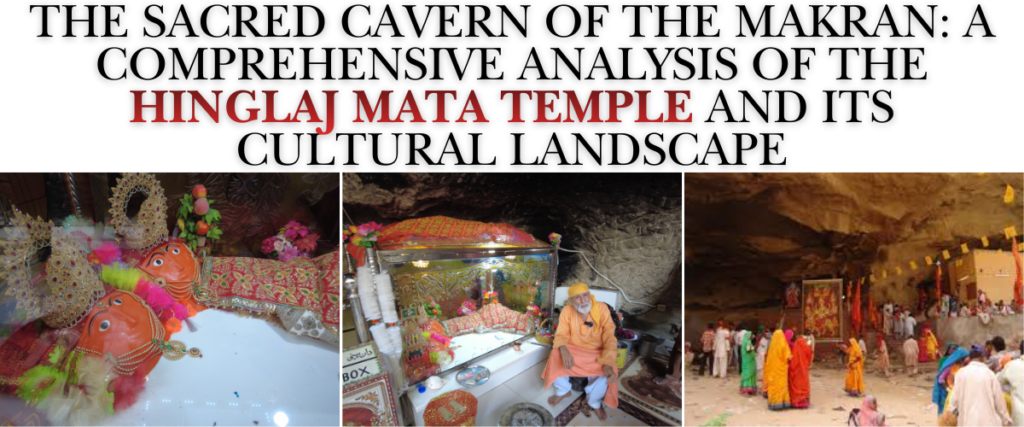
The Sacred Cavern of the Makran: A Comprehensive Analysis of the Hinglaj Mata Temple and its Cultural Landscape

The Sacred Cavern of the Makran: A Comprehensive Analysis of the Hinglaj Mata Temple and its Cultural Landscape

The Hinglaj Mata Temple, nestled in the desolate yet awe-inspiring mountain ranges of the Hingol National Park in Balochistan, represents a singular intersection of profound spirituality, geological marvel, and cross-cultural heritage. Known locally as Nani Mandir or Bibi Nani, the shrine is not merely a religious destination for the Hindu minority but is a site of shared reverence that bridges the deep theological divides between the Hindu and Muslim communities of the region. As one of the fifty-one primary Shakti Peethas of the Hindu tradition, the temple holds a paramount status in the Shaktism denomination, believed to be the spot where the Brahmarandhra, or the crown of the head, of the goddess Sati fell after her body was dismembered by the god Vishnu. This article explores the multifaceted identity of Hinglaj Mata, examining its mythological foundations, its historical evolution from the pre-Islamic era to the modern day, the unique geomorphological landscape that defines its setting, and the contemporary socio-political initiatives that have seen it elevated to a global tourism site in 2025.

The Sacred Cavern of the Makran: A Comprehensive Analysis of the Hinglaj Mata Temple and its Cultural Landscape Read More »

Nutritional and Clinical Analysis of Kiwifruit Bioactives in Human Health and Disease Mitigation

Nutritional and Clinical Analysis of Kiwifruit Bioactives in Human Health and Disease Mitigation

Botanical Evolution and Global Agricultural History

The kiwifruit, historically categorised within the genus Actinidia, represents a singular success story in modern horticulture, transitioning from an indigenous wild fruit of the Yangtze River valley in China to a globally dominant commercial crop. Originally recognised as the Chinese gooseberry, the fruit was highly valued in its native territories for both its unique flavour and its application in traditional medicinal practices, where it was often used to address digestive ailments and inflammatory conditions. The species most commonly associated with global trade, Actinidia deliciosa (green kiwifruit) and Actinidia chinensis (golden kiwifruit), owe their international proliferation to the early twentieth-century transport of seeds. In 1904, Mary Isabel Fraser brought the first seeds from China to New Zealand, initiating a period of domestic cultivation that would eventually redefine the fruit’s identity.

Nutritional and Clinical Analysis of Kiwifruit Bioactives in Human Health and Disease Mitigation Read More »

Scroll to Top