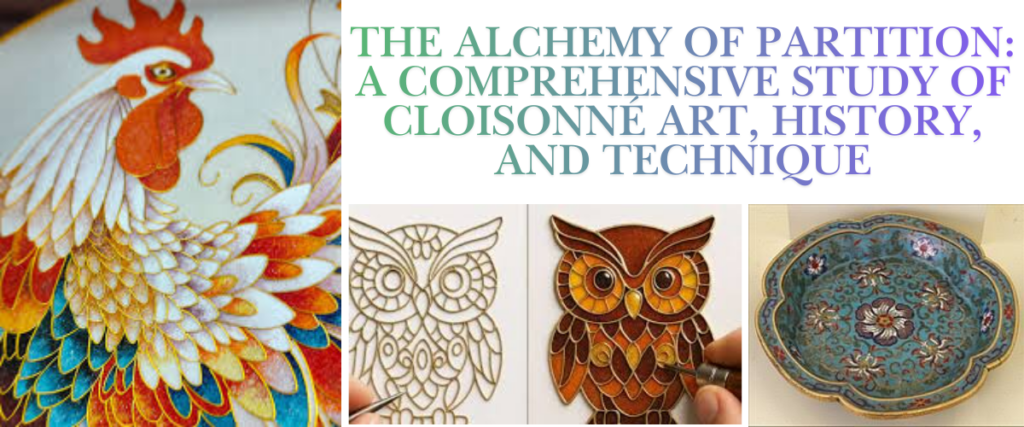
The Alchemy of Partition: A Comprehensive Study of Cloisonné Art, History, and Technique
The history of decorative arts is punctuated by efforts to capture the fleeting brilliance of light within the permanence of metal and stone. Among these endeavours, cloisonné stands as perhaps the most sophisticated synthesis of metallurgy, glasswork, and chemistry. The term cloisonné, derived from the French word cloison, meaning “partition” or “compartment,” refers to an ancient technique for decorating metalwork objects with colored vitreous enamel or inlays of cut gemstones and glass. At its most fundamental level, the art form involves the creation of delicate metal enclosures upon a substrate—typically copper, silver, or gold—which are then filled with colored material and fused through intense heat. The resulting surface is a luminous mosaic where the structural metal wires remain visible, acting both as boundaries for the colour and as an integral part of the aesthetic design.
The Alchemy of Partition: A Comprehensive Study of Cloisonné Art, History, and Technique Read More »