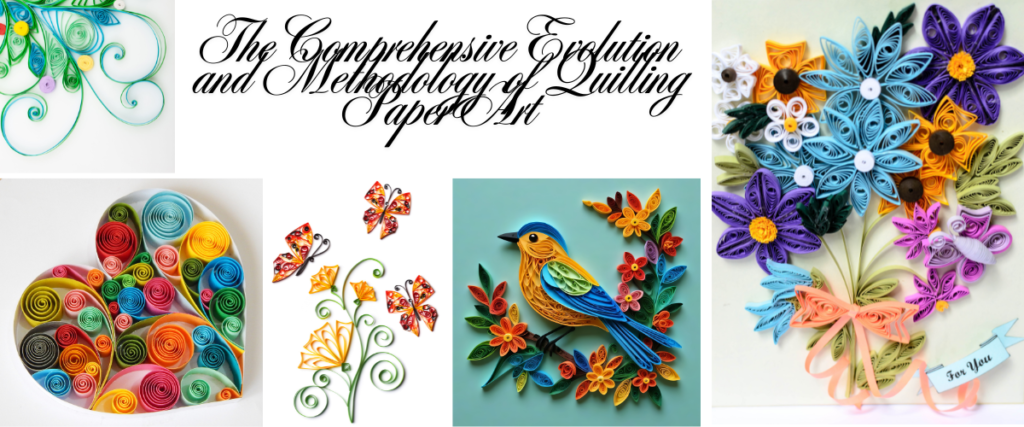
The art of quilling, historically referred to as paper filigree, paper scrolling, or mosaic, represents a sophisticated intersection of material science, artistic expression, and historical upcycling. It is a form of handmade art that involves the meticulous manipulation of thin strips of paper—rolling, coiling, curling, and twisting—which are then shaped and bonded with adhesives to form intricate three-dimensional designs. While the contemporary revival of quilling has transformed it into a medium for high-end typography, wearable jewellery, and architectural miniatures, its roots are deeply embedded in religious devotion and socio-economic adaptation across multiple centuries. The name itself is a historical artifact, derived from the goose feather quills originally used by nuns and monks to roll the paper strips. This article provides an exhaustive analysis of quilling’s historical trajectory, its technical foundations, the engineering of specialised tools, and the emerging trends defining the medium in the mid-2020s.