January 2026

Harmonic Convergence: A Comprehensive Treatise on the Intersections of Music and Visual Art

Harmonic Convergence: A Comprehensive Treatise on the Intersections of Music and Visual Art

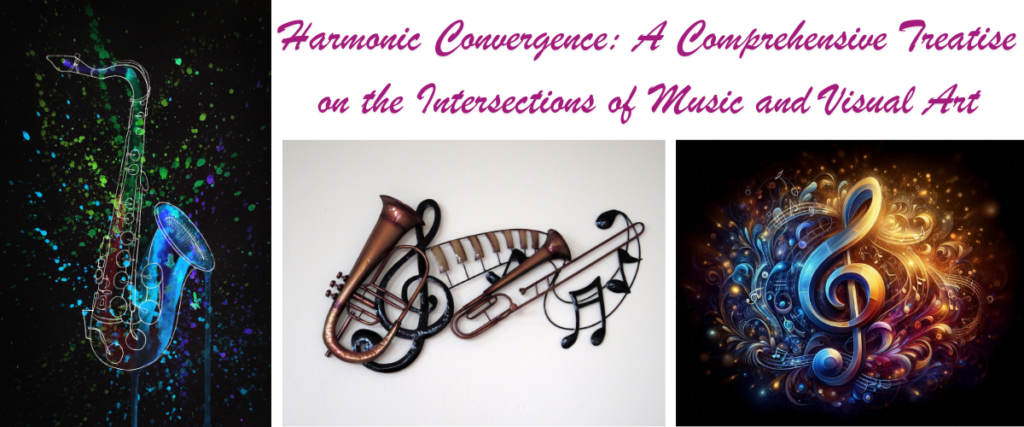
The history of human expression is often categorised into distinct sensory silos: the visual arts, occupied with space, light, and static form; and music, the domain of time, rhythm, and invisible vibration. Yet, this segregation is a relatively modern bureaucratic convenience rather than an artistic reality. For millennia, artists, philosophers, and scientists have pursued a unified theory of perception—a “visual music” where the eye might hear, and the ear might see. This pursuit is not merely a stylistic experiment but a fundamental inquiry into the neurological and spiritual architecture of human consciousness.

Harmonic Convergence: A Comprehensive Treatise on the Intersections of Music and Visual Art Read More »

The Slow Travel Movement: Why Trains Are the New Planes

The Slow Travel Movement: Why Trains Are the New Planes

The trajectory of global travel in the twenty-first century has undergone a profound and unexpected curvature. For the better part of five decades, the dominant narrative of human mobility was defined by the conquest of time. The jet engine, a marvel of mid-century engineering, shrank the globe, turning transcontinental journeys that once took weeks into mere hours. Velocity was the currency of the modern age; the destination was the product, and the journey was merely a friction cost—a logistical hurdle to be minimised, accelerated, and ultimately ignored. However, as we stand in 2025 and look toward 2026, a paradigm shift of seismic proportions is reshaping the way the world moves. We are witnessing the end of the era of hyper-acceleration and the dawn of the Slow Travel Movement.

The Slow Travel Movement: Why Trains Are the New Planes Read More »

Screen-Time Boundaries: Scientific Approaches to Healthy Tech Habits

Screen-Time Boundaries: Scientific Approaches to Healthy Tech Habits

In the span of a single generation, the human experience has undergone a radical transformation mediated by the ubiquitous presence of digital technology. The integration of high-definition screens into the fabric of daily life—from the moment of waking to the final moments before sleep—has fundamentally altered the biological and psychological landscape of the human species. As we navigate the mid-2020s, the discourse surrounding “screen time” has matured from early alarmist reactions to a sophisticated, multidisciplinary field of study encompassing neuroscience, optometry, developmental psychology, and behavioural economics. The question is no longer whether we should use screens, but how we can establish boundaries that align with our evolutionary biology while navigating an increasingly digitised existence.

Screen-Time Boundaries: Scientific Approaches to Healthy Tech Habits Read More »

Information-Technology-Industry

The Maturation of the Machine: IT Industry Deep Dive Report (Week Ending January 16, 2026)

The week ending January 16, 2026, signalled the IT sector’s pivot to an “Industrialisation Phase” defined by ruthless AI operationalisation. As OpenAI introduced ads and Wikimedia commercialised knowledge, TSMC reported massive high-performance computing demand. Yet, severe Apple and Microsoft security failures exposed the fragility underlying this rapid expansion.

The Maturation of the Machine: IT Industry Deep Dive Report (Week Ending January 16, 2026) Read More »

Weekly-Financial-Review-

Global Market Intelligence Report: Structural Divergence and Policy Friction

The week ending January 16, 2026, was defined by the collision of “AI Supercycle” optimism and unprecedented political friction regarding Federal Reserve independence. While US small-caps surged 2.0% in a “Great Rotation,” European luxury sectors crumbled, underscoring a global market fractured by policy divergence and sticky inflation.

Global Market Intelligence Report: Structural Divergence and Policy Friction Read More »

The Aesthetics of the Absurd: A Comprehensive Report on Quirky Art, Pop Surrealism, and the Evolution of Taste

The Aesthetics of the Absurd: A Comprehensive Report on Quirky Art, Pop Surrealism, and the Evolution of Taste

The Philosophy of the Quirk

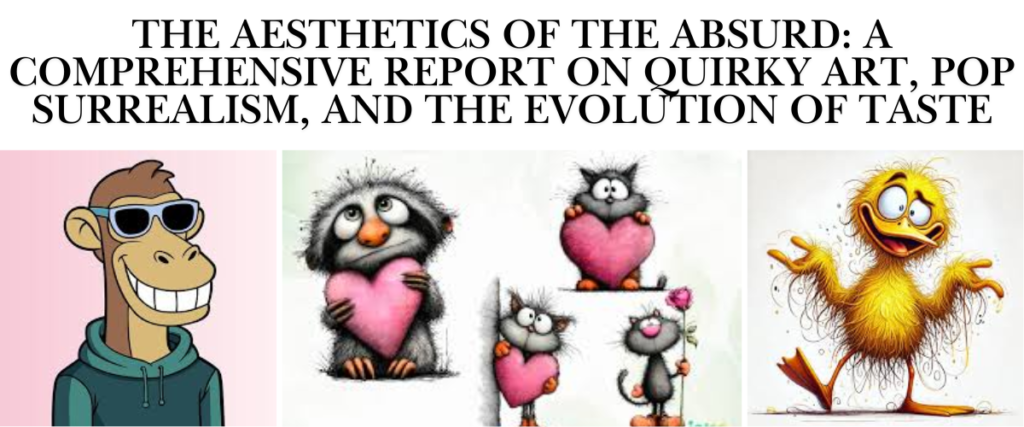
The landscape of contemporary art is no longer defined solely by the solemnity of the white cube gallery or the rigid academic standards of the past. Instead, a vibrant, chaotic, and deeply psychological movement has taken hold—a broad categorisation often referred to colloquially as “Quirky Art.” To define this aesthetic is to attempt to categorise a sensibility that is inherently resistant to categorisation. It is an umbrella term that captures a diverse range of unconventional styles, encompassing everything from whimsical illustrations and “Lowbrow” paintings to shocking, hyper-realistic sculptures of meat and duct-taped fruit. At its core, quirky art is characterised by its deviation from traditional norms of beauty, logic, and decorum. It embraces the weird, the ironic, and the humorous, often merging multiple mediums—collage, painting, sculpture, and digital art—to express ideas that traditional fine art might consider taboo, trivial, or simply too strange.

The Aesthetics of the Absurd: A Comprehensive Report on Quirky Art, Pop Surrealism, and the Evolution of Taste Read More »

Scroll to Top