Introduction to the Cosmic Collision
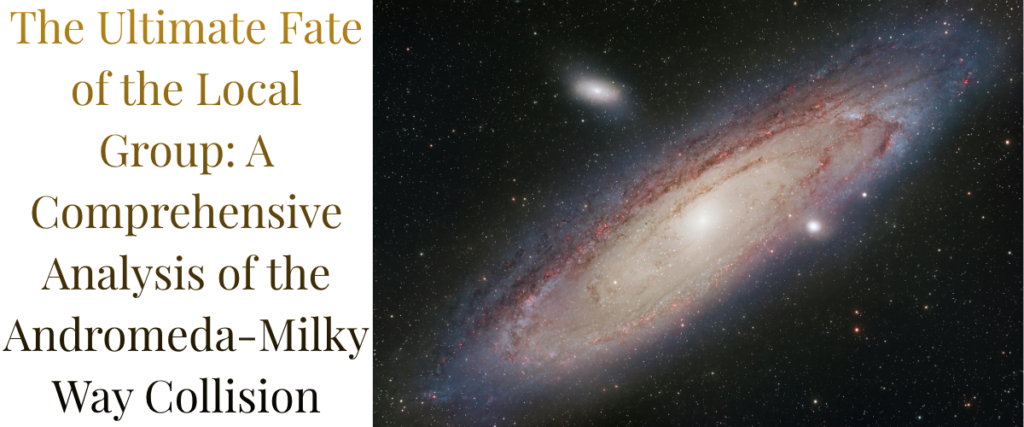
For more than a century, astronomers have gazed toward the Andromeda constellation and observed a faint, cigar-shaped smudge of light that represents our closest galactic neighbour, Messier 31 (M31), commonly known as the Andromeda Galaxy. Since September 1912, when astronomer Vesto Slipher first exposed a spectrum of the Andromeda Nebula at the Lowell Observatory and measured a blueshift of approximately 300 kilometres per second, the scientific community has known that this massive spiral galaxy is hurtling toward the Milky Way. Separated by approximately 2.537 million light-years (780 kiloparsecs), these two colossal island universes anchor the Local Group, a collection of roughly 40 to 50 dwarf and satellite galaxies bound together by their mutual gravitational attraction.
For decades, the overarching consensus within the astrophysical community was one of deterministic finality: the Milky Way and Andromeda were on an inescapable collision course. Early models, relying predominantly on radial velocity—the speed at which an object moves directly toward or away from the observer—indicated an approach speed of roughly 110 to 120 kilometres per second. Based on these measurements, a head-on collision or a catastrophic sideswipe seemed inevitable, with a predicted convergence occurring in approximately 4 to 5 billion years.
However, the dynamics of the Local Group are far more intricate than a simple two-body problem, and modern cosmology has revealed that estimating the true trajectory of galaxies requires an understanding of transverse velocity, dark matter distributions, and multi-body gravitational perturbations1. The precise destiny of the Milky Way and Andromeda is dictated not only by their immense masses and radial velocities but also by their tangential velocities—their sideways motion across the sky, known as proper motion. Measuring the proper motion of an object 2.5 million light-years away is an extraordinary technical challenge, requiring precision on the scale of microarcseconds1. Furthermore, the gravitational influence of satellite galaxies, specifically the Triangulum Galaxy (M33) and the Large Magellanic Cloud (LMC), exerts a profound perturbing effect on the trajectories of the two primary titans1.
This report provides an exhaustive, expert-level analysis of the impending interaction between the Milky Way and the Andromeda Galaxy. By synthesising the latest astrometric data from the Gaia mission, the Hubble Space Telescope, and advanced cosmological N-body simulations, this analysis explores the mechanics of galactic mergers, the shifting probabilities of the collision, the nature of the dark matter halos driving the interaction, the fate of the Solar System, the behaviour of supermassive black holes, and the ultimate evolution of the Local Group.
The Timing Argument and Early Dynamical Paradigms
The foundational theoretical framework for understanding the collision between the Milky Way and Andromeda relies heavily on a concept known as the “timing argument,” pioneered by Kahn and Woltjer in 1959. The timing argument posits a fundamental cosmological scenario: the Milky Way and Andromeda formed in close proximity to one another during the dense, early stages of the universe. Initially, they were pulled apart by the general cosmological expansion of the universe. However, because their mutual gravitational attraction exceeded the force of cosmic expansion locally, they subsequently reversed their paths and are now approaching one another3.
According to this paradigm, the Milky Way and Andromeda have traced out nearly a full period of their orbital motion, governed entirely by Kepler’s laws of planetary motion applied on a galactic scale. By assuming that the Local Group system has zero net angular momentum, and by utilising the current separation distance, the velocity of approach, and the estimated age of the universe, the timing argument yields critical estimates for the fundamental parameters of the Local Group3. Early calculations using this method suggested a total mass for the Local Group exceeding 3 trillion solar masses, a semi-major orbital axis of less than 580 kiloparsecs, and a time for the next close passage exceeding 4 billion years3.
While the timing argument provides an elegant foundational model, it inherently oversimplifies the Local Group by treating it as a closed, isolated, and strictly two-body system without angular momentum. The reality is that the Local Group is embedded within a broader cosmological web, subjected to tidal forces from nearby galaxy clusters, and populated by massive satellite galaxies that inject angular momentum and disrupt Keplerian simplicity1. Consequently, modern astrophysics has moved beyond the timing argument, relying instead on sophisticated N-body hydrodynamic simulations and highly precise astrometric measurements to map the mass distribution and orbital kinematics of the Local Group.
Assessing the Mass and Dark Matter Frameworks of the Titans
To accurately simulate the future mechanics of a galactic merger, astronomers must precisely define the total mass of the interacting bodies. The visible components of galaxies—stars, gas, and dust—represent only a small fraction of their gravitational authority. The gravitational dynamics of the Local Group are overwhelmingly governed by dark matter, a non-baryonic, invisible framework that extends far beyond the luminous disks of the galaxies. Dark matter halos act as gravitational anchors, soaking up energy and angular momentum during galaxy interactions, and their total mass is the primary variable in predicting the timing and severity of any galactic collision.
Discrepancies in Mass Measurements
Estimating the exact mass of these dark matter halos remains a subject of rigorous scientific inquiry, characterised by competing methodologies and slight discrepancies in the resulting data. The Andromeda Galaxy possesses a stellar mass roughly twice that of the Milky Way, containing an estimated one trillion stars compared to the Milky Way’s 300 billion. However, when calculating the total virial mass—the mass enclosed within a radius where the galaxy’s density is 200 times the critical density of the universe, denoted as M200—the two galaxies are surprisingly comparable, though determining which is ultimately more massive remains controversial.
The mass of the Milky Way and Andromeda is typically derived using various dynamical tracers:
- Rotation Curves: The cold gaseous disk of a galaxy serves as an excellent tracer of the underlying mass distribution. By observing the rotational velocities of Hydrogen I (H I) gas and combining it with the velocities of stars and globular clusters, astronomers construct a “grand rotation curve” (GRC). For Andromeda, GRC methods have yielded total mass estimates of 1.39 +/- 0.26 trillion solar masses within 200 kiloparsecs, or a virial mass of 800 billion to 1.1 trillion solar masses.
- Tidal Orbit Modelling: Recent massive mergers create giant stellar streams in the halos of galaxies. By directly fitting the orbits of the giant stream in Andromeda’s halo, some models have suggested a lower total mass of 750 billion solar masses within 125 kiloparsecs.
- Satellite Kinematics: The orbits of dwarf satellite galaxies provide critical constraints on the mass of the primary halo. For the Milky Way, the Leo I dwarf spheroidal galaxy plays an outsized role in these calculations due to its extreme distance (260.6 kiloparsecs) and high Galactocentric radial velocity (167.9 kilometres per second). If the Milky Way’s dark matter halo were of low mass, a satellite moving as fast as Leo I at that distance would be gravitationally unbound and escape into intergalactic space. Because Leo I is presumed to be bound, cosmological models dictate that the Milky Way’s virial mass must be greater than 1 trillion solar masses at a 95% confidence interval, with median estimates around 1.6 trillion solar masses.
| Galaxy | Tracer Method | Estimated Virial Mass (M200) | Stellar Mass (Solar Masses) |
| Milky Way | Satellite Kinematics (Leo I) | ~1.0 – 2.4 trillion | ~50 – 100 billion |
| Milky Way | Grand Rotation Curve | ~700 – 900 billion | ~50 – 100 billion |
| Andromeda (M31) | Grand Rotation Curve | ~800 billion – 1.1 trillion | ~100 – 150 billion |
| Andromeda (M31) | Tidal Stream Modelling | ~500 billion – 1.5 trillion | ~100 – 150 billion |
Theoretical Frameworks: Lambda-CDM vs. MOND
The interpretation of these mass profiles is heavily dependent on the chosen theoretical framework. The standard cosmological model, Lambda-CDM (Lambda Cold Dark Matter), assumes that dark matter dictates galactic rotation and relies heavily on density profiles such as the Navarro-Frenk-White (NFW) profile or the Einasto profile. Recent analysis utilising astrometric and spectro-photometric data for over 719,000 young disk stars from Gaia Data Release 3 (DR3) revealed that beyond 10 to 15 kiloparsecs from the galactic centre, non-baryonic contributions to the Milky Way’s rotation curve become overwhelmingly dominant. Interestingly, when modelled under the Lambda-CDM framework using an Einasto density profile, the Milky Way’s virial mass was estimated at an exceptionally high 1.5 to 2.5 trillion solar masses, which significantly exceeds values derived from models featuring a standard NFW profile.
Conversely, Modified Newtonian Dynamics (MOND) attempts to explain rotation curves without invoking invisible dark matter, proposing a modification to the laws of gravity at extremely low accelerations. While both MOND and Lambda-CDM frameworks are statistically equivalent in representing the observed rotational velocities within the inner galaxy (up to 19 kiloparsecs), Lambda-CDM requires the injection of massive dark matter halos to account for the outer kinematics. Additionally, highly speculative frameworks such as Fractional-Dimension Gravity (FDG) have been proposed, which analyse the Gaia DR3 rotation curve data and suggest that in galactic regions where the space dimension is mathematically less than 3, effective superluminal motion could theoretically occur, offering radical new perspectives on gravitational geometry, though this remains entirely outside the accepted cosmological consensus. For the purpose of predicting the Local Group merger, the standard Lambda-CDM framework remains the robust operational standard, as it effectively accounts for the dynamical friction necessary to complete a galactic merger.
The Four-Body Dynamical Landscape: Satellite Perturbations
Historically, numerical simulations of the Milky Way-Andromeda collision treated the event in isolation, modelling a purely two-body interaction1. Modern astrophysics, however, recognises that the Local Group is a chaotic, multi-body environment. The gravitational dynamics of the Local Group cannot be resolved without accounting for two massive satellite galaxies that possess enough mass to radically alter the orbital mechanics of the primary galaxies: the Triangulum Galaxy (M33) and the Large Magellanic Cloud (LMC)1.
The Triangulum Galaxy (M33)
Located approximately 3 million light-years from Earth, M33 is the third-largest member of the Local Group. It is gravitationally bound to Andromeda, orbiting within its extended dark matter halo. With a stellar mass of 3 to 5 billion solar masses, M33 is cosmologically expected to have a dark matter mass on the order of 100 billion solar masses, representing roughly 10 per cent of the total mass of the Andromeda system.
The mass of M33 adds directly to the gravitational pull of the Andromeda system, effectively drawing the Milky Way toward it with greater force. Recent cosmological models examining the orbital energies of M33 analogues indicate that M33 is either on its first infall passage toward Andromeda (having arrived less than 2 billion years ago) or is on a highly eccentric, long-period orbit of about 6 billion years. Regardless of its specific orbital phase, the inclusion of M33 in four-body simulations inherently increases the probability of a Milky Way-Andromeda merger by deepening the total gravitational potential well of the M31 system3.
The Large Magellanic Cloud (LMC)
The Large Magellanic Cloud is the most massive satellite of the Milky Way, located a mere 160,000 light-years away3. Historically treated as a minor perturbing factor, recent cosmological models indicate that the LMC possesses a dark matter halo of its own with a mass exceeding 100 billion solar masses—representing up to 10 to 25 per cent of the Milky Way’s total mass enclosed within a similar radius. The LMC is so massive that it hosts its own “Magellanic Corona,” a collisionally ionised, warm-hot gaseous halo initially extending out to its own virial radius of 100 to 130 kiloparsecs.
Crucially, the orbit of the LMC runs roughly perpendicular to the axis connecting the Milky Way and Andromeda3. As this enormous mass plunges into the Milky Way’s halo, it induces a profound reflex motion1. The gravitational pull of the LMC physically displaces the barycenter (centre of mass) of the Milky Way, pulling our galaxy sideways relative to Andromeda’s approach1. In the intricate choreography of a galactic merger, this satellite-mediated lateral shift acts as an evasive maneuver, directly counteracting the radial gravitational pull of Andromeda and significantly altering the impact geometry1.
The Circumgalactic Medium: An Ongoing Interaction
When discussing the collision between the Milky Way and Andromeda, the timeline is conventionally placed billions of years in the future. However, a deeper insight into galactic anatomy reveals that this framing is fundamentally flawed. In terms of their extended gaseous envelopes, the collision is not a future event—it has already begun.
Galaxies are not strictly defined by the boundaries of their starlight. Surrounding the visible stellar disks of both the Milky Way and Andromeda are vast, nearly invisible spheres of diffuse plasma known as the circumgalactic medium (CGM). The CGM acts as a vital interface between the interstellar medium of the galaxy and the intergalactic space, playing a crucial role in gas accretion, recycling enriched materials, and driving galactic feedback from supernovae and stellar winds into the outer halo.
Insights from Project AMIGA
To map the elusive CGM of Andromeda, astronomers launched Project AMIGA (Absorption Maps In the Gas of Andromeda). Utilising the Cosmic Origins Spectrograph on the Hubble Space Telescope, alongside data from the Far Ultraviolet Spectroscopic Explorer, researchers observed the ultraviolet light from 43 distant quasars (active galactic nuclei powered by black holes) positioned far behind Andromeda. As the light from these quasars passed through Andromeda’s halo, specific wavelengths were absorbed by ionised gases, allowing scientists to map the density and extent of the medium.
The survey analysed ultraviolet absorption measurements of specific metal ions, including Silicon II, Silicon III, Silicon IV, Carbon II, Carbon IV, and Oxygen VI. The results were paradigm-shifting. The data demonstrated that Andromeda possesses a very extended, warm-hot ionised CGM with temperatures ranging from 10,000 to 316,000 Kelvin. The metal and baryon masses of this warm-hot gas within the halo were found to be exceptionally massive, with baryon masses exceeding 40 billion solar masses.
Most astonishingly, the physical extent of this halo was mapped out to 1.3 million light-years from the galaxy’s centre, and in some directions, it reaches as far as 2 million light-years1. Fast Radio Burst (FRB) dispersion measures, specifically from FRB 20230930A and FRB 20230506C, have further corroborated the existence of this extended hot halo, allowing researchers to isolate Andromeda’s contribution to the dispersion measure and confirm the presence of diffuse plasma at immense impact parameters.
Because the physical distance between the stellar disks of the Milky Way and Andromeda is approximately 2.5 million light-years, and the Milky Way is presumed to possess a similarly expansive CGM mapping deep into the Local Group volume, the outer boundaries of the two halos are currently overlapping. The diffuse, highly ionised plasma of both galaxies is already physically interacting and intermingling. Therefore, the galactic collision is currently in its initial, invisible phase, defined by the slow interpenetration of their respective circumgalactic media.
Astrometry and the Shifting Probability of Collision
While the gaseous halos are already touching, the ultimate fate of the dense stellar disks remains a subject of intense scientific debate. The trajectory of Andromeda depends acutely on its proper motion (transverse velocity). If the transverse velocity is zero, the galaxies will suffer a direct, head-on collision. If the transverse velocity is high, they may pass each other at a vast distance, potentially escaping a merger for tens of billions of years.
The Historical Consensus
In 2012, researchers utilising the Hubble Space Telescope managed to track the minute shifts of stars within Andromeda over a five-to-seven-year baseline. They concluded that Andromeda’s transverse velocity was vanishingly small—less than 17 kilometres per second1. Taking into account the Sun’s motion within the Milky Way, this data suggested that the lateral motion was statistically consistent with zero given the uncertainty. The scientific community widely accepted that a direct collision was highly likely, predicted to occur in roughly 4 to 5 billion years.
The Gaia Disruption and the Coin Toss
This deterministic view was heavily disrupted by the European Space Agency’s Gaia spacecraft, which is actively mapping the positions, parallaxes, and proper motions of billions of stars with unprecedented precision2. In 2025, a landmark study by Till Sawala and colleagues utilised updated Gaia data and introduced the four-body dynamics of the Local Group, factoring in the LMC and M331.
By running 100,000 Monte Carlo simulations to account for the uncertainties in current observational data, the Sawala team discovered a startling divergence from previous models. The simulations revealed that the gravitational pull of the LMC—which is currently near its closest approach to the Milky Way—shifts the Milky Way’s velocity perpendicular to the Andromeda orbital plane1. This satellite-mediated reflex motion vastly increases the miss distance between the two galaxies.
The findings were radical: according to the 2025 study, there was a near 50% probability that the Milky Way and Andromeda would not merge within the next 10 billion years3. In half of the simulated scenarios, the galaxies flew past each other with roughly 500,000 light-years of clearance, entering a gradual, long-term orbital decay driven by dynamical friction. The fate of the Local Group had been downgraded from an inevitable collision to a cosmic coin toss.
The Pendulum Swings Back: Systematics and the 90% Probability
The scientific process is iterative, and the 50% probability did not stand as the final word for long. In early 2026, a subsequent study by Hao Wu, Yang Huang, and colleagues revisited the Sawala framework1. The critical difference in this newer analysis was the application of rigorous corrections for systematic offsets in the Gaia Data Release 3 (DR3) astrometry regarding M31 and M33.
When these systematic errors in the proper motion were accounted for, the transverse velocity of Andromeda was mathematically adjusted. Using the corrected data in the fiducial four-body model, Wu et al. found that the relative motion between the Milky Way and Andromeda became noticeably more radial. The merger probability skyrocketed back to 90%, broadly restoring the classical picture, with a median merger time estimated at 6.5 billion years (with an uncertainty range extending from 5.0 to 7.8 billion years)1.
Future Observational Milestones: Gaia DR4 and Roman
This rapid oscillation in predictive models yields a profound second-order insight: the future of the entire Local Group hinges on incredibly delicate astrometric parameters. The sensitivity analysis demonstrated that the merger probability depends entirely on the adopted proper motion of M31 through two specific channels:
- The Direct Effect: The radial-tangential balance of the primary orbit dictates how closely the galactic cores will approach on their first pass1.
- The Satellite-Mediated Effect: The initial proper motion of M31 fixes the orbital plane of the interaction. This plane dictates exactly how the LMC’s lateral reflex motion on the Milky Way will interact with Andromeda’s trajectory, either amplifying the miss distance or cancelling it out.
Given the current 2-sigma error margins in observational data, the true probability of a merger within 10 billion years spans anywhere from 64.7% to 100%1. To definitively settle the matter and constrain the probability range within 10% at the 2-sigma level, astronomers require proper motion measurements with an uncertainty of less than 2 microarcseconds per year1.
This extreme level of precision is anticipated from two imminent observational milestones:
- Gaia Data Release 4 (DR4): Expected in late 2026, Gaia DR4 will provide 5.5 years of continuous time-series data2. This release will drastically reduce astrometric noise by providing position, magnitude, Radial Velocity Spectrometer (RVS), and Blue/Red Photometer (BP/RP) time series2. This extended baseline will refine the proper motion vectors of Andromeda’s stellar population to unprecedented levels2.
- The Nancy Grace Roman Space Telescope: Launching in late 2026, the Roman Space Telescope will conduct a high-cadence, wide-field time-domain survey in the near-infrared4. Utilising a Three-Mirror Anastigmat design featuring an ellipsoidal primary mirror, a hyperbolic secondary, and an ellipsoidal tertiary mirror, Roman will achieve Hubble-like optical resolution over a significantly wider field of view (surveying the sky 1,000 times faster than Hubble). Through its Core Community Surveys, Roman will provide photometric measurements of hundreds of millions of stars, allowing astronomers to anchor the proper motion of Andromeda against distant, stationary background quasars to a precision of 3 to 10 microarcseconds, effectively ending the debate on the transverse velocity of M314.
The Mechanics of the Merger: A Choreography of Gravity
Assuming the 90% probability holds true, the physical merger of the Milky Way and Andromeda will be a protracted, violent, and transformative process spanning billions of years. The collision will not be a singular impact, but a prolonged gravitational dance governed by the physics of dynamical friction and violent relaxation.
The First Close Encounter and Galactic Starbursts
In approximately 4.3 to 4.5 billion years, Andromeda will make its first close passage. As the two galaxies approach, their immense gravitational fields will exert immense tidal forces upon one another, stretching and distorting their iconic spiral disks.
While the stars themselves will remain physically unharmed due to the vast distances between them, the interstellar medium—the immense clouds of cold molecular hydrogen gas permeating the spiral arms of both galaxies—will not. As the galaxies interpenetrate, these gas clouds will collide at supersonic speeds, generating immense shock waves. This sudden, extreme compression of gas will trigger a phenomenon known as a “starburst”. Across the warped spiral arms, millions of massive, brilliant blue stars will ignite simultaneously. This intense burst of star formation will consume a significant portion of the remaining molecular gas in both galaxies, rapidly depleting their reservoirs for future stellar generation and artificially accelerating their aging process.
Dynamical Friction and Orbital Decay
Following the first pass, the galaxies will not fly apart forever. They will be ensnared by the inexorable force of dynamical friction. As the dense stellar core of Andromeda ploughs through the extended dark matter halo of the Milky Way (and vice versa), the gravitational wake created behind the moving cores will exert a massive drag force. The dark matter halos act as vast cosmic sponges, absorbing the orbital kinetic energy and angular momentum of the galaxies3.
Because of this transfer of energy from the visible galaxies into the dark matter halo, the galaxies will lack the escape velocity necessary to separate entirely. They will reach an apocenter (maximum separation) before falling back toward one another for a second, closer encounter1. With each subsequent pass, the orbital period shrinks, and the tidal forces become more destructive, ripping long, sweeping “tidal tails” of stars and gas out into intergalactic space.
The Impossibility of Stellar Collisions
A common, intuitive misconception is that the collision of two galaxies—containing a combined total of roughly 1.3 trillion stars—will result in catastrophic stellar impacts. In reality, the probability of even two individual stars colliding is infinitesimally small.
The distances separating stars within a galaxy are staggering compared to their physical diameters. The average distance between stars in the Milky Way is roughly 100 to 160 billion miles. To visualise this scale, if the Sun were shrunk to the size of a ping-pong ball, the nearest star, Proxima Centauri, would be a pea located 1,100 kilometres (680 miles) away, and the Milky Way would be 30 million kilometres wide. The galaxies are fundamentally composed of empty space. Therefore, when the Milky Way and Andromeda intersect, their stellar populations will pass through one another seamlessly, mingling without direct physical contact.
The Fate of the Solar System and Astrobiological Implications
While the Sun will not physically collide with another star, the gravitational landscape of the Solar System’s orbit will be completely rewritten, with profound implications for the structure of our planetary system.
Currently, the Sun resides securely in the Orion Spur of the Milky Way’s spiral arms, orbiting the galactic centre at a distance of about 8 kiloparsecs (26,000 light-years). During the merger, this ordered, near-circular rotation will be permanently disrupted by violent relaxation. N-body/hydrodynamic simulations, such as those pioneered by T.J. Cox and Abraham Loeb, forecast several potential outcomes for the Solar System depending on its exact position during the encounters:
- Ejection into a Tidal Tail: During the first close encounter, there is a 12% probability that the Sun will be ripped from its current orbit and flung outward into an extended tidal tail of debris streaming away from the main galactic body.
- Galactic Defection: As the galaxies mingle their stellar populations, there is a remote probability (less than 3%) that the Sun could jump ship entirely, becoming more tightly bound to the gravitational pull of Andromeda than to the Milky Way before the final merger completes.
- Exile to the Halo: As the merger concludes, the most likely outcome is that the Solar System will be scattered into the outer halo of the newly formed elliptical galaxy. Scientists predict a 50% chance that the Sun will be swept out to a galactocentric radius of more than 30 kiloparsecs (roughly 100,000 light-years), stripping it of its current view of a dense galactic core.
The Theory of Lithopanspermia During Galactic Mergers
While the Earth will likely be uninhabitable by the time the merger occurs due to the Sun’s evolution into a red giant, the massive gravitational disruption of a galactic collision presents fascinating astrobiological implications. Theoretical models of “panspermia”—the hypothesis that life exists throughout the universe and is distributed by space dust, meteoroids, and asteroids—suggest that galactic collisions could serve as a macro-mechanism for biological dispersal.
During the violent gravitational scattering of the merger, billions of planetary systems will be disrupted. Oort clouds and Kuiper belts will be heavily perturbed, sending trillions of comets and bolides careening through stellar systems. In extreme cases, entire planets harbouring basic biological material could be ejected from their host stars as rogue planets. As the stars of the Milky Way and Andromeda exchange places, this biological material could be captured by newly forming solar systems within the post-merger starburst regions, theoretically allowing for the cross-pollination of biological precursors across the two formerly distinct galaxies.
The Coalescence of Supermassive Black Holes
At the heart of both the Milky Way and Andromeda lie supermassive black holes (SMBHs). The Milky Way hosts Sagittarius A*, a black hole with a mass of roughly 4.1 million solar masses, while Andromeda’s central black hole is significantly larger, estimated at over 100 million solar masses. The fate of these two cosmic leviathans is one of the most violent consequences of the galactic merger.
As the stellar components of the galaxies merge, the two supermassive black holes will not immediately collide. Instead, they will lose orbital energy through dynamical friction with the dense background of stars and gas, causing them to slowly sink toward the gravitational centre of the newly forming galaxy. Here, they will form a supermassive black hole binary, spiralling around one another.
Advanced N-body simulations conducted by astrophysicist Riccardo Schiavi and his team suggest that the black holes will coalesce approximately 16.6 million years after the main galactic bodies complete their merger. As the binary tightens and the black holes approach within one light-year of each other, they will begin to emit intense, low-frequency gravitational waves. These ripples in the fabric of spacetime will radiate tremendous amounts of orbital energy, driving the final rapid inspiral and coalescence of the black holes.
The resulting gravitational wave emission from this coalescence would be incredibly powerful, detectable by any advanced civilisation possessing technology akin to the proposed Laser Interferometer Space Antenna (LISA) up to a redshift of z <= 2. Interestingly, gravitational wave signals from such massive mergers can be subjected to gravitational lensing. Similar to the hypothesised lensing of event GW231123, where spacetime warps made a black hole merger appear more massive than it was, extragalactic observers could witness multiple, magnified echoes of the Milkomeda black hole collision, offering profound insights into the nature of gravity.
Furthermore, if a sufficient quantity of gas is funnelled into the binary system during the final merger phase, the combined black hole could awaken into an active galactic nucleus (AGN) or quasar. This event would release an inconceivable amount of high-energy radiation, clearing out any remaining gas in the galaxy’s centre and permanently halting future star formation through AGN feedback.
The Post-Merger Epoch: Milkomeda and the End of the Universe
When the violent relaxation of the stars is complete, the spiral structures that currently define the Milky Way and Andromeda will be entirely erased. The ordered, rotating disks will be replaced by randomised, swarm-like stellar orbits.
The final merger product will be a giant elliptical galaxy, often colloquially referred to in astronomical literature as “Milkomeda” or “Milkdromeda”. The density profiles of the stars, gas, and dark matter in this new entity will closely resemble those of other massive ellipticals observed throughout the universe. Because the initial starbursts and subsequent AGN feedback will have consumed or expelled the vast majority of the cold molecular gas, Milkomeda will be a “red and dead” galaxy. It will possess very little active star formation, populated instead by an aging cohort of long-lived, low-mass red stars.
From the perspective of a hypothetical observer situated within the Solar System in its new halo orbit, the night sky will be radically transformed. The sharp, distinct band of the Milky Way that currently cuts across the sky will be gone. In its place, the core of the new elliptical galaxy will dominate the heavens as a massive, brilliantly glowing bulge spanning from horizon to horizon, devoid of the obscuring dust lanes and bright pink emission nebulae of our current epoch.
The Fate of Triangulum and the Outer Universe
The Triangulum Galaxy (M33) will also meet its end within this gravitational crucible. Depending on the exact orbital parameters during the initial encounter, M33 may be absorbed by Andromeda prior to the main collision, participate simultaneously in the Milky Way-Andromeda merger, or be relegated to orbiting the newly formed Milkomeda, only to be cannibalised billions of years later. Eventually, Milkomeda will assert total gravitational dominance, stripping and absorbing all remaining dwarf satellite galaxies in the Local Group.
An underlying cosmological reality provides a sobering footnote to the creation of Milkomeda. Due to the accelerated expansion of the universe driven by dark energy, all galaxies outside the Local Group are steadily receding. Given sufficient time, they will eventually cross the cosmic event horizon, their light forever stretched beyond detection. At that point in the deep future, the merger product of the Milky Way, Andromeda, and their bound satellites will constitute the entirety of the visible universe for any inhabitants within it.
Conclusion
The impending interaction between the Milky Way and the Andromeda Galaxy stands as a cornerstone of our understanding of galactic evolution. Far from a simple, head-on train wreck, the evolution of the Local Group is a deeply complex, multi-body dynamical process involving interacting dark matter halos, satellite-induced reflex motions from the LMC and M33, violent interstellar shocks, and the eventual coalescence of supermassive black holes. Furthermore, the detection of overlapping circumgalactic mediums, mapped by Project AMIGA, indicates that the outermost limits of these galaxies are already in physical contact, reframing the collision from a distant prophecy to an ongoing cosmological reality.
As precision astrometry continues to evolve with the advent of Gaia Data Release 4 and the Nancy Grace Roman Space Telescope, our predictive models will shift from statistical probabilities to deterministic certainty, allowing humanity to chart the exact timeline of the Local Group’s final metamorphosis into a singular, massive elliptical galaxy.
Disclaimer
The information, timelines, and probabilities presented regarding the projected interaction between the Milky Way and the Andromeda Galaxy (M31) are based on current astrophysical models, advanced N-body hydrodynamic simulations, and the latest available astrometric data. The gravitational dynamics of the Local Group represent a highly complex multi-body system, and the precise orbital mechanics are profoundly influenced by the mass and trajectories of satellite galaxies, particularly the Large Magellanic Cloud and the Triangulum Galaxy (M33). Consequently, all predictive models are highly sensitive to current observational uncertainties.
Furthermore, determining the exact trajectory of Andromeda relies on measuring its proper motion (transverse velocity) across the sky, which requires extreme precision on the scale of microarcseconds. These measurements are continually being updated and refined by ongoing and future astronomical missions, such as Gaia Data Release 4 and the Nancy Grace Roman Space Telescope. As observational technology advances and error margins decrease, the estimated probability of a collision, the timeline of the first close encounter, and the ultimate orbital fate of the Solar System are subject to significant revision. Therefore, the physical outcomes and timelines described herein should be understood as current scientific projections and probabilistic forecasts, rather than absolute deterministic certainties.
Author’s Note: The idea for this article was sparked by a conversation with Aadit Bhatnagar.
References
- What Happens When the Milky Way Collides With Andromeda?, https://www.youtube.com/watch?v=Sd095N6488I
- The Collision Between The Milky Way And Andromeda – arXiv, https://arxiv.org/pdf/0705.1170
- The merging of Milky Way and Andromeda’s supermassive black holes, https://www.zmescience.com/space/the-merging-of-milky-way-and-andromedas-supermassive-black-holes/
- Supermassive black hole: Andromeda’s and the Milky Way’s black, https://eusci.org.uk/2021/04/22/supermassive-black-hole-andromedas-and-the-milky-ways-black-holes-will-collide/
- The Collision Between The Milky Way And Andromeda, https://www.astr.tohoku.ac.jp/~noguchi/nature.pdf
- Andromeda–Milky Way collision – Wikipedia, https://en.wikipedia.org/wiki/Andromeda%E2%80%93Milky_Way_collision
- Milky Way-Andromeda Collision Overview | PDF | Galaxy – Scribd, https://www.scribd.com/document/659524939/Andromeda-Milky-Way-collision
- The Fate of the Milky Way–Andromeda System: To Merge or Not?, https://arxiv.org/html/2603.22863v1
- Artist’s views of a night sky transformed by a galaxy merger, https://www.planetary.org/articles/06041013
- H. E. Huckle’s research works | University College London, London, https://www.researchgate.net/scientific-contributions/H-E-Huckle-2116766069/publications/1
- Gaia Mission News – ESA Cosmos – European Space Agency, https://www.cosmos.esa.int/web/gaia/news
- [2408.00064] Apocalypse When? No Certainty of a Milky Way – arXiv, https://arxiv.org/abs/2408.00064
- Why the Andromeda-Milky Way Collision is INEVITABLE !! : r/space, https://www.reddit.com/r/space/comments/1l32c21/why_the_andromedamilky_way_collision_is_inevitable/
- [0705.1170] The Collision Between The Milky Way And Andromeda, https://arxiv.org/abs/0705.1170
- Constraining Mass of M31 Combing Kinematics of Stars, Planetary, http://www.raa-journal.org/issues/all/2022/v22n8/202208/P020220805565657028363.pdf
- Astrophysical and Cosmological Probes of Dark Matter, https://file.scirp.org/Html/7-7500789_23061.htm
- The Andromeda and Milky Way collision, explained, https://www.astronomy.com/science/the-andromeda-and-milky-way-collision-explained/
- Recovering the infall mass for Milky Way satellite galaxy Sextans, https://arxiv.org/html/2603.08940
- The Space Motion of Leo I:The Mass of the Milky Way’s Dark Matter, https://arxiv.org/html/1210.6046v2
- [2407.12482] Exploring Milky Way rotation curves with Gaia DR3, https://arxiv.org/abs/2407.12482
- [2607.01412] Fractional-Dimension Gravity and the Milky Way Galaxy, https://arxiv.org/abs/2607.01412
- The kinematic connection between galaxies and dark matter haloes, https://academic.oup.com/mnras/article/407/1/2/983828
- Messier 33: Triangulum Galaxy, https://www.messier-objects.com/messier-33-triangulum-galaxy/
- Crash of the Titans: Milky Way & Andromeda Collision – YouTube, https://www.youtube.com/watch?v=e3oOphzrlVI
- Orbits of massive satellite galaxies – I. A close look at the Large, https://academic.oup.com/mnras/article/464/4/3825/2525945
- New findings revise the Milky Way-Andromeda collision odds into a, https://www.thebrighterside.news/post/new-findings-revise-the-milky-way-andromeda-collision-odds-into-a-cosmic-coin-toss/
- Hubble and Gaia revisit fate of our galaxy – European Space Agency, https://www.esa.int/Science_Exploration/Space_Science/Hubble_and_Gaia_revisit_fate_of_our_galaxy
- Observations of a Magellanic Corona – PMC, https://pmc.ncbi.nlm.nih.gov/articles/PMC9519455/
- No certainty of a Milky Way-Andromeda collision – HELDA, https://helda.helsinki.fi/items/abbe517c-69f5-4a59-955c-88f5dcb1cd31
- Crash of the Titans: Milky Way & Andromeda Collision – NASA SVS, https://svs.gsfc.nasa.gov/30955
- Hubble Maps Giant Halo Around Andromeda Galaxy – NASA Science, https://science.nasa.gov/missions/hubble/hubble-maps-giant-halo-around-andromeda-galaxy/
- Project AMIGA: The Circumgalactic Medium of Andromeda, https://www.researchgate.net/publication/343928455_Project_AMIGA_The_Circumgalactic_Medium_of_Andromeda
- Revealing Cosmic Ecosystems with the Hubble Space Telescope in, https://arxiv.org/html/2606.11506v1
- Galactic Archaeology with Gaia – arXiv, https://arxiv.org/html/2402.12443v2
- Milky Way may escape galactic collision with Andromeda – Facebook, https://www.facebook.com/SpringerNature/videos/milky-way-may-escape-galactic-collision-with-andromeda/1406628510458439/
- The Fate of the Milky Way–Andromeda System: To Merge or Not?, https://arxiv.org/abs/2603.22863
- Sky at Night: September 2025 Highlights | PDF | Comet – Scribd, https://www.scribd.com/document/900574516/BBC-Sky-at-Night-September-2025-Ebooksyard
- Roman Symposium Booklet – Space Telescope Science Institute, https://www.stsci.edu/files/live/sites/www/files/home/events/event-assets/2025/_documents/2025-roman-symposium-booklet.pdf
- Stars by the Billions – Nancy Grace Roman Space Telescope – NASA, https://roman.gsfc.nasa.gov/science/docs/roman-capabilities-stars.pdf
- Hubble vs. Roman – NASA Science, https://science.nasa.gov/mission/hubble/observatory/hubble-vs-roman/
- Roman Science Pitch, https://asd.gsfc.nasa.gov/roman/sci_pitch/
- Over the next several billion years, the Milky Way’s fate is effectively, https://www.facebook.com/groups/astronautslife/posts/2975187625989544/
- Galaxies | Herschel Space Observatory, https://www.herschel.caltech.edu/page/galaxies
- Feedback from Young Stars Influences Galaxy Evolution, https://www.universetoday.com/articles/feedback-from-young-stars-influences-galaxy-evolution
- Milky Way Has 4 Billion Years of Life Left: The Andromeda Collision, https://futurism.com/galactic-collisions-milky-way-has-4-billion-years-of-life-left
- When Our Galaxy Smashes Into Andromeda, What Happens to the, https://www.universetoday.com/articles/when-our-galaxy-smashes-into-andromeda-what-happens-to-the-sun
- Origins, evolution, and distribution of life in the cosmos: Panspermia, http://brainmind.com/Panspermia1.html
- So, if Andromeda and the Milky Way are destined to merge/clash, https://www.reddit.com/r/space/comments/ysyaqc/so_if_andromeda_and_the_milky_way_are_destined_to/
- When The Milky Way and Andromeda galaxy’s merge, what will, https://www.reddit.com/r/AskPhysics/comments/1l1vo1g/when_the_milky_way_and_andromeda_galaxys_merge/
- How the Milky Way–Andromeda black hole merger may play out, https://www.sciencenews.org/article/andromeda-milky-way-galaxy-black-hole-collision-simulation
- This ‘impossible’ black hole merger may be explained by a … – Space, https://www.space.com/astronomy/black-holes/this-impossible-black-hole-merger-may-be-explained-by-a-warp-in-spacetime
- A Galactic Collision, and the Sun’s Future – Centauri Dreams, https://www.centauri-dreams.org/2007/05/19/a-galactic-collision-and-the-suns-future/
- Triangulum galaxy is 2nd-closest to Milky Way – EarthSky.org, https://earthsky.org/clusters-nebulae-galaxies/triangulum-galaxy-m33-a-binocular-challenge/
- The Milky Way and Andromeda may not merge, after all, https://www.astronomy.com/science/the-milky-way-and-andromeda-may-not-merge-after-all/