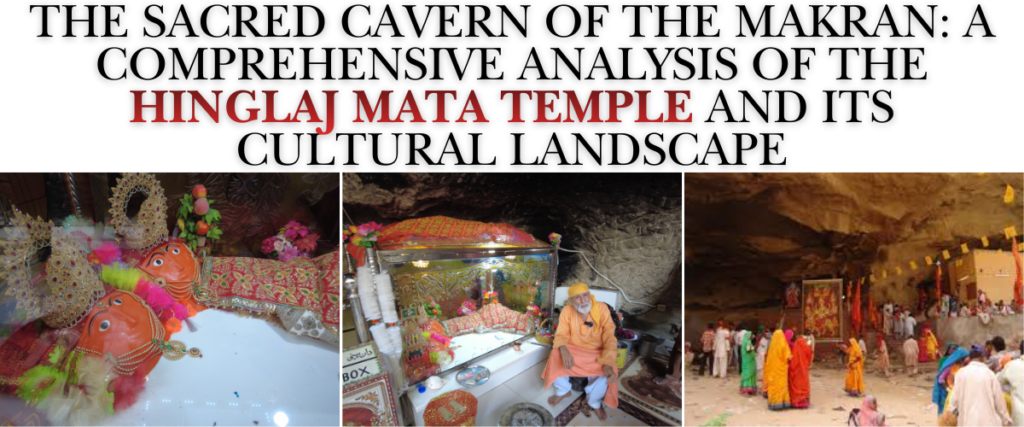
The Hinglaj Mata Temple, nestled in the desolate yet awe-inspiring mountain ranges of the Hingol National Park in Balochistan, represents a singular intersection of profound spirituality, geological marvel, and cross-cultural heritage.1 Known locally as Nani Mandir or Bibi Nani, the shrine is not merely a religious destination for the Hindu minority but is a site of shared reverence that bridges the deep theological divides between the Hindu and Muslim communities of the region.3 As one of the fifty-one primary Shakti Peethas of the Hindu tradition, the temple holds a paramount status in the Shaktism denomination, believed to be the spot where the Brahmarandhra, or the crown of the head, of the goddess Sati fell after her body was dismembered by the god Vishnu.2 This article explores the multifaceted identity of Hinglaj Mata, examining its mythological foundations, its historical evolution from the pre-Islamic era to the modern day, the unique geomorphological landscape that defines its setting, and the contemporary socio-political initiatives that have seen it elevated to a global tourism site in 2025.6
The Theological and Mythological Architecture of Hinglaj
The spiritual gravity of Hinglaj is primarily established through its identity as a Shakti Peetha. In Hindu cosmology, Shakti Peethas are repositories of divine feminine energy, established on the sites where fragments of the goddess Sati’s body landed on earth.2 The mythological narrative begins with the Daksha Yagna, where Sati, daughter of the progenitor Daksha, immolated herself following her father’s public humiliation of her husband, Lord Shiva.5 The subsequent cosmic grief and fury of Shiva, who wandered the universe with Sati’s unburnt corpse, threatened to destabilise the very fabric of creation.5 To pacify Shiva and restore universal equilibrium, Lord Vishnu used his Sudarshan Chakra to sever the body into fifty-one (or fifty-two, depending on the tradition) parts.5
Hinglaj is unique among these sites because it is believed to hold the Brahmarandhra—the highest point of the skull and the seat of consciousness and spiritual awakening.1 In the esoteric anatomy of Tantra, this location is considered the most potent, as the head represents the gateway to cosmic wisdom and the removal of ignorance.1 Consequently, the Hinglaj shrine is not just a place for prayer but a centre for advanced spiritual practices, attracting yogis and saints who seek inner healing and enlightenment.10
The Hierarchy of Shakti Peethas
The significance of Hinglaj is validated across various ancient Hindu scriptures. The Kularnava Tantra lists eighteen primary Pithas, placing Hingula (the Sanskrit name for Hinglaj) as the third most significant.5 In the Kubjika Tantra, it is ranked fifth among forty-two Sakta Pithas, while the Tantrachudamani, in its Pithanirnaya section, lists it as the first of the fifty-one Pithas.5 This consistency across diverse textual traditions underscores the ancient and undisputed status of the shrine in the subcontinental spiritual landscape.5
| Scripture | List Rank | Name Used | Anga-Pratyanga (Body Part) | Reference |
| Kularnava Tantra | 3rd of 18 | Hingula | Not Specified | 5 |
| Kubjika Tantra | 5th of 42 | Hingula | Not Specified | 5 |
| Tantrachudamani | 1st of 51 | Hingula / Hingulata | Brahmarandhra (Crown) | 5 |
| Shivasharitha | 1st of 55 | Hingula | Brahmarandhra | 5 |
In each of these Pithas, the presiding Goddess is accompanied by a Bhairava, a manifestation of Shiva who serves as the guardian of the sacred relics.5 At Hinglaj, the Goddess is known as Kottari, Kottavi, or Hingula Devi, while her protective counterpart is Bhimalochana.2 Interestingly, the physical shrine of Bhimalochana is located across the border in Koteshwar, Kutch, in the Indian state of Gujarat, illustrating the trans-regional spiritual network that predates modern political boundaries.13
The Legend of King Vichitra Hingol
Beyond the Sati narrative, local folklore offers an alternative origin for the name “Hinglaj” dating back to the Treta Yuga.12 The region was reportedly ruled by a tyrant named Vichitra Hingol, who oppressed his subjects and abducted women.12 Responding to the cries of the suffering people, the Goddess manifested in the region, pursuing Hingol to the very cave that now serves as her shrine.5 Before he was executed, Hingol repented for his sins and made a final request: that the sacred location be named after him as a mark of his redemption.5 The Goddess granted this wish, transforming the memory of a tyrant into a symbol of divine mercy and protection.5
Connection to Lord Rama and Parashurama
The temple’s antiquity is further bolstered by its connections to the epics. Local tradition holds that Lord Rama visited the Hinglaj shrine to perform penance and cleanse himself of the sin of Brahmahatya—the killing of a Brahmin—after his victory over the demon-king Ravana.16 Accompanied by Sita and Lakshmana, Rama is said to have undertaken a challenging pilgrimage to the “Sacred Valley of Hinglaj”.16 To commemorate the successful completion of his yatra, Rama reportedly carved symbols of the sun and moon onto a nearby mountain, which are still pointed out to modern pilgrims as evidence of his visit.16
Furthermore, the shrine is central to the history of the Brahmakshatriya and Charan communities.5 According to legend, during the era when the sage Parashurama was systematically eliminating the Kshatriya warrior caste, twelve families sought refuge at the ashram of the sage Dadhichi.5 Dadhichi disguised them as Brahmins and placed them under the protection of Hinglaj Mata.5 The Goddess intervened to stop Parashurama’s campaign, and these families were subsequently known as Brahmakshatriyas, adopting weaving and priestly duties while maintaining their warrior lineage in secret.2 Today, these communities remain the most devoted attendees of the annual yatra, viewing Hinglaj Mata as their Kuldevi or ancestral mother.2
Historical Continuity: From the Bactrian Goddess to Modern Guardianship
The historical trajectory of the Hinglaj Mata Temple reveals a remarkable capacity for survival and adaptation. Scholars have identified potential links between the modern deity and ancient goddesses worshipped in the region long before the formalisation of contemporary Hinduism or the arrival of Islam.2 There is significant evidence suggesting a connection to Nana, a Bactrian goddess whose worship was widespread among the Kushan, Saka, and Parthian empires that once ruled the frontier regions of the subcontinent.19 The linguistic shift from the ancient “Nanaia” (the Babylonian goddess of love and fertility) to the modern “Bibi Nani” suggests a preservation of the site’s sanctity across successive religious and cultural epochs.2
Pre-Islamic Balochistan and the Medieval Survival
Prior to the Arab invasions of the 7th and 8th centuries CE, Balochistan and Sindh were governed by Hindu dynasties, most notably the Sewa and Brahman rulers.2 During this period, Hinglaj was likely a flourishing regional sanctuary, well-integrated into the broader religious life of the Indus Valley and the Makran coast.2 While the subsequent centuries saw the region become predominantly Muslim, the Hinglaj shrine did not fade into obscurity.10 Instead, it entered a phase of quiet persistence, protected by its extreme geographical isolation and the goodwill of the local Baloch tribes.10
Throughout the medieval period, when many prominent urban temples in the subcontinent faced destruction or abandonment, Hinglaj survived by becoming part of the local cultural fabric.10 The Baloch tribes, known for their fierce independence and codes of hospitality, took on the role of protectors of the shrine.2 This inter-communal synergy allowed the temple to remain active even after the partition of India in 1947, which saw the mass exodus of Hindus from the region.2 Today, a dedicated minority of Sindhi Hindus continues to maintain the shrine, supported by the local Muslim population who see “Nani” as a guardian of the entire valley.2
The Geological and Environmental Setting: Hingol National Park
The physical environment of Hinglaj is as compelling as its spiritual history. The temple is situated within the Hingol National Park, which covers 6,190 square kilometres across the Lasbela, Gwadar, and Awaran districts of Balochistan.20 Established in 1988, it is renowned for its diverse ecosystems, ranging from coastal semi-deserts and beaches to arid mountain ranges and riverine estuaries.20
Tectonic Foundations and Mud Rock Formations
The dramatic topography of the park is the result of its position near a major tectonic subduction zone where the Eurasian, Arabian, and Indian plates meet.20 This intersection has created a mass of east-west folds in the earth’s crust, characterised by deep rocky gullies, steep limestone cliffs, and the natural caves that have housed the Hinglaj shrine for millennia.20 The Makran coast is essentially a “cultural landscape” that has evolved in direct response to these geological imperatives.20
| Geological Feature | Description | Religious Significance | Reference |
| Limestone Caves | Formed by tectonic folds and water erosion. | The primary location of the Hinglaj Mata shrine. | 20 |
| Hingol River | Longest river in Balochistan; flows year-round. | Site of ritual purification bathing for pilgrims. | 20 |
| Mud Volcanoes | Eject methane and cold mud rather than lava. | Worshipped as manifestations of Lord Shiva (Baba Chandragup). | 25 |
| Buzi Pass Cliffs | High-altitude pass with dramatic wind-sculpted rocks. | Guardian of the entrance to the “Sacred Valley.” | 16 |
The Mud Volcanoes of Hingol
Among the park’s most extraordinary features are the mud volcanoes, particularly the Chandragup and Khandewari clusters.20 Unlike traditional volcanoes, these vents do not produce lava; instead, they eject a mixture of methane gas and cold, bubbling mud.23 Standing up to 330 feet tall, these volcanoes are not only geological anomalies but are sacred stops on the Hinglaj pilgrimage.25 Hindus refer to the largest of these as Baba Chandragup, considering it an embodiment of Lord Shiva.17 The ritual climbing of the volcano to offer coconuts and confess sins is a mandatory precursor to entering the main temple.17
Flora and Fauna of the Desert Sanctuary
The park supports a rich array of biodiversity, providing a habitat for species that have vanished elsewhere. The Hingol River estuary is home to the marsh crocodile, while the mountains provide sanctuary for the Sindh Ibex, Balochistan Urial, and Chinkara Gazelle.22 The northern reaches of the park include arid subtropical forests, while the coastal zones support mangroves and provide nesting grounds for sea turtles.22 This ecological diversity adds a layer of natural sanctity to the pilgrimage, as devotees must traverse a “living” landscape teeming with wildlife and unique rock formations.1
Iconic Rock Statues: The Princess of Hope and the Sphinx
The forces of wind and tidal erosion over millions of years have sculpted the limestone of Hingol into shapes that border on the surreal.21 Two formations in particular have gained international fame: the Princess of Hope and the Balochistan Sphinx.22
The Princess of Hope
This rock pinnacle is a “hoodoo”—a tall, thin spire of rock that protrudes from the bottom of an arid basin.22 From a distance, it remarkably resembles a crowned woman in a skirt looking out toward the horizon.22 The name was bestowed upon the formation by Hollywood actress and UN Goodwill Ambassador Angelina Jolie during her visit in 2002.22 The name resonated with local communities and has since become the official designation for this geological landmark.27
The Balochistan Sphinx
Located near the Princess, the Balochistan Sphinx (or “Lion of Balochistan”) is a natural rock formation that strikingly resembles the Great Sphinx of Giza.22 Its distinct “head” and “paws” are visible to travellers on the Makran Coastal Highway, serving as a reminder of the “extra-terrestrial” beauty of the Balochistan landscape.21 While entirely natural, these statues are often integrated into the spiritual narrative of the region, viewed as silent witnesses to the sacred history of the Hingol valley.18
Religious Syncretism: The Intersection of Bibi Nani and the Sufis
Hinglaj Mata is a profound example of religious syncretism, where the boundaries between faiths are blurred by shared ancestral memory and regional identity.2 The shrine’s survival in a predominantly Muslim province is a testament to the “secular” and tolerant spirit of the Baloch and Sindhi people.4
The Role of local Muslims and “Nani ki Haj”
Local Muslims do not merely tolerate the shrine; they participate in its sanctity.3 Many refer to the Hinglaj Yatra as “Nani ki Haj” (the pilgrimage to the grandmother).14 They offer incense, candles, and a sweet preparation called “sirini” to the Goddess.19 The term “Nani” itself is a term of endearment and respect for an elder maternal figure, reflecting a belief that the Goddess is a common ancestor to both Hindus and Muslims in the region.10
| Perspective | Community | Interpretation of Hinglaj | Reference |
| Hindu | Sindhi/Gujarati Hindus | A primary Shakti Peetha; seat of Sati’s consciousness. | 2 |
| Muslim (Zikri/Sufi) | Baloch Tribes | “Bibi Nani” (Honourable Grandmother), a site of ancestral protection. | 4 |
| Tantric | Yogis / Sadhus | A “Siddha Pitha” for advanced meditative practice. | 5 |
| Historical | Archaeologists | A site connected to the ancient Bactrian goddess Nana. | 2 |
The Influence of Shah Abdul Latif Bhittai
The syncretic nature of Hinglaj is perhaps best immortalised in the work of Shah Abdul Latif Bhittai, the 18th-century Sufi saint and poet who is the spiritual heart of Sindh.12 Bhittai undertook the arduous journey to Hinglaj, travelling alongside Hindu jogis to pay his respects to the Goddess.12 He composed the Sur Ramkali in his poetic collection, the Shah Jo Risalo, specifically in honour of the Hinglaj shrine and the ascetics who visited it.12 Legend has it that he offered milk to the Goddess inside the cave, and her appearance before him is a staple of local mystical lore.17 This connection bridges the gap between Islamic Sufism and Hindu Tantra, positioning Hinglaj as a universal sanctuary for the soul.2
The Hinglaj Yatra: Rituals of Penance and Rebirth
The annual four-day pilgrimage to Hinglaj, typically held in April during the spring Navratri, is the most significant event for the local Hindu community.16 Attracting over 250,000 pilgrims from as far as India and the Gulf, the yatra is a gruelling display of faith and physical endurance.3
The Traditional Route from Karachi
Historically, the pilgrimage began at the Nanad Panthi Akhada in Karachi, with devotees trekking over 250 kilometres through the harsh Makran desert.5 The group is led by a Chaadiar, a holy staff bearer authorised by the Akhada, who acts as the spiritual guide for the journey.5 While the construction of the Makran Coastal Highway has replaced the month-long trek with a four-hour bus ride for many, some devotees still choose to cycle or walk as an act of austerity (tapas) to earn the deity’s grace.5
The Mud Volcano Confession (Baba Chandragup)
The first major ritual takes place at the base of the Chandragup mud volcano.12 Pilgrims must spend the night in meditation and fasting, reflecting on their past wrongs.25 At dawn, they ascend the 300-foot slope to the rim of the crater.25 There, a unique ceremony of confession occurs:
- Each pilgrim must announce their full name, place of origin, and their specific sins to the group and the volcano.12
- Offerings of coconuts, dal, and betel nuts are cast into the bubbling mud.1
- The Chaadiar interprets the reaction of the volcano—the bubbling of the mud or the shift in wind—as a sign that the Goddess has accepted the confession and forgiven the devotee.17
Purification and the Cave Darshan
Following the descent from Chandragup, pilgrims travel to the banks of the Hingol River to perform ritual bathing, symbolising a final cleansing before approaching the divine.2 The approach to the temple itself involves walking through a narrow gorge, an act that channels the worshippers toward the sacred cave.2
Inside the cave, there is no formal temple building, only a low mud altar.11 The ritual of the darshan involves:
- Offering three coconuts and red cloth to the sacred stone.2
- Crawling through a narrow opening into the inner sanctum, a ritual known as “passing through the womb,” which symbolises a spiritual rebirth.4
- Participating in the Dhuni ceremony, where a perpetual sacred fire is fed with offerings, representing the eternal energy of Shakti.10
The Cave Sanctuary: Architecture of the Earth
The “temple” of Hinglaj is a misnomer in the traditional architectural sense; it is a “living cultural landscape” where the earth itself provides the sanctum.20 The cave entrance stands approximately 50 feet high, leading into a natural cavern that exudes an atmosphere of “timelessness” and “mystique”.4
The Absence of Idols
One of the most significant features of Hinglaj is the absence of a man-made idol.1 The Goddess is worshipped in her “divine form” as a natural rock formation smeared with vermilion.1 This lack of anthropomorphic representation aligns with the Tantric and Puranic descriptions of Hingula as a “Swayambhu” manifestation—a deity that has emerged naturally from the land rather than being carved by human hands.2 A nearby banyan tree, also considered sacred, adds to the organic nature of the shrine.2
| Sanctum Feature | Description | Symbolic Meaning | Reference |
| Natural Stone | Unshaped rock smeared with sindoor. | The raw, unmediated power of the Goddess. | 1 |
| Red Banners | Bright red flags marking the cave entrance. | The presence of Shakti, the colour of vermilion/cinnabar. | 5 |
| Narrow Passage | A small crawl-space for entry/exit. | The “Yoni” of the Earth; the process of rebirth. | 4 |
| Dhuni Fire | A sacred fire that burns perpetually. | The indestructible nature of divine energy. | 10 |
Modernity, Governance, and Global Recognition: 2025-2026
The status of the Hinglaj Mata Temple has undergone a significant transformation in the early 2020s. Recognising its potential as a bridge for interfaith harmony and a driver for provincial revenue, the Balochistan government, under Chief Minister Sarfraz Bugti, has moved to institutionalise the management and promotion of the site.6
Declaration as a Global Tourism Site (June 2025)
In June 2025, a landmark meeting between CM Bugti and Senator Danesh Kumar resulted in the official declaration of Hinglaj Mata as a “Global Tourism Site”.6 This designation is the first of its kind for a minority religious site in Pakistan and aims to elevate the temple to “global standards” for international tourism.7 The government projects that this move could increase tourism in the province by up to 30% over the next five years.8
Infrastructure and Restoration Initiatives
To support this new status, the 2025-2026 provincial budget allocated significant funds for the “minority religious tourism” package.6 These funds are earmarked for:
- Infrastructure: Improving the road networks connecting the Makran Coastal Highway to the temple, as well as upgrading sanitation and pilgrim rest areas.8
- Conservation: Preservation of the natural cave structure and the “historic architecture” of the surrounding complex.33
- Scholarship Programs: The inclusion of a minority quota in the Benazir Bhutto Scholarship Program for higher education, reinforcing the government’s commitment to the social welfare of the Hindu community.7
- Safety and Security: Enhanced protection for pilgrims, particularly those visiting from India and the Gulf states, through the deployment of dedicated security personnel and liaison officers.8
The UNESCO Tentative List Status
The Hinglaj Cultural Landscape is currently inscribed on the UNESCO World Heritage Tentative List.20 UNESCO recognises the site as an “organically evolved landscape” that maintains an active social role in contemporary society.20 Unlike many heritage cave temples that have become museums, Hinglaj is a “living religious centre” where rituals have remained virtually unchanged for over a thousand years.20 This continuity, combined with the site’s “outstanding universal value” as a symbol of tolerance, makes it a prime candidate for full World Heritage status.20
Practicalities of Pilgrimage: Logistics for the Modern Traveler
For those seeking to undertake the yatra in 2026, the journey remains an act of spiritual “adventure” that requires careful planning.36 The temple’s remote location means that while accessible, it is not “convenient” in the urban sense.35
Entry Requirements for International Pilgrims
Indian citizens face specific bureaucratic requirements when visiting Hinglaj. Visas are typically issued for specific sites and cities, meaning travellers cannot wander freely beyond the designated pilgrimage route.35 Applications usually undergo security checks, and group travel through recognised religious boards or travel groups is highly recommended.35 Modes of entry include road travel via the Wagah border for groups, or flights to Karachi followed by a drive to Balochistan.35
Seasonality and Safety
The best time to visit Hinglaj is during the winter (mid-November to February) or the spring yatra in April.12 Summers in Balochistan can be brutally hot, with temperatures exceeding  , making the desert trek dangerous for those not acclimatised.22
- Medical Preparedness: Medical facilities are scarce in the remote areas of the Hingol National Park. Travellers are advised to carry essential medicines and travel insurance.35
- Cultural Modesty: Modest clothing—covering shoulders and legs—is essential for both respect to the deity and the local town customs.35
- Resource Management: Historically, pilgrims were warned not to share their personal stores of water as a form of penance, but modern safety advice emphasises staying hydrated and carrying sufficient supplies.19
Second-Order Insights: The Socio-Cultural Ripple Effects of Hinglaj
The continued vitality of Hinglaj Mata offers several deeper insights into the nature of South Asian society and the resilience of shared heritage.
A Buffer Against Radicalisation
The preservation of Hinglaj by local Muslims serves as a powerful counter-narrative to regional radicalisation. The “secular” outlook of the Baloch tribes, where tribal identity and local hospitality take precedence over narrow religious dogma, creates a “protected space” that defies the broader political trends of the region.4 Hinglaj acts as a living laboratory for interfaith coexistence, proving that sacred spaces can unite rather than divide.33
The Role of Economic Interdependence
The 2025 declaration of the temple as a tourism site highlights the emerging “soft diplomacy” role of religious heritage.8 By investing in Hinglaj, the government is not only protecting a minority site but is also uplifting the local rural communities of Lasbela through increased economic activity.8 This economic interdependence ensures that the local population has a vested interest in the safety and preservation of the shrine.8
The Resilience of Oral Traditions
Much of what is known about Hinglaj comes from oral traditions and folk songs rather than written historical records.10 This “lifeline” of belief, passed down through generations of pilgrims and Baloch tribesmen, has allowed the shrine to survive empires and borders.10 The transition of Hinglaj from a hidden mountain cave to a global tourism destination marks a shift in how these traditions are valued—from secret rituals to celebrated international heritage.8
Conclusion
The Hinglaj Mata Temple, or Nani Mandir, is far more than a collection of stones in a desert cave. It is a profound manifestation of the Brahmarandhra—the crown of consciousness—reflecting the highest spiritual aspirations of the subcontinent.1 Its location within the tectonic chaos of the Hingol National Park, surrounded by mud volcanoes and wind-sculpted sphinxes, provides a natural majesty that reinforces its identity as a “Swayambhu” sanctuary.17 As the Balochistan government moves toward the global promotion and preservation of the site in 2025 and 2026, Hinglaj stands as a beacon of interfaith harmony, proving that where the “Mother” resides, there is a home for all seekers, regardless of their path.2
Disclaimer
This article is intended for professional and informational purposes only. The information regarding travel, safety, and visa requirements is based on data available as of 2025-2026 and is subject to change. Travellers are advised to consult with official government sources and authorised pilgrimage boards before planning a visit to the Hingol National Park or the Hinglaj Mata Temple. The terrain of Balochistan is rugged and remote; all journeys should be undertaken with proper planning, local guidance, and adherence to environmental conservation laws. 35
References
- Hinglaj Mata Temple – History, Significance & Pilgrimage – Char Dham Tour Package, accessed on February 26, 2026, https://chardham.ticketstotrip.com/hinglaj-mata-temple/
- Hinglaj Mata, Balochistan…A sacred Shakti Peeth – Daily Excelsior, accessed on February 26, 2026, https://www.dailyexcelsior.com/hinglaj-mata-balochistan-a-sacred-shakti-peeth/
- Where is the temple of Hinglaj Mata located? – Quora, accessed on February 26, 2026, https://www.quora.com/Where-is-the-temple-of-Hinglaj-Mata-located
- Hingol temple symbolises Baloch secularism | World News – Hindustan Times, accessed on February 26, 2026, https://www.hindustantimes.com/world/hingol-temple-symbolises-baloch-secularism/story-yOyVxu6v2DeBdC9obUAwsN.html
- Hinglaj Mata Temple – Wikipedia, accessed on February 26, 2026, https://en.wikipedia.org/wiki/Hinglaj_Mata_Temple
- Hinglaj Mata Temple in Balochistan declared ‘world tourism site’ – Pakistan – DAWN.COM, accessed on February 26, 2026, https://www.dawn.com/news/1918036
- Balochistan CM announces plan to develop Hinglaj Mata Temple as …, accessed on February 26, 2026, https://www.nation.com.pk/27-Mar-2025/balochistan-cm-announces-plan-to-develop-hinglaj-mata-temple-as-a-religious-tourist-site
- Pakistan sets global example: Balochistan declares Hinglaj Mata temple a world tourism site, accessed on February 26, 2026, https://gnnhd.tv/news/48147/pakistan-sets-global-example-balochistan-declares-hinglaj-mata-temple-a-world-tourism-site
- Hinglaj Mata Shakti Peeth: Story, Meaning, Significance & Complete Guide, accessed on February 26, 2026, https://rrudraksha.com/blogs/blog/hinglaj-mata-shakti-peeth-story-meaning-significance-complete-guide
- Hinglaj Shaktipeeth, Balochistan, Pakistan: History, Reason, Significance – Rudraksha Hub, accessed on February 26, 2026, https://www.rudrakshahub.com/blogs/daily-blogs/hinglaj-shaktipeeth-balochistan-pakistan-history-reason-significance
- Hinglaj Mata – Hindu Temple located in the remote, hilly area of Lyari Tehsil in Pakistan’s Balochistan province. – Journal Edge, accessed on February 26, 2026, https://vikasacharya.wordpress.com/2016/08/25/hinglaj-mata/
- Hinglaj Mata Mandir – Heritage of Pakistan, accessed on February 26, 2026, https://heritageofpakistan.org/balochistan/hinglaj-mata-mandir/
- Where is the Hinglaj Mata Temple, and how do you go there? – Quora, accessed on February 26, 2026, https://www.quora.com/Where-is-the-Hinglaj-Mata-Temple-and-how-do-you-go-there
- About Hinglaj Mata – Vidarbha Bhavsar Samaj Sanstha, accessed on February 26, 2026, http://vidarbhabhavsarsamaj.orgfree.com/?page_id=41
- Hinglaj Shakti Peeth – Simple English Wikipedia, the free encyclopedia, accessed on February 26, 2026, https://simple.wikipedia.org/wiki/Hinglaj_Shakti_Peeth
- Hinglaj Devi Temple – Aryavratpedia – Miraheze, accessed on February 26, 2026, https://aryavratpedia.miraheze.org/wiki/Hinglaj_Devi_Temple
- Hinglaj Mata Temple – The Revered Shakti Peeth in Baluchistan …, accessed on February 26, 2026, https://www.mashahur.com/blog/hinglaj-mata-temple-the-revered-shakti-peeth-in-pakistan-hinglaj-mata-also-known-as-hinglaj-devi-hingula/
- Journey to the Heart of Hinglaj: A Spiritual Pilgrimage to the Shakti Peeth – Peek, accessed on February 26, 2026, https://www.peek.com/aghor-balochistan-pakistan/r0pmpb3/journey-to-the-heart-of-hinglaj-a-spiritual-pilgrimage-to-the-shakti-peeth/ar0dmpv59
- Hinglaj – Wikipedia, accessed on February 26, 2026, https://en.wikipedia.org/wiki/Hinglaj
- Hingol Cultural Landscape – UNESCO World Heritage Centre, accessed on February 26, 2026, https://whc.unesco.org/en/tentativelists/6109/
- Hingol National Park – Heritage of Pakistan, accessed on February 26, 2026, https://heritageofpakistan.org/balochistan/hingol-national-park/
- Princess of Hope – Heritage of Pakistan, accessed on February 26, 2026, https://heritageofpakistan.org/balochistan/princess-of-hope/
- Hingol National Park – NASA Science, accessed on February 26, 2026, https://science.nasa.gov/earth/earth-observatory/hingol-national-park-148262/
- (PDF) Unlocking the Geoheritage Potential of Hingol National Park (HNP), Pakistan: Geological and Geomorphological Insights Through Multi-Satellite Remote Sensing Data and Field Geology Validation – ResearchGate, accessed on February 26, 2026, https://www.researchgate.net/publication/394242890_Unlocking_the_Geoheritage_Potential_of_Hingol_National_Park_HNP_Pakistan_Geological_and_Geomorphological_Insights_Through_Multi-Satellite_Remote_Sensing_Data_and_Field_Geology_Validation
- Hingol mud volcanoes – Wikipedia, accessed on February 26, 2026, https://en.wikipedia.org/wiki/Hingol_mud_volcanoes
- The volcano in Pakistan which is considered an embodiment of Lord Shiva – Times of India, accessed on February 26, 2026, https://timesofindia.indiatimes.com/etimes/trending/the-volcano-in-pakistan-which-is-considered-an-embodiment-of-lord-shiva/articleshow/113908664.cms
- Princess of Hope – Wikipedia, accessed on February 26, 2026, https://en.wikipedia.org/wiki/Princess_of_Hope
- The Balochistan Sphinx – Heritage of Pakistan, accessed on February 26, 2026, https://heritageofpakistan.org/balochistan/the-balochistan-sphinx/
- Hingol National Park – Wikipedia, accessed on February 26, 2026, https://en.wikipedia.org/wiki/Hingol_National_Park
- In a Muslim-Majority Country, a Hindu goddess lives on – Hinglaj Mata Nani Mandir, accessed on February 26, 2026, https://www.youtube.com/watch?v=B61ui6biwHw
- Hinglaj Mata Temple in Balochistan: A Sacred Pilgrimage Site Uniting Faith, History, Devotion – YouTube, accessed on February 26, 2026, https://www.youtube.com/shorts/ySqOyjsEoa8
- Hinglaj: The largest Hindu pilgrimage in Pakistan. | Struggle for Hindu Existence, accessed on February 26, 2026, https://hinduexistence.org/2024/04/24/hinglaj-the-largest-hindu-pilgrimage-in-pakistan/
- Balochistan declares Hinglaj Mata Temple a global tourist destination – Dunya News, accessed on February 26, 2026, https://dunyanews.tv/en/Pakistan/890231-balochistan-declares-hinglaj-mata-temple-a-global-tourist-destination
- Balochistan to promote Hinglaj Mata Temple as global religious tourism site – The Nation, accessed on February 26, 2026, https://www.nation.com.pk/19-Jun-2025/balochistan-to-promote-hinglaj-mata-temple-as-global-religious-tourism-site
- How can Indian citizens visit the auspicious Hindu temples in Pakistan – Rudraksha Hub, accessed on February 26, 2026, https://www.rudrakshahub.com/blogs/daily-blogs/how-can-indian-citizens-visit-the-auspicious-hindu-temples-in-pakistan
- Hinglaj Mata Temple: Unveiling The Sacred Site – Crown, accessed on February 26, 2026, https://ccgit.crown.edu/cyber-reels/hinglaj-mata-temple-unveiling-the-sacred-site-1764798340
- Hinglaj Mata Temple Yatra – 1 Day | 2026-27 – Apricot Tours, accessed on February 26, 2026, https://www.apricottours.pk/tours/hinglaj-mata-temple-yatra-1-day/
- Hinglaj Mata Temple: A Spiritual Journey In Pakistan – Crown, accessed on February 26, 2026, https://ccgit.crown.edu/cyber-reels/hinglaj-mata-temple-a-spiritual-journey-in-pakistan-1764797419