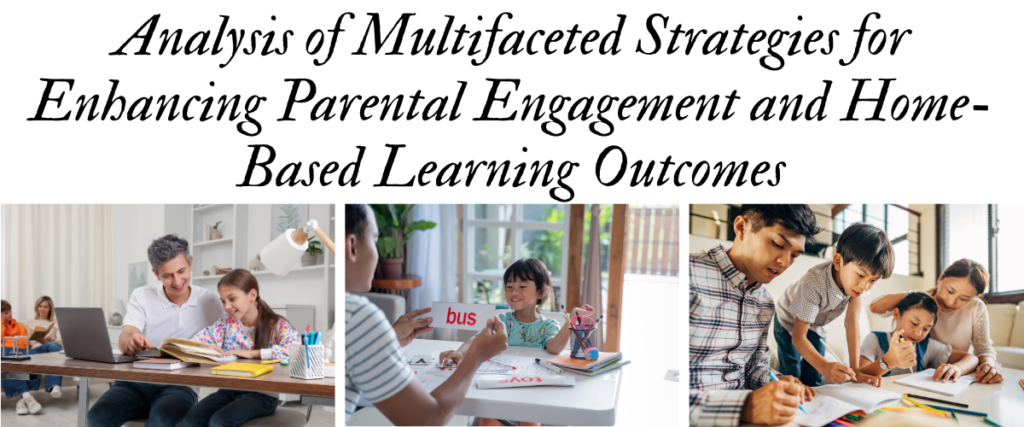
The intersection of the home environment and the formal education system constitutes the most significant variable in a child’s academic and social trajectory. Empirical evidence consistently indicates that student achievement is not solely a product of classroom instruction but is deeply rooted in the synergy between educators and families.1 This report examines the systemic frameworks, practical methodologies, and psychological underpinnings required to sustain high-quality parental involvement in schooling and to cultivate a robust learning culture within the domestic sphere.
Theoretical Frameworks for Family-School Synergy
The contemporary understanding of educational success has shifted from a school-centric model to a partnership-based paradigm. This transition is codified in the Family-School Partnerships Framework, which serves as a foundational guide for Australian educational settings.2 This framework posits that valuable learning is not confined to the school grounds but occurs continuously within the family and the broader community.2 By aligning these environments, schools can create a seamless learning experience that enhances student attendance, academic results, and social-emotional well-being.1
The framework identifies seven critical dimensions that must be addressed to foster effective partnerships. These dimensions move beyond the traditional view of parents as mere recipients of information, repositioning them as active collaborators in the educational process.
| Dimension of Partnership | Strategic Focus | Expected Outcome |
| Communication | Two-way, plain English, multi-channel.2 | Mutual understanding of goals and student needs.3 |
| Connecting Learning | Linking home activities to the classroom curriculum.2 | Reinforced learning and practical application of skills.1 |
| Community and Identity | Building a sense of belonging and cultural safety.2 | Higher student engagement and family trust.4 |
| Role Recognition | Valuing the family as the child’s first teacher.2 | Empowered parents and validated home learning.5 |
| Consultative Decision Making | Involving parents in school policy and direction.2 | Transparent governance and community-aligned priorities.6 |
| Collaboration Beyond School | Engaging with local resources and organisations. 2 | Holistic support for student health and wellbeing.7 |
| Active Participation | Volunteering and physical presence in school life.2 | Visible modelling of the value of education.6 |
This partnership model is particularly effective when it is responsive and adaptable to the specific needs of diverse families.4 For instance, culturally and linguistically diverse (CALD) families may require specialised communication strategies, such as the use of translated documents or community liaison officers, to ensure they are not marginalised within the school community.2
Mechanisms of Professional Communication in NSW Schools
In the New South Wales (NSW) educational context, communication is structured to provide both formal progress tracking and informal, real-time engagement. The effectiveness of these mechanisms depends on the move toward “straight talk” and transparency between teachers and parents.8 Schools employ a variety of tools to ensure that families are not only informed but also equipped to support their child’s specific learning trajectory.3
Formal Reporting and Interactive Conferences
Formal communication often centres around the biannual written report, but the true value lies in the subsequent interactive sessions. Parent-teacher interviews provide a platform for constructive advice regarding a child’s progress.3 However, there is an increasing trend toward “three-way learning conferences” which include the student in the dialogue. This approach grants the student agency, allowing them to share their learning journey and work collaboratively with adults to set future goals.3
| Method | Participant Roles | Primary Benefit |
| Parent/Teacher Interview | Teacher and Parents | Detailed discussion of academic progress and areas for support.3 |
| Three-Way Conference | Teacher, Parents, and Student | Student-led goal setting and increased accountability.3 |
| Review Meetings | Specialist Staff and Parents | Development of personalised learning plans and pathways.3 |
| Email Updates | Teacher and Individual Parents | Reliable and personalised communication for specific issues.3 |
The psychological impact of these meetings is significant. When parents prepare for these conferences by reflecting on their child’s social and academic experiences, the interaction shifts from a passive update to a strategic planning session.8 It is recommended that parents maintain an open-minded approach, viewing these interviews as check-in points within a continuous, year-long conversation.8
Digital Integration and Real-Time Engagement
The advent of online learning platforms such as Google Classroom and Seesaw has revolutionised the “visibility” of the classroom for parents. These tools allow teachers to share photos, videos, and short descriptions of daily activities, which parents can then use as prompts for discussion at home.2 Such digital integration serves to bridge the gap between the school gate and the living room, ensuring that parents are well-resourced to support homework and long-term projects.2
The Socio-Educational Impact of Parental Advocacy and P&C Involvement
Beyond the individual support of one’s own child, parental involvement at the systemic level—primarily through the Parents and Citizens Association (P&C)—provides the structural support necessary for school communities to thrive. Participation in the P&C is a form of civic engagement that demonstrates to the student the high value placed on their educational environment.6
Structural Contributions of the P&C
At schools like North Kellyville Public School (NKPS), the P&C functions as a dedicated partner to the school leadership, focusing on resource provision and community cohesion.6 The P&C meeting, typically held in the school library on Wednesday evenings in Week 3 and Week 8 of each term, serves as the primary forum for this collaboration.6
| P&C Activity Area | Specific Actions | Direct Impact on Students |
| Financial Resource Management | Purchasing classroom and playground equipment.6 | Enhanced physical and educational facilities.6 |
| Community Service | Operating second-hand uniform shops.6 | Affordable access to school requirements.6 |
| Policy Consultation | Providing feedback on school priorities and initiatives.6 | Community-supported school directions.6 |
| Event Coordination | Organising discos, fun runs, and stalls.6 | Strengthened social bonds and school spirit.6 |
Membership in these associations is often accessible, with nominal annual fees (such as $2 at NKPS) allowing parents to gain voting rights and participate in democratic decision-making.6 This involvement models teamwork and community service for the student, while providing the parent with a firsthand view of the school’s operational realities.6
Designing the Pedagogical Home Environment
The physical and cultural configuration of the home can either facilitate or hinder the learning process. An intentional home environment promotes curiosity, independence, and a sense of security, all of which are prerequisites for cognitive development.9
Spatial Organisation and Learning Nooks
Educational experts recommend that homes be divided into “zones” that support different types of cognitive engagement. This spatial differentiation helps children understand the expectations of a given area and prevents the sensory overload that occurs in cluttered, multi-purpose spaces.9
- The Literacy Environment: Establishing a “book nook” in a quiet corner of the home is essential for fostering a reading culture. This space should be comfortable, well-lit, and provide easy, open access to a variety of books.9
- Visual Scaffolding: The use of educational pictures, such as alphabet charts, number lines, and weather calendars, helps to create a visual “look” of learning. These displays should be placed at the child’s eye level to encourage spontaneous interaction.9
- Creative and Sensory Play Areas: Zones for drawing, building with blocks, or engaging in “open-ended play” with loose parts (buttons, fabric, sticks) allow children to explore concepts of physics, art, and storytelling without the pressure of a specific outcome.9
- Practical Inclusion: Small adjustments, such as providing a stool in the kitchen, allow children to participate in daily tasks like food preparation. These moments are rich opportunities to teach measurement, biology, and cultural traditions.9
The Role of Routine in Neurological Security
Predictable daily routines are a powerful tool for self-regulation and emotional resilience. When a child understands the sequence of the day, their cognitive resources are freed from the anxiety of the unknown and can be redirected toward learning.5 Routines that might seem mundane—such as packing a bag, washing hands, or the transition from school to home—are actually opportunities for children to practice independence, sequencing, and higher-order thinking.5
| Routine Phase | Educational/Developmental Focus | Implementation Strategy |
| Morning Transition | Self-regulation and preparation.12 | Visual checklists for dressing and bag packing.13 |
| Learning Check-in | Alignment with school expectations.12 | Reviewing platforms like Google Classroom together.12 |
| Brain Breaks | Cognitive refresh and physical health.12 | Scheduled movement, stretching, or healthy snacks.12 |
| Reading Culture | Language acquisition and empathy.11 | Aiming for three books per day, reading aloud together.11 |
A consistent bedtime routine is particularly critical for cognitive function. Sleep deprivation negatively impacts memory consolidation and emotional regulation, making it difficult for children to engage effectively in the classroom the following day.15
Curriculum Alignment and Academic Support at Home
Supporting a child’s academic progress requires an understanding of the specific skills being targeted in the classroom. In New South Wales, the curriculum is structured into “Stages” (e.g., Stage 1 for Years 1 and 2), and current reforms are moving toward a more explicit, knowledge-based approach.17
Supporting Literacy: Phonemes, Digraphs, and Trigraphs
In the early years (K-2), literacy support at home should focus on the relationship between sounds and letters. Parents can assist by identifying “digraphs” (two letters making one sound, such as sh, th, ch, ph) and “trigraphs” (three letters making one sound, such as air, ear, igh) during daily reading sessions.19
- Oral Language Development: Engaging in games like “Simon Says” or treasure hunts can teach positional language (left/right, near/far) and enhance the child’s ability to follow complex, multi-step instructions.19
- Vocabulary Extension: Using “subject-specific” words in daily conversation—such as volume in math or friction in science—helps children build the receptive language necessary for higher-level learning.19
- Reading Fluency: Practising poetry or short scripted plays can help children understand the importance of punctuation and expression in reading.19
Numeracy and Daily Life Integration
Promoting mathematical thinking does not always require formal worksheets. Integrating numeracy into daily life—such as calculating the total cost at a supermarket, measuring ingredients for a recipe, or identifying geometric shapes in the local architecture—helps children see the real-world relevance of their studies.9 Parents should focus on the process of problem-solving, asking questions like “What do we know about this problem?” or “What should we try first?” to build the child’s critical thinking capacity.13
The Homework Dilemma: From Rescue to Resilience
Homework is often a source of familial conflict, yet it serves as an essential training ground for executive function, time management, and self-discipline.20 The primary role of the parent during homework is to act as a “coach” rather than a “teammate” or a “rescuer”.20
The Coaching Paradigm
A “coach” provides the environment and strategies for success but allows the “athlete” to do the actual work. When parents take over a task to alleviate a child’s frustration, they inadvertently signal that the child is incapable of handling difficulty, which undermines their long-term resilience.20
- Linguistic Shifts: Moving from “We need to do your homework” to “You need to work on your homework, would you like me to help you?” reinforces that the child owns the task.21
- Managing Frustration: Learning inherently involves moments of anxiety and struggle. By helping a child manage these emotions rather than removing the source of the stress, parents help them become truly engaged learners.21
- Done/To-Do Lists: For students who feel overwhelmed by large assignments, creating a visual “Done/To-Do” list helps them understand that complex tasks are completed incrementally. This builds a sense of satisfaction as they check off each completed step.13
Stage-Appropriate Homework Strategies
| Grade Level | Focus Area | Practical Tip |
| K – Grade 3 | Sensory and Tactile.20 | Use blocks for math or flashcards for spelling.20 |
| Grades 4 – 8 | Critical Thinking.20 | Use a planner to prioritise tasks based on deadlines.20 |
| Grades 9 – 12 | Accountability.20 | Utilise digital productivity tools like Notion or Google Keep.20 |
For younger children, doing homework at a communal table (such as the dining room) while a parent is nearby can alleviate the loneliness or “boredom” often associated with study, while preventing procrastination.14
Fostering Social-Emotional Wellbeing and Mental Health
A child’s emotional state is the filter through which all academic information must pass. If a child is stressed, isolated, or lacks emotional regulation skills, their ability to engage with the curriculum is significantly compromised.23 Social-Emotional Learning (SEL) is the process through which children develop the skills to manage emotions, set positive goals, and maintain supportive relationships.25
The Five Core SEL Competencies
The NSW Department of Education emphasises five broad skill areas that should be modelled and reinforced both in the classroom and at home.25
| Competency | Definition | Home Support Strategy |
| Self-Awareness | Recognising emotions and strengths.25 | Discussing “emotional weather reports” (sunny/stormy).23 |
| Self-Management | Regulating emotions and behaviours. 25 | Modelling calm problem-solving and deep breathing.23 |
| Social Awareness | Empathy and perspective-taking.25 | Discussing characters’ feelings in books.19 |
| Relationship Skills | Resolving conflict and seeking help.25 | Encouraging sharing and turn-taking during play.24 |
| Responsible Decision-Making | Awareness of consequences.25 | Providing age-appropriate choices for daily tasks.13 |
Early Intervention: The “Got It!” Program
For children in the early primary years (K-2) who display emerging behavioural or conduct problems, the NSW Health “Got It!” (Getting On Track In Time) program offers a multi-level, school-based intervention.28 Conduct disorders are among the most common childhood mental health challenges and, if left unaddressed, can lead to significant long-term costs for the individual and society.29
The “Got It!” program utilises the Strengths and Difficulties Questionnaire (SDQ) to screen students and then provides a 10-week targeted therapeutic intervention for selected children and their parents.30 This program is highly successful because it brings together specialists from Child and Adolescent Mental Health Services (CAMHS), teachers, and families into a single, cohesive support network.7
Navigating the Transition to Secondary School
The shift from primary to secondary school is a pivotal developmental milestone characterised by significant changes in the physical environment, social structures, and academic expectations.31 While many students transition successfully, others may experience increased anxiety, withdrawal, or behavioural outbursts 31
Identifying Transition Stressors
In primary school, students typically spend the majority of their time with one teacher in a single classroom, fostering a strong sense of security. Secondary school introduces a variety of teachers, diverse learning environments, and the challenge of following a complex timetable.31
- Practical Concerns: Students often worry about getting lost, losing old friends, making new ones, or being bullied.16
- Academic Pressure: The marking workload and academic expectations increase significantly, requiring students to develop better self-management and organisational skills.32
Strategies for a Positive Transition
Parents can support this move by focusing on practical preparations and emotional validation. This includes attending orientation programs, practising the commute to the new school to build the child’s confidence in travelling independently, and ensuring a parent or close adult is available before and after school during the first few weeks.16
Effective home support also involves creating a comfortable study space away from distractions and identifying key school staff (such as the year coordinator or school counsellor) whom the child can approach for help.16 Encouraging participation in extracurricular activities—such as drama, sports, or music—is also a vital strategy for helping students meet new people and develop a sense of belonging within the larger secondary school community.16
Community Resources: Libraries and External Support
The educational journey is bolstered by a network of community resources that provide students with “third spaces” for learning and parents with expert guidance.33
Library Services in The Hills Shire
The Hills Shire Council libraries serve as a vital extension of the school environment, offering digital resources, study spaces, and programs tailored to different developmental stages.33
| Program/Resource | Age/Target | Key Educational Value |
| Baby Bounce | 0 – 24 months.36 | Interactive singing and rhyming to build early literacy.33 |
| Toddler Time | 18 months – 3 years.36 | Developing language skills and social interaction.33 |
| Preschool Storytime | 2 – 5 years.36 | Stories and activities to encourage a love of reading.33 |
| Year One Reading Club | Year 1 Students.33 | Encouraging independent reading habits and library use.33 |
| Britannica for Young Adults | High School Students.33 | Vetted, age-appropriate content for school research.33 |
Digital resources such as TumbleBooks (animated picture books), StoryBox Hub (stories read by celebrities), and BorrowBox (eBooks and audiobooks) ensure that children have access to high-quality literature regardless of their physical location.33 For older students, libraries offer “HSC content” and quiet study areas, which are essential during high-stakes examination periods.33
Professional Development for Parents
To support parents in their role as “first teachers,” organisations like Gowrie NSW and Learning Links offer workshops on specialised topics. These sessions are designed to move away from “perfection” and toward “presence,” providing practical, evidence-based strategies for the modern home.37
- Fussy Eaters (May 13, 2026): A dietitian-led session focusing on making mealtimes positive without pressure.37
- Supporting Healthy Sleep (June 10, 2026): Strategies for building calm, consistent routines that support cognitive development.37
- Circle of Security (July 9, 2026): Grounded in attachment theory, this workshop helps parents recognise the emotional needs beneath their child’s behaviours. 37
- Toileting for 2-5 Year Olds (Sept 1, 2026): Reframing toileting as a shared learning journey rather than a “power battle”.37
Conclusion: The Long-Term Trajectory of Engaged Parenting
The cumulative effect of parental involvement in education is transformative. When families create a home culture of curiosity, provide the structural security of routines, and maintain a respectful partnership with schools, they provide their children with a competitive advantage that extends far beyond academic marks.1 This involvement signals to the child that their education is a shared priority, fostering a growth mindset and a lifelong love of discovery.4
As students move from the play-based learning of the early years into the specialised challenges of secondary education and beyond, the role of the parent must adapt—shifting from the architect of the environment to the mentor and advocate. By leveraging the comprehensive resources available through NSW schools, health systems, and community libraries, parents can ensure that their support is both informed and effective. Ultimately, the goal is to produce independent, resilient, and emotionally intelligent young adults who are prepared to navigate the complexities of the modern world.24
Disclaimer
This report is provided for general educational and informational purposes only and does not constitute professional advice. While the information has been synthesised from various educational frameworks and research materials to ensure accuracy as of the publication date, users should be aware that educational policies, curriculum standards, and community program schedules are subject to change. Every child is unique, and strategies that are effective for one student may not be appropriate for another. Parents and carers are encouraged to consult with their child’s teachers, school leadership, or qualified healthcare professionals regarding specific academic, developmental, or mental health concerns. The mention of specific organisations, schools, or commercial platforms does not imply endorsement by the author or associated entities. Users should conduct their own independent assessment of any external resources or links provided herein.39
References
- Tips for Building Parent-School Partnerships and Family Engagement – Gowrie NSW, accessed on May 11, 2026, https://www.gowriensw.com.au/blog/tips-for-building-parent-school-partnerships-and-family-engagement
- education.nsw.gov.au, accessed on May 11, 2026, https://education.nsw.gov.au/content/dam/main-education/en/home/teaching-and-learning/curriculum/multicultural-education/culture-and-diversity/engaging-communities/family-school_partnerships_framework_-_strategies.docx
- Communicating with parents and carers, accessed on May 11, 2026, https://education.nsw.gov.au/teaching-and-learning/curriculum/leading-curriculum-k-12/explaining-curriculum-pcc/communicating-with-parents-and-carers
- Spotlight – Strengthening parent engagement to improve student outcomes – aitsl, accessed on May 11, 2026, https://www.aitsl.edu.au/research/spotlights/strengthening-parent-engagement-to-improve-student-outcomes
- Routines: Extraordinary learning in everyday opportunities – Education, accessed on May 11, 2026, https://www.education.vic.gov.au/Documents/childhood/providers/edcare/Three-Year-Old-Kindergarten-Teaching-Toolkit/Tip-Sheet-9-Routines-V4.pdf
- Community involvement, accessed on May 11, 2026, https://northkellyville-p.schools.nsw.gov.au/school-life/community-involvement
- Child and Adolescent Mental Health Services (CAMHS) – NSW Health, accessed on May 11, 2026, https://www.health.nsw.gov.au/mentalhealth/Pages/services-camhs.aspx
- How to get the most out of parent-teacher interviews when your child is there – Reddit, accessed on May 11, 2026, https://www.reddit.com/r/AustralianTeachers/comments/1ld5ks0/how_to_get_the_most_out_of_parentteacher/
- Creating a Positive Learning Environment at Home | Child’s Play ELC, accessed on May 11, 2026, https://www.childsplayelc.com.au/creating-a-positive-learning-environment-at-home/
- Creating a Positive and Supportive Learning Environment at Home, accessed on May 11, 2026, https://greenleaveselc.com.au/creating-a-positive-and-supportive-learning-environment-at-home/
- Our guide to creating a love of reading at home – St Nicholas – Early Education, accessed on May 11, 2026, https://stnicks.org.au/news/our-guide-to-creating-a-love-of-reading-at-home/
- ACT Education – Resources to support home learning – Effective Home Learning – Google, accessed on May 11, 2026, https://sites.google.com/ed.act.edu.au/act-home-learning/family-guides/effective-home-learning
- Helping Elementary Students Manage Homework Challenges – K12 Tutoring, accessed on May 11, 2026, https://tutoring.k12.com/resources/learning/struggling-learners/struggles-with-homework/helping-elementary-students-manage-homework-challenges/
- Homework tips for parents: How do you make it less stressful for you and your kids? – Reddit, accessed on May 11, 2026, https://www.reddit.com/r/AskParents/comments/1njiw2g/homework_tips_for_parents_how_do_you_make_it_less/
- Learning for children, pre-teens and teenagers – Raising Children Network, accessed on May 11, 2026, https://raisingchildren.net.au/school-age/school-learning/learning-ideas/learning-school-years
- Starting secondary school or high school | Raising Children Network, accessed on May 11, 2026, https://raisingchildren.net.au/pre-teens/school-education/school-choosing-starting-moving/starting-secondary-school
- NSW Curriculum structure | NSW Curriculum | NSW Education Standards Authority, accessed on May 11, 2026, https://curriculum.nsw.edu.au/use-the-curriculum/learn-about-nsw-curriculum/curriculum-structure
- Curriculum Reform and home schooling – NSW Government, accessed on May 11, 2026, https://www.nsw.gov.au/education-and-training/home-schooling/support-material/curriculum-reform-home-schooling
- A parent and carer guide to supporting your child in – English 1–2, accessed on May 11, 2026, https://www.sjndbb.catholic.edu.au/wp-content/uploads/2024/05/english-k-10-2022-parent-and-carer-guide-1-2.pdf
- How Can I Help My Child With Homework (Without Doing It for Them …, accessed on May 11, 2026, https://www.yourmodernfamily.com/help-my-child-with-homework/
- Place2Be: Parenting Smart: Supporting children with their homework, accessed on May 11, 2026, https://parentingsmart.place2be.org.uk/article/supporting-children-with-their-homework
- Homework Help for Reluctant Children – Harvard Graduate School of Education, accessed on May 11, 2026, https://www.gse.harvard.edu/ideas/usable-knowledge/18/10/homework-help-reluctant-children
- Supporting student wellbeing in the classroom – Life Ed Australia, accessed on May 11, 2026, https://lifeed.org.au/news/supporting-student-wellbeing-in-the-classroom/
- Children Mental Health Week: Supporting Emotional Wellbeing – Young Academics, accessed on May 11, 2026, https://www.youngacademics.com.au/childrens-mental-health-week-supporting-emotional-well-being-in-early-childhood/
- Social-emotional learning – NSW Department of Education, accessed on May 11, 2026, https://education.nsw.gov.au/schooling/school-community/attendance-behaviour-and-engagement/behaviour-support-toolkit/support-for-teachers/restorative-practices/social-emotional-learning
- Emotional wellbeing strategies – NSW Department of Education, accessed on May 11, 2026, https://education.nsw.gov.au/schooling/school-community/wellbeing-framework-for-schools/emotional-wellbeing-strategies
- Nurturing Social and Emotional Wellbeing: A Guide for Parents with Children in Australian Childcare | CareforKids.com.au, accessed on May 11, 2026, https://www.careforkids.com.au/resource-corner/parent-resources/nurturing-social-and-emotional-wellbeing-a-guide-for-parents-with-children-in-australian-childcare
- Getting On Track In Time – Got It! – NSW Health, accessed on May 11, 2026, https://www.health.nsw.gov.au/mentalhealth/resources/Pages/got-it-guidelines.aspx
- Getting On Track In Time – Got It! – NSW Health, accessed on May 11, 2026, https://www.health.nsw.gov.au/mentalhealth/resources/Factsheets/mh-getting-on-track.PDF
- HOW THE GOT IT! PROGRAM RUNS IN SCHOOLS, accessed on May 11, 2026, https://mnclhd.health.nsw.gov.au/wp-content/uploads/How-the-Got-It-program-runs-in-schools.pdf
- The transition from primary to secondary school – Be You, accessed on May 11, 2026, https://beyou.edu.au/resources/fact-sheets/child-and-adolescent-development/transition-from-primary-to-secondary
- What are your opinions about pro and cons for secondary vs primary? : r/AustralianTeachers, accessed on May 11, 2026, https://www.reddit.com/r/AustralianTeachers/comments/1i42g8u/what_are_your_opinions_about_pro_and_cons_for/
- Library Services | The Hills Shire Council, accessed on May 11, 2026, https://www.thehills.nsw.gov.au/Residents/Library/Library-Services
- Our Library | OLOR Kellyville, accessed on May 11, 2026, https://www.olorkellyville.catholic.edu.au/school-life/our-library
- Library | The Hills Shire Council, accessed on May 11, 2026, https://www.thehills.nsw.gov.au/Residents/Library
- The Hills Sydney: What’s on this week, accessed on May 11, 2026, https://hillsdistrictmums.com.au/the-hills-sydney-whats-on-this-week/
- Family Workshops for Parents | Practical Parenting Support – Gowrie NSW, accessed on May 11, 2026, https://www.gowriensw.com.au/family-workshops-for-parents-practical-parenting-support
- Learning Links | The Hills Shire Council, accessed on May 11, 2026, https://www.thehills.nsw.gov.au/Business-Building/Business/Council-Business-Support/Local-Business-Directory-for-MyCity/Learning-Links-2
- Disclaimer – Department of Education, accessed on May 11, 2026, https://www.education.wa.edu.au/disclaimer
- Disclaimer – Department of Education, Australian Government, accessed on May 11, 2026, https://www.education.gov.au/using-site/disclaimer