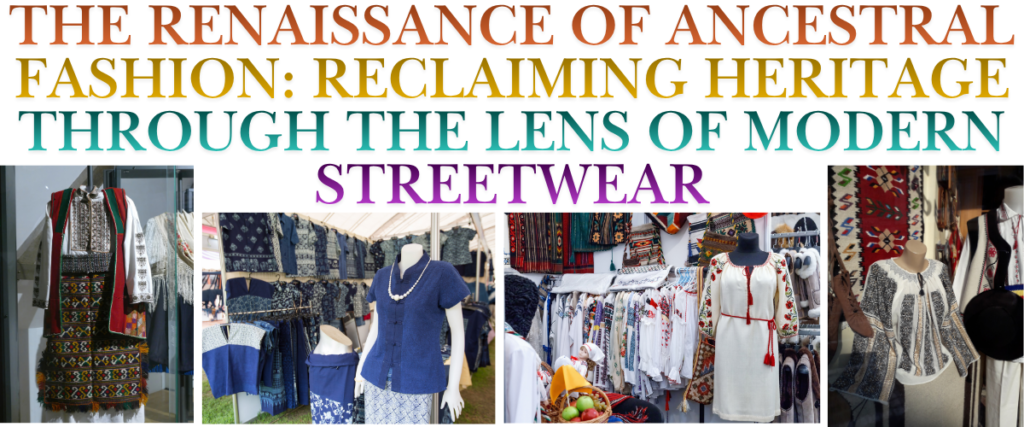
The global fashion landscape is currently undergoing a seismic shift, characterised by a profound synthesis of ancestral heritage and contemporary urban aesthetics. This movement, often described as ancestral fashion, represents the deliberate integration of traditional cultural patterns, artisanal techniques, and historical narratives into the silhouettes of modern streetwear. What began as a localised expression of identity among marginalised youth has evolved into a sophisticated global phenomenon that challenges the traditional power structures of the fashion industry.1 By bridging the gap between ancient textile wisdom and cutting-edge design, ancestral fashion serves as a critical medium for cultural preservation, storytelling, and social resistance.4
The Subcultural Origins and Globalisation of Streetwear
To understand the rise of ancestral fashion, one must first trace the evolution of streetwear from its grassroots origins to its current status as a dominant force in high fashion. Streetwear emerged in the late 1970s and early 1980s, primarily rooted in the DIY (Do-It-Yourself) ethos of California’s surf and skate communities and the burgeoning hip-hop scene in New York City.1 These styles were born from a necessity for comfort, practicality, and self-expression, often serving as a rebellious counterpoint to the rigid, top-down norms of the mainstream fashion industry.2
In California, the surf and skate subcultures required durable, functional clothing that reflected their nonconformist attitudes. Pioneers like Shawn Stussy began by printing distinctive signatures on surfboards and later on T-shirts, creating an impactful branding strategy that resonated with surfers and skaters alike.1 Stüssy’s introduction of custom-made varsity jackets for the “International Stüssy Tribe”—an exclusive group of designers, photographers, and creatives—laid the foundation for the scarcity and community-driven models that define modern streetwear.1 Simultaneously, the hip-hop movement in New York utilised oversized silhouettes, gold chains, and branded sneakers to reflect the music’s raw, street-level origins.1 Global brands like Adidas and Nike gained new traction among urban youth, particularly following Run-D.M.C.’s endorsement of Adidas sneakers in the mid-1980s, which solidified the link between music, identity, and apparel.1
The 1990s marked a pivotal era of global expansion. In New York, James Jebbia founded Supreme in 1994, focusing on limited-edition releases and collaborations with artists that emphasised authenticity.1 In Japan, Nigo founded A Bathing Ape (BAPE) in 1993, bringing a uniquely Japanese perspective to streetwear by blending Western influences with bold, exclusive designs.1 This era introduced the concept of “drop” culture, which prioritised scarcity and hype, effectively reshaping consumer behaviour and establishing streetwear as a symbol of cultural awareness.2
| Era | Key Influences | Defining Characteristics | Notable Figures/Brands |
| 1970s – 1980s | Surf, Skate, Hip-Hop, Punk | DIY ethos, comfort, oversized silhouettes, rebellious attitude | Shawn Stussy, Dapper Dan, Run-D.M.C., Adidas |
| 1990s | Global Expansion, Japanese Ura-Harajuku | Limited “drops,” graphic-heavy prints, exclusivity, skate shops | Supreme, BAPE (Nigo), FUBU, Stüssy |
| 2000s – 2010s | Luxury Fusion, Digital Age | High-end collaborations, premium materials, and social media influence | Virgil Abloh, Off-White, Louis Vuitton, Kanye West |
| 2020s – Present | Ancestral Fashion, Sustainability | Cultural motifs, artisanal craft, ethical production, storytelling | Rastah, Kartik Research, Miimi & Jiinda, Ngali |
1
The transition into high fashion began in earnest during the 2000s, as designers like Virgil Abloh bridged the gap between luxury houses and street culture.7 Collaborations such as Supreme x Louis Vuitton signalled the genre’s acceptance into the fashion elite, introducing structured silhouettes and avant-garde principles to what was once purely functional clothing.7 Today, streetwear remains a driving force for individuality, leveraging digital culture and social media to reach a global audience while increasingly focusing on sustainability and the preservation of cultural identity.1
Oceanic Narratives: The Rise of First Nations Fashion in Australia
In Australia, First Nations designers are leading a significant movement that integrates tens of thousands of years of cultural knowledge with contemporary high fashion and streetwear. For Aboriginal and Torres Strait Islander people, fashion is rarely “just for fun”; it is a storytelling medium that carries stories of Country, community, and care into everyday life.5 This connection to “Country”—a term encompassing land, water, sky, and spiritual heritage—is the foundational element of Indigenous design.5
Matriarchal Philosophies and Gumbaynggirr Artistry
A prominent example of this synthesis is the brand Miimi & Jiinda, founded by mother-daughter duo Melissa Greenwood and Lauren Jarrett on Gumbaynggirr Country in New South Wales.14 As a matriarchal lifestyle brand, Miimi & Jiinda celebrates the strength and survival of First Nations women.15 The name itself reflects this philosophy: “Miimi” means Mother and “Jiinda” means Sister in the Gumbaynggirr language.15
The brand’s aesthetic is deeply rooted in the natural beauty of the Mid-North Coast, often referred to as “Saltwater Country”.13 Their designs utilise vibrant colours and patterns that reflect the deep blues of the ocean (gaagal) and the earthy tones of the land.13 The “Yarilla Resort” collection, for instance, is inspired by the Gumbaynggirr word for “to light up and illuminate,” featuring hand-painted artworks on luxury fabrics like silk and linen.13 One significant piece, the “Baalya” dress, was inspired by sacred birthing caves in Country, where female ancestors brought life into the world, protected by cultural midwives.13
| Brand | Region/Culture | Key Motifs & Symbolism | Product Focus |
| Miimi & Jiinda | Gumbaynggirr, NSW | Ocean totems (gaagal), birthing caves, matriarchal strength | Handcrafted couture, silk slip dresses, linen trenches |
| Ngali | Wiradjuri, NSW/VIC | Abstract paintings, photography of Country, Yindayamarra (respect) | Digitally printed silk garments, slow fashion |
| Clothing The Gaps | Wurundjeri, VIC | “Always Was, Always Will Be,” Bunjil (eagle) icon, social justice | Advocacy-driven streetwear, tees, hoodies |
| Gammin Threads | Kamilaroi/Yorta Yorta | “Blak Matriarchy,” witty slogans, community language | Casual streetwear, tees, tote bags, jewellery |
| Kirrikin | Wonnarua/Gumbaynggirr | Native flora (Grevillia), ripple patterns, licensed artworks | Luxury resort wear, silk scarves, blazers |
| Jarin Street | Wiradjuri, NSW | Cultural connection through art and well-being | Aboriginal-designed activewear, yoga mats |
13
Strategic Collaboration and Economic Empowerment
The growth of First Nations fashion is not merely an aesthetic shift but a strategic effort toward economic independence and cultural revitalisation.5 Brands like Ngali, founded by Denni Francisco, translate traditional painting and photography into refined silk silhouettes, ensuring that the First Nations artists whose work is featured are credited and fairly compensated. 19 This collaborative model is a hallmark of the industry, where “Country” is not just a source of inspiration but a stakeholder that requires environmental stewardship and ethical production.11
Maintaining cultural integrity involves adhering to strict protocols. Many designers, such as Otis Hope Carey, collaborate with luxury global houses like Christian Louboutin while ensuring that clan totems and traditional patterns are approved by Elders according to protocol.17 Carey’s collaboration featured original artworks across 48 pieces, including shoes and bags, bringing Gumbaynggirr stories to the global luxury stage.17 Furthermore, brands like Gammin Threads and Clothing The Gaps use fashion as a vehicle for advocacy, creating “ally-friendly” designs that allow the wider community to support Indigenous causes respectfully, while designating certain ceremonial items for Indigenous people only.11
African Textile Legacies: Reclaiming Identity in the Urban Context
African prints and textile traditions have emerged as a revolutionary force in global streetwear, providing a vibrant platform for artistic expression and the reclamation of cultural identity.3 This movement encompasses a wide range of ancient techniques—from pre-colonial weaving to symbolic dyeing—and more recent colonial-era fusions that have been repurposed by African designers to reshape urban fashion.3
Pre-Colonial Mastery and the Evolution of Wax Prints
The history of African textiles is marked by sophisticated traditions that flourished centuries before colonisation. Notable examples include Ghana’s Kente cloth—a royal hand-woven silk and cotton fabric—and Mali’s Bogolan (mud cloth), which utilises earth pigments to create complex, symbolic patterns.3 These ancient practices laid the foundation for a modern movement where vibrant colours and intricate designs serve as both art and heritage.3
A more complex history surrounds “African Wax Prints,” also known as Ankara. These fabrics originated in Indonesian batik, which was adopted and mass-produced by Dutch firms in the 19th century before finding an enthusiastic market in West and Central Africa.3 Despite their external origins, these prints have been so deeply integrated into African social life over the last 125 years that they have become synonymous with the continent’s artistry and identity.22 Designs such as “house marbles” or “skin” have been worn by generations, forging a unique heritage for the African diaspora.22
Popular Patterns and Contemporary Styling
Modern African streetwear utilises these traditional patterns to create bold statements that honour history while embracing urban silhouettes.3 Ankara remains the “streetwear champion” due to its versatility in hoodies and joggers, while Dashiki patterns—characterised by central medallion motifs and symmetrical layouts—have transitioned from ceremonial wear to high-fashion staples.3
| Textile Pattern | Origin / Region | Traditional Symbolism | Streetwear Adaptation |
| Ankara (Wax Print) | West/Central Africa | Social identity, marital status | All-over print hoodies, sneakers, tailored sets |
| Kente | Ghana (Asante) | Royalty, strength, wealth | Graphic tee accents, metallic gold thread jackets |
| Bogolan (Mud Cloth) | Mali | Connection to earth, protection | Minimalist neutral panels, structured outerwear |
| Dashiki | West Africa | Communal unity, celebration | Medallion-print oversized tees, urban sets |
| Shweshwe | South Africa | Ancestry, indigo heritage | Structured denim-style jackets, accessories |
| Adinkra | Ghana | Symbolic proverbs (e.g., Gye Nyame) | Stamped motifs on caps, backpacks, and tees |
3
Sustainable practices are often inherent in these traditional methods. Designers like Sindiso Khumalo combine traditional Zulu and Xhosa storytelling with modern ready-to-wear formats, prioritising artisanal handwork that is more eco-friendly than mass-produced fast fashion.10 For consumers, styling these bold prints requires a balance of “rules”: pairing large-scale prints with solid anchors like black denim or white sneakers to create visual harmony without overwhelming the ensemble.3
| Baye Fall Spirit Item | Product Type | Price Range (USD) | Key Feature |
| African Queen T-Shirt | Apparel | $26.90 – $28.90 | Celebrates Black beauty and strength |
| Authentic Baye Fall Hoodie | Outerwear | $47.95 | Traditional Senegalese BayeFall motifs |
| Senegalese Streetwear Sweatshirt | Apparel | $37.90 – $39.90 | Bold, modern urban fit |
| Car Rapide Fanny Pack | Accessory | $37.99 | Inspired by Senegalese transport vehicles |
| Baye Fall Spirit Hat | Headwear | $29.90 – $29.95 | Embroidered cultural logos |
3
South Asian Renaissance: From maximalism to Intention
The South Asian fashion landscape is witnessing a “quiet revolution” as a new generation of designers moves away from the cinematic sparkle associated with Bollywood toward a creative language of “future vintage” and intentionality.25 These designers are reframing traditional Indian and Pakistani crafts—such as Phulkari, Kantha, and Zardozi—as intellectual authority rather than mere exotic heritage.26
Reclaiming Artisanal Authority: Case Studies of Rastah and Kartik Research
Founded in 2018 in Lahore, the brand Rastah, led by creative director Zain Ahmad, merges South Asian artisanship with a global streetwear voice.29 Ahmad, who studied political economy in Canada, realised that while many luxury garments in Western boutiques were “Made in Pakistan,” the country lacked ownership of these designs.32 Rastah uses traditional techniques like woodblock printing and hand-looms in radical ways; for example, they recently created a contemporary jacket silhouette using hand-woven fabric traditionally reserved for blankets.29 This approach aims to alter global narratives, positioning Pakistani craftsmanship as a source of high-end luxury and resilience.30
In New Delhi, Kartik Kumra’s label, Kartik Research, functions as a “living archive” of Indian craft.26 Launched in 2021, the brand prioritises the “humanness” of clothing, collaborating with expert weavers and natural dyers across India.26 Kumra’s collections are often inspired by “analog” research—travelling to remote villages to build a production network.27 His work demonstrates that Indian handmade textiles can enter the global luxury conversation as material knowledge, appearing in prestigious stockists like Dover Street Market and Selfridges.25
Symbolic Stitches: Phulkari, Kantha, and Zardozi in Modernity
The techniques utilised by these labels carry centuries of history. Phulkari (“flower work”) from Punjab uses bright silken threads to create geometric motifs on hand-spun cotton, traditionally embroidered for wedding trousseaus as a symbol of love and prosperity.34 Kantha, originating in Bengal, was historically a humble craft where women repurposed old saris using simple running stitches; it has now evolved into a storytelling art featured on contemporary luxury pieces.34 Zardozi, an opulent form of gold and silver thread embroidery, was once the peak of Mughal royal attire but is now being adapted for modern tailored blazers and “after-dark” streetwear.26
| Artisanal Technique | Region | Traditional Context | Modern Streetwear Application |
| Phulkari | Punjab | Wedding shawls, floral symbols | Bold geometric embroidery on hoodies |
| Kantha | Bengal/Odisha | Upcycled sari quilts, folk stories | Reversible jackets, upcycled denim panels |
| Zardozi | Mughal India/Persia | Royal garments, metal threads | Embellished blazers, luxury chore jackets |
| Chikankari | Lucknow | Fine white-on-white shadow work | Understated textured shirts and linens |
| Hand-Block Printing | Rajasthan | Regional floral/geometric motifs | Contemporary button-downs, sneakers |
26
Sustainable processes are inherent in these techniques, such as the use of natural dyes and the upcycling of old textiles to reduce waste.26 By positioning these crafts on platforms like Paris Fashion Week, South Asian designers are shifting the power structure from “extraction to exchange,” ensuring the artisan is recognised as a co-creator rather than an invisible labourer.26
Japanese Materiality: The Fusion of Resilience and Technology
Japan’s contribution to ancestral fashion is grounded in the philosophies of Wabi-sabi (beauty in imperfection) and Mottainai (resourcefulness).39 The integration of traditional textiles like Sashiko and Boro into modern techwear and high-fashion streetwear highlights a commitment to durability and “fashion with memory”.41
The Aesthetics of Repair: Sashiko and Boro
Sashiko, meaning “little stabs,” originated in Northern Japan during the Edo period as a practical method for reinforcing garments and adding warmth during harsh winters when cotton was scarce.39 These rows of white cotton thread evolved into geometric patterns—waves, grids, and circles—that carried symbolic meanings of protection and longevity.39 When these garments were repaired repeatedly over decades, they became Boro—heavily patched textiles that represent necessity and stewardship.39
Modern brands like Kapital and TERAS have reimagined Sashiko for the contemporary market.38 TERAS, for instance, rescues vintage fabrics over 100 years old from torn-down buildings, restoring them with intricate Sashiko stitching to create modern jackets and tapestries.39 The appeal of Sashiko fabric today lies in its dimensional texture and structured hand-feel that softens with wear, creating a garment built to last rather than follow fleeting trends.41
Japanese Techwear: Ancient Concepts in the Digital Era
The rise of Japanese Techwear represents a unique synthesis of high-performance materials—such as Gore-Tex and water-resistant nylon—with traditional aesthetics.40 Designers like Issey Miyake and Yohji Yamamoto were early pioneers in exploring how technical materials can be used to create silhouettes rooted in Japanese culture.40 Techwear often incorporates traditional workwear elements, such as the Noragi (work jacket), but utilises modern fabrication to offer weatherproofing and utility for the urban “ninja” aesthetic.40
| Concept / Material | Origin / Philosophy | Functional Trait | Modern Techwear Use |
| Sashiko | Edo period rural mending | Abrasion resistance, depth | Reinforced panels on technical shells |
| Boro | Mottainai (No waste) | Unique texture, durability | High-end upcycled luxury pieces |
| Indigo Dyeing | Traditional craft | Anti-bacterial, deep aging | Natural-dyed technical layers |
| Noragi Silhouette | Traditional work jacket | Freedom of movement | Tech-fabric kimono-style outerwear |
| Wabi-sabi | Beauty in imperfection | Organic, natural feel | Distressed technical garments |
40
Techwear is not just about the “tactical” look; it is deeply influenced by concepts such as Ma (negative space) and the appreciation of nature.40 Brands like Goldwin and Arc’teryx Veilance have further refined this, blending minimalist urban design with advanced materials that allow for temperature regulation and activity monitoring.47
Technical Methods: Bridging Ancestral Craft with Modern Fabrication
The successful incorporation of traditional motifs into modern streetwear relies on a balance between artisanal craftsmanship and digital innovation.49 This “hybrid practice” allows designers to respect the past while meeting the demands of global commercialisation.28
Digital Innovation and Artisanal Collaboration
Modern technology, including Computer-Aided Design (CAD), 3D printing, and digital fabric printing, plays a critical role in reinterpreting traditional patterns.49 These tools allow designers to experiment with scale and precision, applying intricate Indigenous beadwork or African geometric patterns to streetwear staples like hoodies, joggers, and high-top sneakers.3 Indigenous streetwear designers often utilise modern printmaking methods to create striking garments that honour their cultural origins while ensuring technical accuracy in reproduction.52
However, the most successful brands emphasise that technology should not replace the human touch. Collaboration with artisans ensures that “tacit craft knowledge” is preserved.50 This involves including designers and artists from the source culture in the creative process and ensuring that artisans are fairly compensated.53 Brands that succeed are those that treat heritage not as a “marketing angle” but as a responsibility, as seen in the work of designers like Prabal Gurung, who ensures South Asian artisans are credited on the global stage.53
The Role of Fabric Manipulation and Sustainability
Streetwear thrives on diverse fabric choices, from heavyweight cotton to futuristic neoprene.51 Understanding fabric manipulation techniques such as distressing, natural dyeing, and hand-weaving can add a unique edge to these designs.49 Sustainability is becoming a central focus, with brands increasingly using organic cotton, recycled linen, and bamboo fibres.38 Upcycling old textiles—such as 18th-century French linen or vintage kimonos—allows brands to “close the loop” on waste, giving a second life to garments that carry deep cultural meaning.4
The Ethics of Engagement: Appropriation, Appreciation, and Advocacy
As ancestral fashion moves into the mainstream, the industry must navigate the delicate line between cultural appropriation and appreciation.55 This dialogue is essential for preventing “cultural erasure” and ensuring that the stories behind the aesthetics are not lost in the pursuit of profit.54
Defining the Boundaries: Credit and Collaboration
Cultural appropriation occurs when elements of a culture are used for aesthetics while the history and people behind them are ignored.55 A prominent modern example is the “Clean Girl Aesthetic” popularised on platforms like TikTok, which often features slicked-back hairstyles and gold jewellery—styles historically significant to Black and Latino communities.55 When these styles are rebranded as “revolutionary” on white celebrities while being labelled “messy” or “ghetto” on Black women, it creates a harmful double standard.55
Cultural appreciation, by contrast, is characterised by:
- Giving Credit: Naming the source culture is the bare minimum requirement.55
- Fair Compensation: Ensuring that marginalised communities profit from their craftsmanship.54
- Genuine Collaboration: Making someone from the community a decision-maker, not just a reviewer.53
- Structural Inclusion: Actively hiring South Asian, Middle Eastern, and African creatives in brand strategy and design roles.55
| Practice | Classification | Ethical Implication |
| Repackaging traditional rituals as “brand new trends” | Appropriation | Erasure of history and originators |
| Using sacred garments as “festival costumes” | Appropriation | Trivialization of cultural significance |
| Partnering with Indigenous artists on licensed prints | Appreciation | Empowerment and economic justice |
| Documenting textile origins in marketing materials | Appreciation | Education and transparency |
| Ensuring profit-sharing with community cooperatives | Appreciation | Sustainable social impact |
53
The Responsibility of the Industry
Fashion media and influencers have a crucial role in promoting awareness and cultural education.12 By questioning beauty canons and advocating for more pluralistic narratives, the industry can move toward a more inclusive future.12 For designers, the message is clear: “You don’t get to wear the beauty if you ignore the burden”.55 This means that if an industry profits from a style, it must also listen to and advocate for the people from whom that style originated.55
Conclusion
The emergence of ancestral fashion signifies a profound evolution in how we conceive of identity, heritage, and style in a globalised world. By weaving traditional cultural patterns into the versatile and contemporary silhouettes of streetwear, designers are doing more than just making clothes; they are engaging in acts of truth-telling and resilience. This movement is driven by a desire for authenticity, a commitment to sustainable “slow fashion,” and a reclamation of narratives by communities that have historically been excluded from the global luxury conversation. As brands like Miimi & Jiinda, Rastah, and Kartik Research continue to push the boundaries of design, they prove that fashion can be a powerful vehicle for social change and cultural revitalisation. The future of the industry lies in this synthesis—where the “honest work” of ancestral craft meets the innovative energy of modern urbanism, creating a fashion landscape that is as inclusive and respectful as it is aesthetically compelling.
Disclaimer
The content of this report is provided for informational and educational purposes only. While every effort has been made to ensure the accuracy of the cultural, historical, and technical data presented, fashion remains a subjective and rapidly evolving field. The opinions expressed herein are based on the analysed research and do not necessarily reflect the official policies of the brands or Indigenous communities mentioned. Readers are encouraged to conduct independent research and engage with cultural practitioners directly when seeking to use or represent specific traditional motifs. All trademarks and licensed artworks referenced are the property of their respective owners, and any use of copyrighted material is intended for commentary and critical analysis under fair use principles. Mention of specific brands or products does not constitute an endorsement.
References
- The Evolution of Streetwear: From Subculture to High Fashion and Beyond – Fibre2Fashion, accessed on March 30, 2026, https://www.fibre2fashion.com/industry-article/10134/the-evolution-of-streetwear-from-subculture-to-high-fashion-and-beyond
- Role of Streetwear in Culture: Identity, Sustainability, Impact – MEXESS, accessed on March 30, 2026, https://mexess.com/blogs/blog/role-of-streetwear-in-culture
- African Prints Streetwear: Bold Patterns Reshaping Urban Fashion …, accessed on March 30, 2026, https://bayefallspirit.com/african-prints-streetwear-bold-patterns-reshaping-urban-fashion/
- Tradition-Inspired Streetwear: Merging Culture, Sustainability, and Modern Fashion Trends, accessed on March 30, 2026, https://deepwear.info/blog/tradition-inspired-streetwear-merging-culture-sustainability-and-modern-fashion-trends/
- Indigenous Australian Fashion Influences – BW Tribal, accessed on March 30, 2026, https://bwtribal.com/blogs/news/indigenous-australian-fashion-influences
- The Role of Fashion and Art in First Nations Healing, Decolonisation, and Cultural Practice, accessed on March 30, 2026, https://www.mdpi.com/2313-5778/9/1/5
- Streetwear Aesthetic: The Evolution of Urban Fashion Culture – N-Duo Concept, accessed on March 30, 2026, https://www.n-duo-concept.com/news/streetwear-aesthetic-the-evolution-of-urban-fashion-culture
- The Evolution of Streetwear: From Subculture to High Fashion | RMCAD, accessed on March 30, 2026, https://www.rmcad.edu/blog/the-evolution-of-streetwear-from-subculture-to-high-fashion/
- Undergraduate Student Perceptions of the Origins of Streetwear Fashion: An Exploratory Study, accessed on March 30, 2026, https://www.ifhe.org/fileadmin/user_upload/e_Journal/Vol_18_1/IJHE-Vol-18-Iss-1-A4-Markova.pdf
- Fusion Fashion: The Blending of Eastern and Western Styles in Contemporary Apparel, accessed on March 30, 2026, https://www.fibre2fashion.com/industry-article/10470/fusion-fashion-the-blending-of-eastern-and-western-styles-in-contemporary-apparel
- More than style: How First Nations fashion is growing in Australia …, accessed on March 30, 2026, https://www.sbs.com.au/language/english/en/podcast-episode/first-nations-fashion-in-australia/441jn7u3v
- Indigenous Art Designs in Fashion – Artlandish Aboriginal Art, accessed on March 30, 2026, https://www.aboriginal-art-australia.com/aboriginal-art-library/indigenous-designs-fashion/
- The Power Of Art, Design and Sharing Stories Of Country with Miimi & Jiinda – David Jones, accessed on March 30, 2026, https://www.davidjones.com/blog/interviews/miimi-jiinda-sharing-stories-of-country/
- Miimi & Jiinda – Australian Indigenous Art & Lifestyle Brand, accessed on March 30, 2026, https://miimiandjiinda.com/
- About Miimi & Jiinda: Connecting Culture Through Fashion, accessed on March 30, 2026, https://miimiandjiinda.com/pages/about-us
- Miimi & Jiinda’s Lauren Jarrett & Melissa Greenwood on Motherhood & Art, accessed on March 30, 2026, https://harpersbazaar.com.au/miimi-and-jiinda-motherhood-art-interview/
- Meet the Gumbaynggirr Bundjalung artist partnering with one of the world’s biggest fashion houses | SBS NITV, accessed on March 30, 2026, https://www.sbs.com.au/nitv/article/meet-the-gumbaynggirr-bundjalung-artist-partnering-with-one-of-the-worlds-biggest-fashion-houses/uw03xdkyf
- 8 First Nations-owned fashion and streetwear brands to get behind – Esquire Australia, accessed on March 30, 2026, https://esquire.com.au/style/first-nations-owned-fashion-streetwear-brands/
- 13 Indigenous Australian fashion designers we love – RUSSH, accessed on March 30, 2026, https://www.russh.com/indigenous-australian-fashion-designers/
- Indigenous-Owned Fashion Brands in Australia to Shop – The Australian Women’s Weekly, accessed on March 30, 2026, https://www.womensweekly.com.au/fashion/indigenous-owned-fashion-brands-australia/
- Where to find Australia’s best Aboriginal fashion and textiles, accessed on March 30, 2026, https://www.australia.com/en/things-to-do/aboriginal-australia/best-aboriginal-fashion-textiles.html
- Fabric of the African Diaspora • V&A Blog, accessed on March 30, 2026, https://www.vam.ac.uk/blog/museum-life/fabric-of-the-african-diaspora
- How to Style African Streetwear for Authentic Expression – King Ngoma Clothing, accessed on March 30, 2026, https://kingngoma.com/blogs/news/how-to-style-african-streetwear-authentic-expression
- WEST AFRICAN TEXTILES, accessed on March 30, 2026, https://www.fcs.uga.edu/docs/WestAfricanTextiles.pdf
- The New South Asian Aesthetic: Designers Defining a Modern Identity | MOLTN, accessed on March 30, 2026, https://www.wearemoltn.com/latest-articles/south-asian-designers-2025
- Kartik Research, an Indian craft-focused brand is the architecture of cool – The Nod Mag, accessed on March 30, 2026, https://thenodmag.com/content/kartik-research-indian-textiles-craftsmanship-lvmh-prize-shortlist
- Kartik Research, the Men’s Label Celebrating India’s Rich Culture of Craft | AnOther, accessed on March 30, 2026, https://www.anothermag.com/fashion-beauty/16189/kartik-research-indian-heritage-craft-culture-kartik-kumra-interview-aw25
- Kartik Research: Reimagining Indian Craft for the Global Stage | AGNES SELECT, accessed on March 30, 2026, https://www.agneselect.com/en/fashion/kartik-research-aw25/
- Zain Ahmed discusses ‘Rastah’ streetwear brand – The Express Tribune, accessed on March 30, 2026, https://tribune.com.pk/story/2585843/zain-ahmed-discusses-rastah-streetwear-brand
- Looking Inward with Rastah | Office Magazine, accessed on March 30, 2026, https://officemagazine.net/looking-inward-rastah
- About Us – Rastah, accessed on March 30, 2026, https://rastah.co/pages/about-us
- Zayn Malik Chose This Brand. Here’s How Rastah Is Breaking Boundaries – Elle India, accessed on March 30, 2026, https://elle.in/fashion/zayn-malik-chose-this-brand-heres-how-rastah-is-breaking-boundaries-8738720
- Kartik Research, Kartik Kumra | FHCM, accessed on March 30, 2026, https://www.fhcm.paris/en/news/kartik-research-kartik-kumra
- How You Can Use The Revival Of South Asian Embroidery To Elevate Your Home, accessed on March 30, 2026, https://www.anokhilife.com/how-you-can-use-the-revival-of-south-asian-embroidery-to-elevate-your-home/
- The Art of Embroidery: Preserving South Asian Heritage in Fashion – ODITE, accessed on March 30, 2026, https://odite.in/blogs/news/the-art-of-embroidery-preserving-south-asian-heritage-in-fashion
- Kantha Embroidery: The Quilted Art of Threads – The Voices – Media Literacy India, accessed on March 30, 2026, https://medialit.in/thevoices/kantha-embroidery-the-quilted-art-of-threads/
- 8 Kartik Research Styles That Do All the Talking, accessed on March 30, 2026, https://wp-admin.firstlook.fashion/8-kartik-research-styles-that-do-all-the-talking/
- The New Craft Revolution: How Heritage Techniques Are Shaping Tomorrow’s Materials, accessed on March 30, 2026, https://www.fibre2fashion.com/industry-article/10266/the-new-craft-revolution-how-heritage-techniques-are-shaping-tomorrow-s-materials
- Opening New Worlds Through Every Stitch: TOMOS Company’s Revolutionary Approach to Traditional Japanese Sashiko – Japan Travel Guide – VELTRA, accessed on March 30, 2026, https://www.veltra.com/en/travelguide/sustainable-tourism/tomos-sashiko/
- What is Japanese Techwear?, accessed on March 30, 2026, https://techwearstorm.com/blogs/techwear/what-is-japanese-techwear
- The Craft of Sashiko – Taylor Stitch, accessed on March 30, 2026, https://www.taylorstitch.com/blogs/archive/fabric-stories-sashiko
- Why Fabric Matters: The Textures That Define Japanese Streetwear – Japan Clothing, accessed on March 30, 2026, https://japan-clothing.com/blogs/japan/why-fabric-matters-the-textures-that-define-japanese-streetwear
- What is Techwear & Asian Brands to Know – Imaphotic, accessed on March 30, 2026, https://www.imaphotic.com/blogs/techwear/what-is-techwear-and-asian-brands-to-know
- Techwear Japan – A List of Japanese Technical Fashion Brands – shellzine, accessed on March 30, 2026, https://shellzine.net/techwear-japan/
- Japanese Workwear Culture: The Craftsmanship Behind the Clothes, accessed on March 30, 2026, https://japaneseworkwear.com/blogs/blog/japanese-workwear-culture-the-craftsmanship-behind-the-clothes
- Techwear – Aesthetics Wiki – Fandom, accessed on March 30, 2026, https://aesthetics.fandom.com/wiki/Techwear
- Fabrics in the Evolution of Fashion: Past, Present, and Future – TEXBER, accessed on March 30, 2026, https://www.texber.com/en/fabrics-evolution-fashion-past-present-future/
- 10 Techwear Brands Still Informing Fashion in 2024 | Field Mag, accessed on March 30, 2026, https://www.fieldmag.com/articles/techwear-guide-brands-to-know
- How We Incorporate Traditional Techniques Into Modern Designs – Asherah Jewellery, accessed on March 30, 2026, https://asherahjewellery.co.uk/blogs/blog/how-we-incorporate-traditional-techniques-into-modern-designs
- Technology & Fashion: Hybrid Practices Blurring the Lines Between Craft, Knowledge, and Innovation | by Berisheet Press | Creativity & Commerce Journal | Mar, 2026 | Medium, accessed on March 30, 2026, https://medium.com/creativity-commerce-journal/technology-fashion-hybrid-practices-blurring-the-lines-between-craft-knowledge-and-innovation-865f9fecce5d
- Top Streetwear Design Techniques: Learning Creative Strategies – Yellowbrick, accessed on March 30, 2026, https://www.yellowbrick.co/blog/streetwear/top-streetwear-design-techniques-learning-creative-strategies
- Indigenous Art Techniques and Their Influence on Modern Streetwear Design, accessed on March 30, 2026, https://redrebelarmour.ca/blogs/news/indigenous-art-techniques-influence-modern-streetwear-design
- How Fashion Brands Can Avoid Cultural Appropriation – PR ON THE GO, accessed on March 30, 2026, https://pronthego.com/pages/blog/cultural-boundaries-how-fashion-brands-can-avoid-cultural-appropriation
- Cultural Appropriation in Fashion: A Guide to an Ethical and Sustainable Fashion System, accessed on March 30, 2026, https://dress-ecode.com/en/cultural-appropriation-in-fashion-a-guide-to-an-ethical-and-sustainable-fashion-system/
- The problem with ‘cultural references’ in fashion … – Fashion Journal, accessed on March 30, 2026, https://fashionjournal.com.au/fashion/cultural-appropriation-fashion/
- Diversity on Display: Visual Narratives of Fashionable Bodies in Vogue Italia – MDPI, accessed on March 30, 2026, https://www.mdpi.com/2075-4698/15/11/319