
The Frontier Artificial Intelligence Landscape
Structural Capital Realignments and Proprietary Model Pivots
The macroeconomic landscape of generative artificial intelligence (AI) experienced a significant structural shift during the week ending 29 May 2026, marked by unprecedented private capital concentration and a pronounced strategic pivot toward proprietary model ecosystems.1 Anthropic emerged as a dominant force, securing USD 65 billion in a venture funding round led by Altimeter Capital, Greenoaks, Dragoneer, and Sequoia Capital.1 This transaction elevated Anthropic’s valuation to USD 965 billion, surpassing its primary rival, OpenAI, which was valued at USD 852 billion during its previous funding cycle in March 2026.1 This massive capital influx is intended to meet historical enterprise demand, sustain expensive frontier research, and accelerate the integration of the Claude family of chatbots into corporate productivity environments.1
Simultaneously, the foundational partnership between Microsoft and OpenAI continues to undergo structural changes.2 Following a non-binding agreement in September 2025 that allowed OpenAI to pursue a commercial, for-profit corporate transition and an eventual initial public offering (IPO), Microsoft has actively taken steps to reduce its single-vendor dependencies.2 This shift followed significant tensions in mid-2025, during which OpenAI executives debated accusing Microsoft of anticompetitive behaviour whilst attempting to renegotiate exclusivity rights over cloud-hosting models.2
To assert architectural independence, Microsoft announced plans to unveil a suite of internally developed, homegrown AI models at its annual Build conference in San Francisco.2 This suite includes specialised coding models engineered to restore the competitive edge of GitHub Copilot, which has recently lost ground to Anthropic’s Claude Code.2 Additionally, Microsoft’s new models will target specific tasks such as transcription, reasoning, speech, and image processing, allowing the enterprise giant to bypass external API vulnerabilities, reduce licensing costs, and mitigate antitrust scrutiny.2
| Platform & Metric | May 2025 Status | May 2026 Status | Underlying Technological Shift |
| OpenAI ChatGPT Search Market Share | 89.1% 3 | 62.6% 3 | Impacted by the rapid enterprise adoption of competitive models and local host architectures.3 |
| Google Gemini Search Market Share | 2.4% 3 | 10.6% 3 | Driven by the integration of Gemini 3.5 Flash as the default model in Chrome’s AI Mode.3 |
| Anthropic Corporate Valuation | USD 150 billion (approx.) | USD 965 billion 1 | Catapulted by a USD 65 billion funding round and extensive global infrastructure partnerships.1 |
| OpenAI Corporate Valuation | USD 80 billion (approx.) | USD 852 billion 1 | Determined during its transitional March 2026 funding and restructuring round.1 |
In parallel with these corporate maneuvers, software engineering workflows are undergoing a deep transformation characterised by the rise of “vibe-coding”.4 This practice, where developers prompt AI engines using conversational natural language rather than drafting syntax manually, has been accelerated by the introduction of OpenAI’s Codex into its mobile application.4 This enables engineers to supervise autonomous coding agents, approve terminal commands, and monitor persistent backgrounds remotely.5
However, this transition has triggered a structural labour realignment across the technology industry.4 Companies previously celebrated as premier employers, such as Meta and LinkedIn, initiated another wave of targeted redundancies during the week.5 These layoffs are part of a broader corporate trend to redirect capital from human engineering overhead toward high-performance GPU data centres, which are projected to push global hyperscaler infrastructure spending past USD 1 trillion by the end of 2026.4
Ethical Classifications and Societal Guardrails
As machine learning applications become more deeply integrated into daily operations, the requirement for ethical oversight and governance has intensified.7 On 29 May 2026, the Just Horizons Alliance, an applied research laboratory focused on responsible AI, launched the AI Ethics Index for K–12 Education.7 This diagnostic framework is designed to help educators, policymakers, and software developers evaluate how algorithms impact classroom instruction, student grading, behavioural support, and cognitive development.7 The index addresses a critical gap, as schools are increasingly deploying automated tools without standardised benchmarks to evaluate biases, data-harvesting risks, or student privacy protections.7
The broader social implications of this rapid automation were also highlighted by a significant religious and ethical address.1 On 26 May 2026, Pope Leo XIV presented a new encyclical at the Vatican alongside prominent computer scientists.1 The document cautions against the privatisation of human thought and urges the global community to treat cognitive capacity as a shared public good rather than a commercial utility, warning of the potential for increased social inequality.1
Systemic Cyber Security Exposures and SaaS Supply Chain Vulnerabilities
The Global Canvas Data Breach and Third-Party Risk
The global education sector suffered a major cybersecurity incident with a severe compromise of the Canvas Learning Management System (LMS), operated by the US-based provider Instructure.9 The attack, executed by the cybercriminal syndicate ShinyHunters, targeted the platform’s “Free-For-Teacher” registration pipeline, which was identified as the primary exploit vector.9 By exploiting this vulnerability, the threat actors exfiltrated 3.65 terabytes of data, containing the personal information of approximately 275 million users across more than 9,000 educational institutions globally.9 The compromised datasets included student names, institutional email addresses, student identification numbers, and billions of private messages exchanged through the platform.9
Although Instructure asserted that passwords, dates of birth, financial records, and government-issued identifiers were not exposed, the breach caused widespread operational disruption.9 In Australia, at least 122 educational institutions, including the University of Melbourne, the University of Sydney, RMIT, Western Sydney University, UTS, the University of Newcastle, and Australian Catholic University, were confirmed as affected, alongside the Queensland and Victorian Departments of Education.9 Several universities suspended access to Canvas during active investigations, forcing administrators to delay exams, extend assessment deadlines, and coordinate response strategies with the Australian Government’s National Office of Cyber Security (NOCS).11
| Impacted Australian Institutions | Exploit Vector & Data Volume | Exfiltrated Data Fields | Operational & Administrative Response |
| 122+ Universities, TAFEs, and Schools (e.g., Melbourne, Sydney, RMIT, Queensland QLearn).9 | “Free-For-Teacher” account vulnerability; 3.65 Terabytes exfiltrated globally.9 | Names, email addresses, student IDs, and billions of internal platform messages.9 | Temporary platform shutdowns, exam extensions, coordination with NOCS, and forensic audits.11 |
Instructure disclosed the incident publicly around 6 May 2026, coinciding with an initial ransom deadline.9 However, the platform faced further disruption on 7 May when ShinyHunters defaced the login page with a revised ransom demand, setting a final deadline of 12 May 2026.10 By 15 May, Instructure reportedly reached an agreement with the hackers, who provided digital confirmation that the exfiltrated datasets had been destroyed.9
While Instructure did not disclose whether a ransom was paid, the incident has highlighted the significant third-party risks associated with consolidated Software-as-a-Service (SaaS) architectures, where a single vendor compromise can expose critical public infrastructure to systemic extortion.9
Core Code Infrastructure and State-Sponsored Operations
Beyond the education sector, software supply chains faced sophisticated attacks targeting core development platforms.13 On 18 May 2026, a highly coordinated campaign known as the “Megalodon” attack targeted developer credentials and secrets across critical infrastructure.13 The threat actors compromised a GitHub employee’s local device using a poisoned third-party Visual Studio Code extension.13
This compromise allowed hackers to publish a malicious version of the Nx Console developer tool (version 18.95.0, assigned CVE-2026-48027) on the Visual Studio Marketplace.13 During the 18 minutes the package remained active, the attackers injected malicious GitHub Action workflows into more than 5,500 open-source repositories with weak branch protection.13 This resulted in the large-scale exfiltration of cloud credentials, API tokens, and SSH keys, prompting CISA to urge security teams to audit all workflow files and revert unauthorised commits.13
| Disclosed Vulnerability / ID | Exploited System / Software | Operational Attack Mechanism | Federal Action & Remediation Status |
| CVE-2026-48027 13 | Nx Console VS Code Extension.13 | Poisoned package deployment on VS Marketplace to inject malicious GitHub workflows.13 | Added to CISA KEV Catalogue; malicious packages revoked; code audits mandated.13 |
| CVE-2026-8398 14 | Daemon Tools Lite.14 | Embedded malicious code execution within legacy virtualisation software.14 | Added to CISA KEV Catalogue on 27 May 2026; immediate patching required.14 |
| CVE-2026-45321 14 | TanStack.14 | Unspecified vulnerability exploited in popular web-development library.14 | Catalogued as actively exploited; patch deployment recommended for frontend assets.14 |
| CVE-2025-34291 15 | Langflow.15 | Remote execution flaw exploited by state-sponsored cyber espionage groups.15 | Added to KEV Catalogue on 21 May 2026; federal remediation deadline set for 4 June 2026.15 |
These supply chain vulnerabilities have been further exploited by state-sponsored threat actors.15 The Iranian Revolutionary Guard Corps (IRGC)-affiliated group Nimbus Manticore (also tracked as UNC1549) executed an active campaign targeting aerospace, defence, and telecommunications organisations across the US and the Middle East.15 The group’s primary tool was “MiniFast,” a previously undocumented 64-bit Windows backdoor that disguises its command-and-control traffic as normal Google Chrome JSON browser sessions.15
By using generative AI to accelerate their malware development, Nimbus Manticore rapidly iterated its tactics, introducing AppDomain hijacking, search engine optimisation (SEO) poisoning, and trojanized Zoom installers within a single month.15 The group’s operations were linked to the exploitation of CVE-2025-34291 in the Langflow AI framework, which was added to CISA’s Known Exploited Vulnerabilities (KEV) Catalogue with a strict federal remediation deadline of 4 June 2026.15
This trend of using AI to accelerate attacks has prompted the security industry to introduce new defensive tools.16 These include Pipelock, an open-source firewall designed to block unauthorised shell access and API key leaks from autonomous coding agents, and Sysdig’s Headless Cloud Security platform, which integrates threat detection directly into developer workflows.16
Furthermore, internal security challenges continue to affect regulatory bodies.15 A contractor employed by Nightwing, working on behalf of CISA, inadvertently exposed administrative credentials for three AWS GovCloud accounts in a public GitHub repository.15 The exposed files included system usernames, private SSH keys, and password patterns that violated CISA’s own credential safety guidelines, illustrating the ongoing challenges of maintaining basic security hygiene within public sector agencies.15
Geopolitical Technology Initiatives and Sovereign Execution
Bilateral Safety Alliances and Corporate Directives
The growing geopolitical risks associated with advanced technology have prompted nations to form new bilateral alliances to protect critical infrastructure.18 On 25 May 2026, UK AI Minister Kanishka Narayan and Australian Assistant Minister for Science, Technology and the Digital Economy, Dr. Andrew Charlton, signed a new Memorandum of Understanding in Canberra.18 This pact formally links the UK AI Security Institute with the Australian AI Safety Institute to coordinate on several key initiatives:
- Sharing technical research on the capabilities and vulnerabilities of frontier AI models.18
- Evaluating how machine learning models could be exploited to execute or accelerate cyberattacks.18
- Designing standardised testing methodologies to ensure AI systems behave as intended.18
- Establishing reciprocal staff exchange programmes to share operational expertise.18
This bilateral coordination reflects a broader push toward “sovereign execution” within Australia.19 Research published in Kinetic IT’s Sovereign Technology Report indicates a growing gap between public sector modernisation goals and execution capabilities.19 Although 60 percent of Australian government and critical infrastructure organisations identify agentic AI as an investment priority, only 2 percent believe they possess the governance, data maturity, and assurance frameworks required to deploy these technologies safely.19 Under the Security of Critical Infrastructure (SOCI) Act, Australian agencies are under pressure to adopt AI and enhance cyber resilience without disrupting essential public services.19
| Australian Sovereign Technology Indicators | Quantitative Value / Proportion | Underpinning Policy or Operational Mandate |
| Agentic AI Investment Priority | 60% of public sector agencies.19 | Driven by the need to automate public service workflows and improve data processing.19 |
| Governance and Assurance Readiness | 2% of prioritised agencies.19 | Constrained by a lack of data maturity and standardised AI testing protocols.19 |
| Annual Cybercrime Incident Reports | 87,400+ reports (one every six minutes).20 | Highlights the scale of threats facing national networks and critical databases.20 |
| CBA Annual Technology Investment | AUD 2.4 billion (AUD 500 million above peers).21 | Allocation aimed at building secure local platforms and reducing dependence on offshore services.21 |
At the Commonwealth Bank of Australia (CBA) Accelerate AI conference, Chief Executive Matt Comyn emphasised these themes, cautioning that Australia must build its own local data and computing infrastructure or risk becoming a “permanent renter of offshore intelligence”.21 To address these challenges, CBA announced its AUD 90 million Future Workforce Program to reskill employees whose roles are altered by automation, alongside its ongoing AUD 2.4 billion annual technology investment.21
Concurrently, the Australian Information Security Association (AISA) urged critical infrastructure operators to accelerate their transition to post-quantum cryptography.20 Board member Dr. Rajiv Shah warned that legacy systems cannot easily migrate, urging organisations to establish transition plans ahead of the Australian Signals Directorate’s end-of-2026 target.20
Regulatory Responses and Labor Safeguards
In the United States, regulatory efforts have focused on the labour and privacy risks associated with rapid automation.8 On 21 May 2026, California Governor Gavin Newsom signed an executive order to protect workers and small businesses from AI-driven disruption.8 The directive coordinates state agencies and labour experts to track early signs of workforce displacement and integrate AI training into higher education.8
Additionally, the order establishes a public tracking dashboard and introduces consumer protection measures, including mandatory watermarking for AI-generated content, protections against unauthorised digital likenesses, and guardrails to prevent AI-driven robocall scams.8 This initiative also launches a statewide deliberative democracy effort with Engaged California to include public input in state technology policy.8
Meanwhile, international regulators are increasingly targeting the digital safety of younger users.22 The UK Government announced plans to introduce new social media restrictions for individuals under the age of 16.22 These rules aim to place greater responsibility on platforms for content delivery and algorithmic recommendation systems, reflecting a broader effort by governments to regulate the social impacts of automated technology.22
Enterprise Software, Collaboration Platforms, and Open-Source Systems
Collaboration Suites and MediaWiki Infrastructure
Enterprise software providers introduced several updates to their core productivity platforms during the week ending 29 May 2026, focusing on data organisation and simplified interfaces.23 Microsoft announced several changes to its Microsoft 365 suite, including a redesigned People Hub in Outlook on the web that automatically merges duplicate contacts and displays detailed organisational profiles.23
Within Teams, Microsoft renamed Viva Connections to the SharePoint App and updated the platform’s home site experience.23 Teams also introduced a simplified desktop app bar that groups less-frequently used applications into a “View more apps” menu, which users can show or hide using the Ctrl + \ (Windows) or Cmd + \ (Mac) keyboard shortcuts.23
To give organisers more control over meeting data, Microsoft Teams added a feature allowing hosts to delete recordings, transcripts, and AI-generated summaries directly from the meeting recap page.23 Following customer feedback, Microsoft paused plans to disable automated email notifications for expiring meeting recordings, meaning educational and corporate users will continue to receive warning emails.23
Upcoming changes scheduled for June 2026 include a requirement for external Teams participants to authenticate with a recognised account before joining, and an updated call transfer interface with separate “Transfer” and “Consult” buttons.23 Microsoft also announced that after 30 June 2026, users will no longer be able to schedule new Live Events, with the company recommending a transition to Teams town halls.23
| Platform | Key Software Update | Primary Functional Outcome | Operational Performance Impact |
| Microsoft Teams | Automated recap deletion and interface simplification.23 | Organisers can delete AI summaries, notes, and transcripts directly.23 | Reduces data accumulation and helps organisations manage digital footprint risks.23 |
| Microsoft Teams | Call Transfer UI Updates (Upcoming June 2026).23 | Introduces separate Transfer and Consult buttons with contact suggestions.23 | Speeds up switchboard operations and reduces call handling times.23 |
| MediaWiki | Reduction of thumbnail size options to three standards.24 | Restricts user selections to Small (180px), Regular (250px), and Large (400px).24 | Reduces server-side processing demands on image-scaling services.24 |
| Wikimedia API | Phase 2 Global Rate Limits transition.24 | Implements per-minute rate limits instead of hourly caps.24 | Prevents AI crawlers from overloading the platform, stabilising human traffic access.24 |
Concurrently, the Wikimedia Foundation implemented several updates to its technical infrastructure to optimise performance and protect open-source assets.24 The Product and Technology Advisory Council published draft recommendations for how affiliate groups can contribute to the platform’s technical development.24 To improve performance and reduce server load, MediaWiki reduced its available thumbnail size preferences to three options: Small (180px), Regular (250px), and Large (400px).24
Furthermore, the foundation rolled out Phase 2 of its global API rate limits, shifting from per-hour to per-minute tracking.24 This change is designed to mitigate the impact of automated AI crawlers, which account for approximately 64 percent of all Wikimedia API traffic, ensuring stable access for human contributors.24
Next-Generation Developer Workflows and Design Ecosystems
The integration of generative AI into design and development workflows has also prompted changes in collaborative design platforms.25 During its Canvas 26 keynote, Miro announced that its AI assistant, Miro Sidekicks, will transition to an agentic model, enabling it to act as an autonomous collaborator that can analyse complex problems alongside teams.25 Miro also introduced “Miro Prototypes,” a feature that allows developers to import code generated in tools like Claude Code, Cursor, or Replit directly onto the canvas.25 This converts raw code into interactive prototypes, helping design, product, and engineering teams collaborate more effectively on software mockups.25
Meanwhile, enterprise database and planning software providers announced updates to improve data integration.26 Incorta released its Adaptive Data Foundation for Workday Adaptive Planning, designed to simplify financial reporting and planning workflows.26
Additionally, Persistent Systems announced a partnership with Kong to combine Kong’s AI Gateway with Persistent’s GenAI Hub.26 This integration is intended to help organisations move from isolated AI experiments to governed, production-grade systems, reducing compliance risks whilst accelerating development cycles.26
Capital Markets, Hardware Pipelines, and Physical Infrastructure
Hardware Capitalisation and Exascale Simulation Milestones
The expansion of the global AI sector has driven significant valuation gains in public technology markets.27 High demand for AI server infrastructure led to a 1.4 percent weekly rise in the S&P 500, marking its ninth consecutive week of gains.27
Dell Technologies saw its stock price surge 33 percent on Friday after reporting a 757 percent year-on-year increase in its AI server division, generating USD 16.1 billion in quarterly revenue.27 These server configurations utilize high-performance H100 and B200 GPUs from Nvidia, whose market capitalisation reached USD 5.27 trillion, maintaining its position as the world’s most valuable semiconductor company.27
| Technology Entity | Financial Metric / Transaction | Recorded Value | Strategic Industry Context |
| Nvidia | Global Market Capitalisation.28 | USD 5.27 trillion.28 | Reflects the company’s leading position in GPU, AI, and data centre hardware supply.28 |
| Dell Technologies | AI Server Quarterly Revenue.27 | USD 16.1 billion.27 | Driven by enterprise demand for high-performance computing clusters.27 |
| Dell Technologies | US Pentagon Consolidated Contract.27 | USD 9.7 billion.27 | Intended to streamline and centralise software acquisition across defence services.27 |
| Medtronic | Acquisition of SPR Therapeutics.29 | USD 650 million.29 | Secures an FDA-cleared, non-opioid pain therapy device platform.29 |
This hardware demand has also benefited other semiconductor manufacturers.27 Over the past 12 months, shares in SK Hynix, Micron, and Samsung rose 1,000 percent, 900 percent, and 470 percent respectively, driven by the demand for high-bandwidth memory (HBM) and storage technologies.27 Competitors AMD and Intel also recorded 12-month share price gains of 350 percent and 490 percent respectively, illustrating the broad scale of investment across the hardware sector.27 Additionally, Dell secured a USD 9.7 billion contract from the US Department of Defence to consolidate and streamline software acquisition across the Pentagon, intelligence services, and the Coast Guard.27
This physical infrastructure expansion has been accompanied by the construction of major new data centres.30 Architecture firm Gensler unveiled designs for the Stratos Hyperscale Data Centre in Box Elder County, Utah, which is planned to include 60 data centre buildings, making it one of the largest developments of its kind globally.30 Gensler also released designs for the Thistle Data Centre Campus in Arizona, featuring a weathering steel facade designed to blend with the local environment.30
Corporate Acquisitions and Startup Funding Movements
In the corporate sector, several acquisitions and funding rounds were completed during the week.26 Medtronic announced a USD 650 million acquisition of Cleveland-based SPR Therapeutics, securing an FDA-cleared, temporary medical device that alters how clinicians treat chronic pain through non-opioid therapies.29
In defence technology, Anduril launched a major recruitment push to scale production of its “Barracuda” air-breathing autonomous air vehicles.29 Newly hired technical teams will deploy to the massive Arsenal-1 campus in Ashville, Ohio, to stand up the company’s third active manufacturing line by winter 2026.29
In the venture capital market, Columbus-based Accelerating Angels closed its inaugural USD 2 million Fund I to back high-growth, women-led companies, combining venture investments with investor training.29
Meanwhile, high-growth Australian technology companies reported notable developments:
- Catapult Sports expanded its presence in women’s football through a performance analytics partnership with Mercury13, reporting an annual revenue increase to USD 140.72 million.31
- Echo IQ deployed its EchoSolv AS artificial intelligence diagnostic software for structural heart disease at the Mount Sinai Health System, supporting its efforts toward FDA approval.31
- Technology One reported half-year revenue growth of 12.7 percent, climbing to AUD 318.42 million, driven by demand for its cloud-based software-as-a-service platforms.31
Consumer Electronics, Retail Dynamics, and Deep-Tech Breakthroughs
Component Pricing Pressures and Consumer Device Deployments
The high demand for semiconductors and memory chips has had a direct impact on the consumer electronics supply chain.32 Unprecedented memory price hikes have increased the manufacturing cost of smart TVs by an estimated 30 to 50 percent.32 For a 32-inch HD smart TV, mainboard components now account for 37 percent of the total bill of materials (BOM), up from 13 percent in 2025.32 For a 55-inch UHD Google Smart TV, mainboard costs have risen to 31 percent of the BOM, compared to 12 percent last year.32
To manage these rising costs, major retailers and TV manufacturers have coordinated to share the financial impact, using promotional events to clear older 2025 inventory.32 Walmart introduced 30 to 50 percent price reductions on selected TV models during its May 2026 Rollback promotions.32
Concurrently, Amazon announced that its Prime Day promotional event, which spans 26 countries, will move to June 2026, shifting away from its traditional July schedule to help clear inventory before newer 2026 models are introduced.32
| Consumer Gadget / Product | Retail Price / Valuation | Core Technical Attribute | Performance Evaluation |
| Sony Inzone H6 Air 22 | USD 198.22 | Open-back gaming headset architecture.22 | Sets a new standard for open-back gaming audio and soundstage clarity.22 |
| LG G6 OLED TV 22 | USD 2,399.99.22 | High-contrast self-lit OLED panel.22 | Evaluated as an exceptional display with strong colour accuracy.22 |
| Dali Sonik 1 22 | USD 900.22 | Compact bookshelf speaker engineering.22 | Delivers crystal-clear audio output for near-field listening.22 |
| Audio-Technica ATH-ADX7000 22 | USD 3,499.22 | Premium open-back reference headphones.22 | Rated as an exceptional long-term audio investment for audiophiles.22 |
In consumer device evaluations, several products received high ratings from testing laboratories.22 These included the Sony Inzone H6 Air open-back gaming headset, the LG G6 OLED TV, and the premium Audio-Technica ATH-ADX7000 reference headphones.22 Other notable product releases included the DJI Mic Mini 2, the Samsung Galaxy Book6 Pro, and the Ray-Ban Meta Wayfarer AI smart glasses.22
In simulated sports, iRacing developer Greg Hill announced the upcoming Season 3 release.33 The platform recorded a 47 percent increase in participation for its virtual Nurburgring 24H event, with users driving more than 7 million miles.33 The upcoming release will include touring car events and updated formats for the eNASCAR College Series.33
Physical Computing and Material Physics Innovations
In hardware research and material physics, scientists achieved several notable breakthroughs.34 At the University of Cambridge, researchers developed a new type of LED by electrically powering insulating nanoparticles.34 Using organic “molecular antennas,” the team found a way to activate these particles, a process previously considered impossible.34
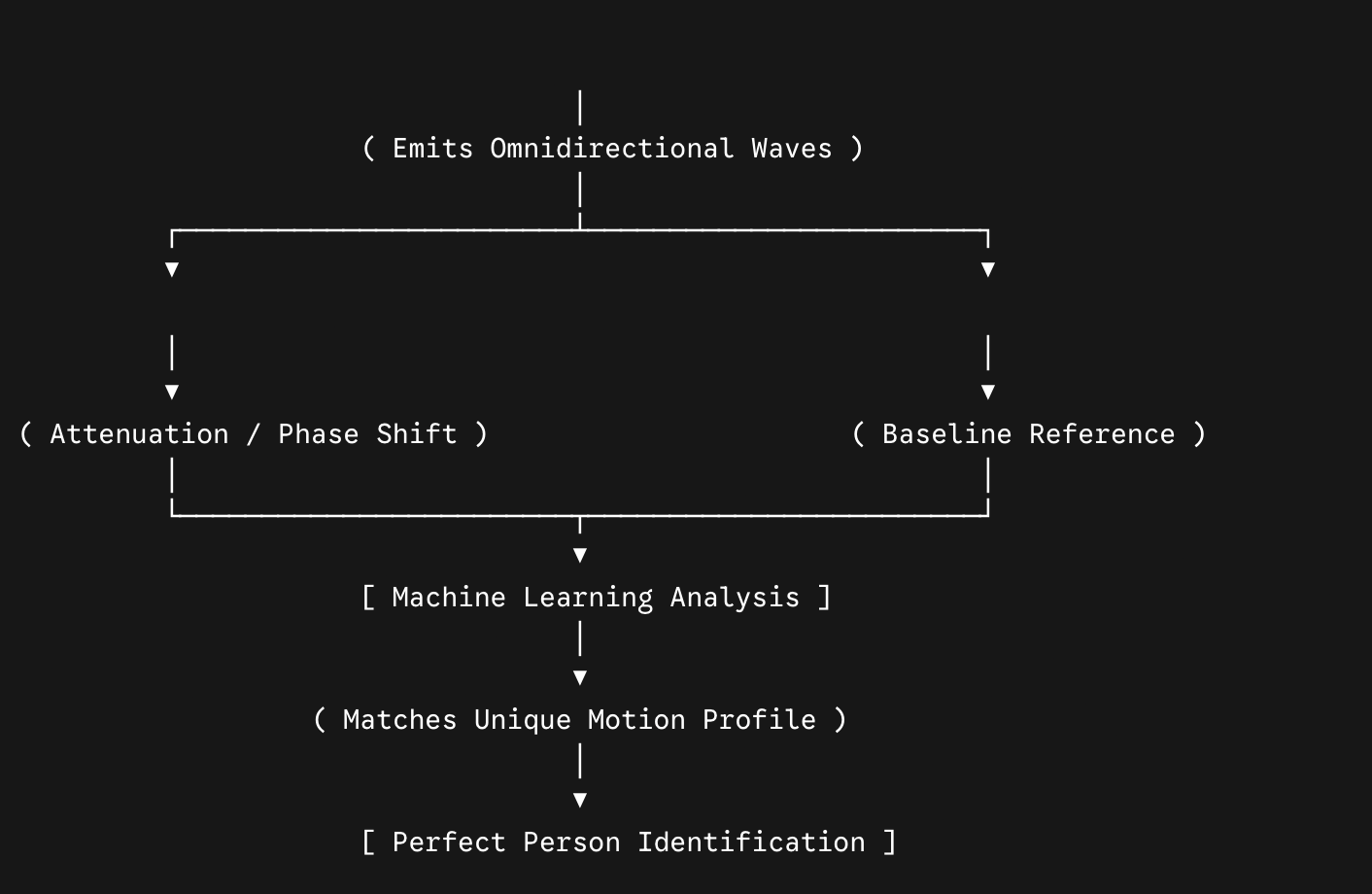
Meanwhile, researchers in Germany demonstrated a new surveillance capability, using standard WiFi signals to identify individuals with near-perfect accuracy by analysing how radio waves bounce off bodies within a room.34
In microchip development, researchers identified a potential obstacle to the next generation of ultra-tiny computer chips.34 They discovered that many promising 2D materials lose their performance advantages because an invisible, atomic-scale gap forms when they are combined with other substrates, presenting a key challenge for semiconductor engineers to address.34
Finally, in high-performance computing, the JUPITER exascale supercomputer in Germany simulated a 50-qubit quantum computer for the first time.34 This simulation provides a new benchmark for evaluating quantum hardware error rates.34
This milestone was accompanied by a new quantum-inspired algorithm that can simulate extraordinarily complex quantum materials, such as quasicrystals, in seconds, resolving a materials science problem that conventional supercomputers have struggled to approach.34
Conclusion
The week ending 29 May 2026 highlighted several key trends shaping the global technology sector, defined by rapid scale and emerging systemic risks.1 Anthropic’s significant funding round and valuation growth highlight the continuous flow of capital into generative AI development, even as major technology firms reorganise their workforces to offset massive infrastructure investments.1 This capital expansion occurs alongside serious cybersecurity challenges, as illustrated by the massive Canvas LMS data breach and the “Megalodon” supply chain compromise, which have emphasised the vulnerability of consolidated Software-as-a-Service models.9
These security challenges are driving a broader push toward “sovereign execution,” with nations like the UK and Australia forming bilateral safety alliances to establish robust testing standards.18 At the same time, hardware supply chains face pressure from rising memory costs, influencing both consumer electronics pricing and the deployment of hyperscale data centres.30 As the industry navigates these operational and economic challenges, long-term development will increasingly rely on deep-tech breakthroughs, including quantum simulations, optical computing, and next-generation material physics.34
Disclaimer
This research report is compiled for academic, educational, and informational analysis purposes only. The information contained herein has been synthesised from various public technology news sources, corporate disclosures, and market research reports available up to and including May 2026. This analysis does not constitute financial, investment, legal, or professional cybersecurity advice. No commercial decisions, strategic organisational shifts, or security implementations should be made solely in reliance upon the findings, data tables, or interpretations presented in this document. All registered trademarks, brand names, and corporate logos are the sole property of their respective owners.
References
- Anthropic soars to $965bn valuation, leapfrogging OpenAI …, accessed on May 30, 2026, https://www.aljazeera.com/economy/2026/5/29/anthropic-soars-to-965bn-valuation-leapfrogging-openai
- Microsoft unveils new AI coding model next week | Cybernews, accessed on May 30, 2026, https://cybernews.com/ai-news/microsoft-new-homegrown-ai-models-copilot-github/
- Google May 2026 SEO Changes: What’s Actually Happening | McDougall Interactive, accessed on May 30, 2026, https://www.mcdougallinteractive.com/blog/seo/google-may-2026-seo-changes/
- I avoid AI tools because thinking is supposed to be hard. It’s what makes us human, accessed on May 30, 2026, https://www.theguardian.com/commentisfree/2026/may/24/ai-tools-thinking-human-hard-coding-writing-technology
- AI NEWS: Week of May 18 to May 24, 2026 | by David Akpovi – Medium, accessed on May 30, 2026, https://medium.com/@davidakpovi/ai-news-week-of-may-18-to-may-24-2026-6cb451ecb766
- Australia’s AI moment: the opportunity in front of us – CommBank, accessed on May 30, 2026, https://www.commbank.com.au/articles/newsroom/2026/05/australias-ai-moment-opportunity-in-front-of-us.html
- New AI Ethics Index Launches to Help Schools Evaluate the Real-World Impact of Artificial Intelligence | Wheelock College of Education & Human Development – Boston University, accessed on May 30, 2026, https://www.bu.edu/wheelock/news/articles/2026/new-ai-ethics-index-launches/
- Governor Newsom signs first-of-its-kind executive order to prepare workers and businesses for potential AI disruption, accessed on May 30, 2026, https://www.gov.ca.gov/2026/05/21/governor-newsom-signs-first-of-its-kind-executive-order-to-prepare-workers-and-businesses-for-potential-ai-disruption/
- The Instructure Canvas Data Breach: What Happened, What Schools Are Doing, and What It Means for Australian Businesses – Otto IT, accessed on May 30, 2026, https://www.ottoit.com.au/blog/instructure-canvas-data-breach/
- 2026 Canvas data breach – Wikipedia, accessed on May 30, 2026, https://en.wikipedia.org/wiki/2026_Canvas_data_breach
- Canvas LMS cybersecurity incident, accessed on May 30, 2026, https://www.unimelb.edu.au/cybersecurity/resources/canvas-incident
- Canvas cyber incident, accessed on May 30, 2026, https://www.westernsydney.edu.au/news-centre/stories/2026/canvas-cyber-incident
- CISA urges security teams to check for software development compromises, accessed on May 30, 2026, https://www.cybersecuritydive.com/news/cisa-security-software-supply-chain-compromises-GitHub/821487/
- CISA Adds Three Known Exploited Vulnerabilities to Catalog, accessed on May 30, 2026, https://www.cisa.gov/news-events/alerts/2026/05/27/cisa-adds-three-known-exploited-vulnerabilities-catalog
- Top 5 Cybersecurity News Stories May 29, 2026 – DIESEC, accessed on May 30, 2026, https://diesec.com/2026/05/top-5-cybersecurity-news-stories-may-29-2026/
- Hottest cybersecurity open-source tools of the month: May 2026, accessed on May 30, 2026, https://www.helpnetsecurity.com/2026/05/28/hottest-cybersecurity-open-source-tools-of-the-month-may-2026/
- New infosec products of the month: May 2026 – Help Net Security, accessed on May 30, 2026, https://www.helpnetsecurity.com/2026/05/29/new-infosec-products-of-the-month-may-2026/
- UK and Australia pact on fast-moving AI security risks – GOV.UK, accessed on May 30, 2026, https://www.gov.uk/government/news/uk-and-australia-pact-on-fast-moving-ai-security-risks
- Sovereign Technology Report: Execution Pressures Hold Back …, accessed on May 30, 2026, https://kineticit.com.au/news/sovereign-technology-report-2026/
- Australia warned over quantum cyber security risks – SecurityBrief Australia, accessed on May 30, 2026, https://securitybrief.com.au/story/australia-warned-over-quantum-cyber-security-risks
- The AI future Australia chooses to build – CommBank, accessed on May 30, 2026, https://www.commbank.com.au/articles/newsroom/2026/05/the-ai-future-australia-chooses-to-build.html
- Top tech of the month: the best new gadgets we’ve tested for May 2026 – TechRadar, accessed on May 30, 2026, https://www.techradar.com/tech/top-tech-of-the-month-the-best-new-gadgets-weve-tested-for-may-2026
- What’s New in Microsoft 365 – May 2026 – Seton Hall University, accessed on May 30, 2026, https://www.shu.edu/technology/news/what-new-in-microsoft-365-may-2026.html
- Tech News 2026 – Issue 19 – Diff, accessed on May 30, 2026, https://diff.wikimedia.org/2026/05/04/tech-news-2026-issue-19/
- What’s New: What we announced in May 2026 – Miro, accessed on May 30, 2026, https://miro.com/blog/whats-new-may-2026/
- Top Worktech News From the Week of May 29th: Updates from Advantive, Syntax, Persistent, and More, accessed on May 30, 2026, https://solutionsreview.com/enterprise-resource-planning/top-worktech-news-from-the-week-of-may-29th/
- US stocks post longest weekly winning streak since 2023, accessed on May 30, 2026, https://www.ft.com/content/d218a534-7f63-4bd9-867d-f47f4727e2e1?syn-25a6b1a6=1
- NVIDIA Market Cap (NVDA) – May 2026 Update | Capital.com, accessed on May 30, 2026, https://capital.com/en-int/markets/shares/nvidia-corp-share-price/market-cap
- AI turns software flaws into Ohio’s top cyber threat, accessed on May 30, 2026, https://www.ohiotechnews.com/ai-software-flaws-ohio-top-cyber-threat/
- This week a 60-building data centre by Gensler was unveiled, accessed on May 30, 2026, https://www.dezeen.com/2026/05/23/utah-data-centre-gensler-this-week/
- High Growth Tech Stocks In Australia May 2026 – Simply Wall St News, accessed on May 30, 2026, https://simplywall.st/stocks/au/software/asx-cat/catapult-sports-shares/news/high-growth-tech-stocks-in-australia-may-2026
- Walmart and Amazon TV promotions offer 30–50% savings in 2Q26 despite rising memory chip costs – Omdia, accessed on May 30, 2026, https://omdia.tech.informa.com/blogs/2026/may/walmart-and-amazon-tv-promotions-offer-30-to-50percent-savings-in-2q26-despite-rising-memory-chip-costs
- iRacing Development Update: May 2026 – iRacing.com | iRacing.com Motorsport Simulations, accessed on May 30, 2026, https://www.iracing.com/iracing-development-update-may-2026/
- Information Technology News – ScienceDaily, accessed on May 30, 2026, https://www.sciencedaily.com/news/computers_math/information_technology/