An Invitation to Listen
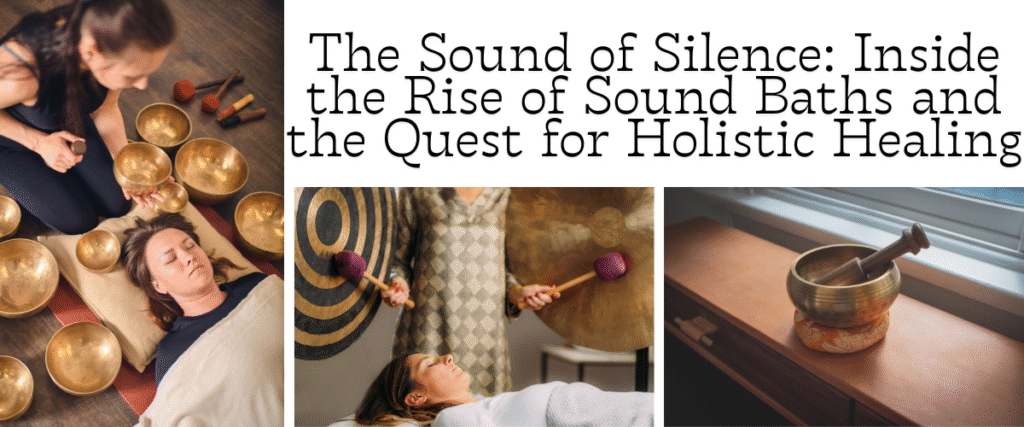
The room is dimly lit, the air still and expectant. Participants settle onto yoga mats, cocooned in blankets and supported by pillows, a small archipelago of quiet repose. The silence is not empty but full of anticipation. Then, a single, resonant tone from a large bronze gong cuts through the quiet. It is not so much a sound as it is a presence—a wave of vibration that seems to wash over the skin, through the muscles, and into the very bones. This is the beginning of a sound bath, an ancient practice finding profound new relevance in the cacophony of the 21st century.1
The rise of sound baths and other alternative healing practices is not an isolated trend but a significant cultural response to the pervasive “noise” of modern existence. In an era defined by chronic stress, digital saturation, and relentless productivity, the search for silence has become a radical act of self-preservation.3 These practices, rooted in millennia of human history, are being rediscovered as potent tools for navigating contemporary life. They represent a collective quest for inner quiet, a deeper connection to the self, and a more holistic vision of well-being that conventional medicine has often overlooked.5
The very name “sound bath” offers a clue to its appeal. It presents a powerful metaphor that contrasts the overwhelming, often chaotic digital and urban soundscapes of daily life with a deliberate, therapeutic, and cleansing auditory experience. The concept of a “bath” implies immersion, renewal, and purification—a stark departure from the feeling of being constantly assaulted by notifications, traffic, and media chatter.3 This framing suggests a collective yearning not just for quiet, but for a form of sensory purification. The practice offers a modern, secular ritual to “wash away” the accumulated stress of the day, much as a physical bath cleanses the body.
This article embarks on a journey to understand this phenomenon. It will explore the immersive experience of a sound bath, trace its echoes through ancient history, and examine the societal drivers fueling its modern resurgence. It will delve into the symphony of science that is beginning to explain how sound affects the mind and body, place the practice within the broader landscape of alternative wellness, and offer a necessary note of caution for navigating this burgeoning field. It is an exploration of how, in a world that never stops talking, we are learning once again how to listen.
What is a Sound Bath? An Immersive Auditory Journey
At its core, a sound bath is a form of passive meditation in which participants are “bathed” in sound waves produced by a variety of resonant instruments.7 Unlike traditional meditation, which often requires a disciplined focus on breath or a mantra, a sound bath allows the sound itself to guide the participant into a meditative state.9 This accessibility is a key component of its growing popularity; no prior experience is needed, and the soothing vibrations can help focus attention away from the mind’s chatter, allowing the sound to lead the way into silence and relaxation.3
What to Expect in a Session
A typical sound bath session is a carefully curated experience designed to maximise comfort and minimise distraction. Participants enter a serene, calming atmosphere, often dimly lit to encourage an inward focus.2 They are invited to lie down on yoga mats, making themselves as comfortable as possible with blankets and pillows.1
A trained facilitator, often called a “sound healer” or practitioner, typically begins the session with a brief guided meditation. This serves to ground participants in the space and transition them from the busyness of their day into a more receptive state.2 The session then transitions into the sound portion, which can last anywhere from 45 to 90 minutes.8 The practitioner plays a sequence of instruments, creating an immersive and overlapping soundscape. The experience is both auditory and somatic—the vibrations are not just heard with the ears but are felt physically throughout the body, creating a full-body sensory journey that can help release tension and promote a sense of calm.3 Some people report a deep sense of relaxation, while others may experience emotional release, heightened creativity, or vivid imagery. The key is to approach the experience with an open mind, allowing the vibrations to guide the journey without expectation.2
The Sound Healer’s Toolkit
The profound melodies that guide participants are created by a specific set of instruments, each chosen for its unique sonic qualities and historical significance. While the exact combination can vary, a core ensemble forms the foundation of most sound baths.
The evolution of these instruments within the Western wellness context is telling. Traditional Tibetan bowls, forged from a blend of metals, produce complex, rich harmonics deeply embedded in ancient spiritual and cultural traditions.7 Their meaning is nuanced and layered. In contrast, the modern crystal singing bowl, crafted from pure quartz, produces a very clear, almost perfectly sustained single-frequency tone.7 This purity of sound allows for a simple and direct mapping onto the Westernised concept of the seven chakras, with each bowl tuned to a specific note corresponding to an energy centre and colour.7 This adaptation makes a complex spiritual system immediately accessible and understandable to a modern consumer who may not have the time or inclination to study Tibetan Buddhism. The rise of the crystal bowl is not merely an aesthetic choice but a strategic “productisation of an ancient concept, making it more digestible and marketable for the contemporary wellness industry.
The following table provides an overview of the primary instruments used in this therapeutic practice.
| Instrument | Material/Description | Cultural Origin | Primary Sonic Quality | Purported Therapeutic Effect |
| Tibetan Singing Bowl | Blend of metals | Himalayan Region | Rich, complex harmonics | Deep relaxation, meditation, chakra balancing 7 |
| Crystal Singing Bowl | Pure quartz crystal | Modern creation | Ethereal, pure, sustained tones | Chakra alignment, mental clarity 7 |
| Gong | Bronze or other metals | East/Southeast Asia | Powerful, all-encompassing waves of sound | Emotional release, clearing blockages, deep meditation 7 |
| Shamanic Drum | Animal hide and wood | Global Indigenous Cultures | Rhythmic, primal, heartbeat-like beat | Grounding, inducing altered states of consciousness 7 |
| Didgeridoo | Hollowed eucalyptus | Indigenous Australia | Deep, continuous drone | Cellular healing, aligning physical and spiritual energies 12 |
| Tuning Forks | Metal (steel/aluminium) | Modern (18th Century England) | Precise, single frequencies | “Tuning” the body’s energy, clearing blockages on acupressure points 7 |
These instruments, whether ancient or modern, are the tools through which sound practitioners create a therapeutic environment, inviting participants on a melodic journey toward self-discovery and profound relaxation.7
Echoes of the Past: The Ancient Roots of Sound Healing
The contemporary fascination with sound baths is not a fleeting new-age invention but the modern expression of a practice deeply woven into the fabric of human history. The use of sound, music, and vibration as a tool for healing and spiritual connection is a universal thread that runs through nearly every ancient civilisation across the globe.7
This wisdom is ancient and widespread. The Aboriginal people of Australia, for example, have used the deep, droning sound of the didgeridoo as a healing tool for at least 40,000 years, believing it could mend broken bones, muscle tears, and other illnesses.12 In ancient Egypt, music and chanting were integral parts of healing rituals performed in temples.16 The ancient Greeks recognised a profound link between music and medicine, so much so that they dedicated a single god, Apollo, to preside over both domains.16 Philosophers like Pythagoras (c. 500 BCE) and his followers are credited with developing a structured approach to sound therapy, using specific melodies to address psychological ailments like depression and anger, while Aristotle wrote about the flute’s power to purify the soul.16 In the East, ancient Vedic philosophers in India employed chants and monosyllabic mantras to soothe the senses and mind, a practice that continues today in traditions like Nada Yoga.15 Similarly, Tibetan singing bowls have been used for centuries in monasteries to deepen meditation and aid in spiritual practice.9
To understand why these practices are now labelled “alternative,” it is necessary to trace the historical divergence of Western medicine from its own holistic origins. Early Western medicine, rooted in the Hippocratic-Galenic tradition, was fundamentally integrative. It viewed illness not as a localised mechanical failure but as a systemic imbalance among the body’s “humours” intrinsically linked to a patient’s mind, personality, and environment.18 Health was a state of harmony. However, the seeds of change planted during the Renaissance blossomed during the Scientific Revolution. In the 16th century, Andreas Vesalius began teaching anatomy through direct dissection of human cadavers, replacing philosophical theory with empirical observation.19 This shift accelerated, and by the 18th century, Giovanni Battista Morgagni’s work on pathologic anatomy definitively transformed medicine into a science focused on localised diseases within specific organs.19 This mechanistic, reductionist view, while allowing for incredible advances, eroded the holistic perspective that had sustained Western medicine for millennia.
As conventional medicine grew more specialised and, at times, dangerously invasive with treatments like bleeding and purging, a counter-movement began. The 18th and 19th centuries saw the rise of the first “alternative” medical systems in the West, such as homeopathy and chiropractic, which emerged as a direct reaction against harsh conventional methods and advocated for a return to holistic principles.18 These practices flourished, and by 1900, about 20 per cent of all medical practitioners in the United States were alternative physicians.18 The discovery of antibiotics and other “miracle drugs” in the 1930s and 1940s caused a sharp decline in their popularity, but the pendulum began to swing back with the counter-culture movement of the 1960s. This revival was fueled by a growing scepticism toward mainstream medicine and a renewed interest in Eastern philosophies, further accelerated by immigration in the 1970s, which introduced practices like acupuncture and Ayurvedic medicine to a wider American audience.18
The current rise of sound baths, therefore, is not a simple revival but a significant re-contextualization of these ancient traditions. Historically, sound healing was deeply embedded within a spiritual or religious framework, serving purposes of communal ritual and spiritual transcendence—from shamanic journeys to connect with the spirit world to Vedic mantras designed to achieve enlightenment.16 The modern framing of the practice has shifted this focus. Today, the marketing and scientific exploration of sound baths emphasises measurable, individual benefits: lowering cortisol, reducing anxiety, altering brainwave states, and improving sleep.3 This evolution reflects a broader cultural change from collective spiritual belief systems to an individualised, secular, and science-validated approach to well-being. The fundamental purpose has been adapted for a new era; we are no longer using sound primarily to connect with the divine, but to optimise our own nervous systems and manage the stresses of our individual lives. This reframing makes the practice palatable and appealing to a modern, scientifically-minded audience.
The Modern Wellness Boom: Why We’re All Listening Now
The recent explosion in the popularity of sound baths is not happening in a vacuum. It is a direct and resonant response to a confluence of societal pressures, generational shifts, and a collective re-evaluation of what it means to be healthy. The practice has emerged as a uniquely tailored solution for the ailments of our time.
The Age of Anxiety and Burnout
The primary engine driving this trend is the escalating mental health crisis of the modern world. We live in an age of anxiety, characterised by constant connectivity, information overload, and the pressure to be perpetually productive.3 The World Health Organisation estimates that depression and anxiety cost the global economy $1 trillion per year in lost productivity.4 Younger generations, in particular, report higher levels of burnout and stress compared to their predecessors.24 In this environment of chronic overstimulation, people are actively and desperately seeking ways to “switch off” and find genuine solace. Sound baths offer a sanctuary from this external and internal noise, providing a structured and accessible way to disconnect from the demands of the world and reconnect with an inner sense of peace.3
The Shift to Holistic and Proactive Health
Concurrent with this mental health challenge is a profound cultural shift in how we approach well-being. There is a growing movement away from a purely reactive, symptom-treating model of health toward one that is proactive, preventative, and holistic.5 Consumers are increasingly wary of the potential side effects of conventional pharmaceuticals and are seeking natural, non-invasive treatments that work in harmony with the body’s own healing processes.5 The modern concept of wellness has expanded to encompass the mind, body, and spirit working in unison.3 This holistic perspective recognises the deep interconnectedness of our physical, mental, and emotional states—for instance, understanding that mental stress has tangible physical consequences. Practices like sound baths fit perfectly within this new paradigm, offering a therapy that addresses the whole person.5
Generational Drivers and the Attention Economy
This wellness boom is being led by Millennials and Gen Z, who have adopted wellness not as an occasional activity but as a daily, personalised practice.24 These generations self-report higher levels of stress and poorer overall health, but they are also more proactive in seeking solutions and are more likely to be influenced by health-related content on social media.24 They prioritise mindfulness and are open to experimenting with a wide range of discretionary wellness products and services, from health-tracking devices to sound baths.24
The appeal of sound baths to this demographic can also be understood as a direct consequence of the “attention economy.” In a world where our focus is constantly being captured, fragmented, and monetised by digital platforms, our ability to concentrate is a depleted resource.3 Traditional mindfulness practices, which require the active and disciplined direction of one’s own attention, can feel daunting or even impossible for a mind accustomed to constant distraction. Sound baths offer a clever “hack” for the attention-depleted individual. They are a low-effort, high-reward modality where the meditative state is induced passively.22 The responsibility for maintaining focus is effectively outsourced to the immersive sound waves, which naturally quiet the mind. This makes sound baths a wellness solution perfectly adapted to the cognitive landscape of the 21st century, offering a path to mindfulness that doesn’t demand the one thing many people feel they have the least of: focused, disciplined attention.
The Accessibility of Mindfulness
This passive nature makes sound baths a form of “meditation for the masses.” Many people who are curious about meditation find the traditional silent approach to be a struggle, their restless minds refusing to quiet down.3 Sound baths provide an accessible and inviting entry point. The immersive sounds give the mind something to focus on, gently lulling it into a state of deep relaxation without requiring intense effort.8 Furthermore, the communal aspect of group sessions fosters a sense of connection and shared experience, which can be deeply appealing in an increasingly isolated world, enhancing the overall therapeutic effect.3
The Symphony of Science: How Sound Affects the Mind and Body
While the healing traditions of the past were built on millennia of intuitive wisdom and empirical observation, modern science is now beginning to provide a new language to describe these effects. A growing body of research is starting to unpack the measurable physiological and psychological changes that occur during a sound bath, validating through neuroscience what ancient cultures have long understood.22
The Core Mechanisms
The therapeutic effects of sound baths appear to operate through several interconnected biological mechanisms, which work together to shift the body and mind from a state of stress to one of deep relaxation.
The Relaxation Response: One of the most significant effects of a sound bath is its ability to activate the parasympathetic nervous system, the branch of the autonomic nervous system responsible for the “rest and digest” response.7 This directly counteracts the sympathetic nervous system’s “fight or flight” response, which is chronically activated in modern life by stress. The deep, low-frequency vibrations produced by instruments like gongs and singing bowls are thought to stimulate the vagus nerve, a major component of the parasympathetic system that runs from the brainstem through the neck and into the chest and abdomen.10 Stimulating this nerve helps to slow the heart rate, lower blood pressure, and signal to the body that it is safe to relax.10
Brainwave Entrainment: Our brains operate in rhythmic patterns of electrical activity known as brainwaves, which are associated with different states of consciousness. During a typical waking day, our brains are predominantly in a high-frequency Beta state ($12–30$ Hz), associated with active cognition and alertness.28 The consistent, rhythmic, and repetitive sounds of a sound bath can induce a phenomenon called brainwave entrainment, or the Frequency-Following Response.28 This is where the brain’s own electrical oscillations begin to synchronise with the external auditory rhythm. This process gently guides the brain to shift from the active Beta state into slower, more restorative brainwave patterns: the calm, focused Alpha state ($8–12$ Hz), and the dreamy, meditative Theta state ($4–8$ Hz), which is often associated with deep relaxation, creativity, and the state just before sleep.8
Sympathetic Resonance: The principle of sympathetic resonance states that every object, including the cells and organs in the human body, has a natural vibratory rate or resonant frequency. When an object is exposed to an external vibration that matches its own resonant frequency, it will begin to vibrate in harmony with that external source—a phenomenon easily demonstrated by striking one tuning fork and watching a nearby, identically tuned fork begin to vibrate on its own.3 Sound healing is based on the idea that the intentional use of specific frequencies can bring the body’s systems, which may be “out of tune” due to stress or illness, back into a state of harmonious vibration, facilitating relaxation and healing on a cellular level.3
The Evidence: What the Studies Say
While the field is still emerging, a number of studies have documented the tangible benefits of sound meditation.
- Mental and Emotional Health: An observational study published in the Journal of Evidence-Based Integrative Medicine involving 62 participants found that a one-hour sound meditation with Tibetan singing bowls resulted in significantly less tension, anger, fatigue, and depressed mood.26 Other studies and reviews have echoed these findings, noting improvements in distressed mood, confusion, and overall anxiety.11
- Physiological Markers: Research has demonstrated measurable physiological effects. Participants have shown reductions in blood pressure and heart rate following sound therapy sessions.9 A 2022 study using a 6a 4-channel EEG to measure brain activity during a singing bowl sound massage found a significant decrease in overall EEG power, particularly in the higher-frequency beta and gamma bands, indicating a neurophysiological shift toward a more mindful, meditative state of consciousness.31
- Pain and Sleep: As sound baths promote deep relaxation, many participants report improved sleep quality and a greater ability to fall asleep after sessions.9 The 2016 study also asked participants to rate any physical pain they were experiencing; they tended to rank their pain higher before the sound bath than they did afterwards, suggesting a potential for pain reduction, though more research is needed to confirm clinical significance.23
It is important to approach these findings with a degree of scientific caution. Much of the current research is based on small-scale studies, observational designs, or lacks rigorous control groups.23 Systematic reviews of the literature, while acknowledging promising positive effects, consistently conclude that more robust, large-scale randomised controlled trials are needed before sound therapy can be widely recommended for clinical applications.30
Interestingly, the scientific evidence reveals a fascinating dynamic: the practice appears to be most effective for those who are least experienced with it. The key observational study found that participants who were “previously naïve to this type of meditation experienced a significantly greater reduction in tension compared with participants experienced in this meditation”.26 This challenges the traditional model of skill acquisition in wellness, where more practice is assumed to lead to greater benefit. It suggests that for a person chronically stressed and unfamiliar with deep relaxation, the initial, novel experience of being passively guided into a meditative state provides the most dramatic and measurable “before and after” effect. For seasoned meditators, the state achieved may be more familiar and thus result in a less pronounced statistical shift from their baseline. This points to the possibility that the most potent therapeutic application of sound baths may not be as a long-term, deepening practice, but as a highly effective and accessible “gateway” tool for introducing the benefits of a quiet mind to the stressed, overstimulated, and meditation-sceptical individual.
Beyond the Bath: A Glimpse into Other Healing Modalities
Sound baths do not exist in isolation; they are part of a vast and diverse ecosystem of practices that fall under the umbrella of complementary and alternative medicine (CAM).18 Understanding this broader context is essential for navigating the modern wellness landscape. While each modality is unique, many share a common philosophical thread: a holistic view of health that emphasises the interconnectedness of mind, body, and spirit, and a focus on a subtle “life force” or “energy” that is believed to be fundamental to well-being.18
A brief comparative overview of a few other popular practices can help contextualise the principles and scientific standing of sound baths.
- Reiki: Reiki is a Japanese form of energy healing developed in the early 20th century by Mikao Usui.35 Its core principle is that a practitioner can channel “universal life energy”—known as qi or ki—through their palms to a recipient to encourage emotional or physical healing.36 The practice is typically administered through “palm healing” or “hands-on healing,” where the practitioner places their hands lightly on or just above the client’s body.36 In addition to the energy work, Reiki is guided by five ethical precepts, such as “Just for today, I will not be angry” and “Just for today, I will be grateful,” which serve as daily mindfulness affirmations.35 From a scientific perspective, Reiki is considered a pseudoscience. There is no empirical evidence for the existence of the “universal energy” it claims to manipulate, and its therapeutic effects are widely attributed to the placebo effect, the power of gentle human touch, and the relaxation induced by the quiet, therapeutic setting.36
- Crystal Healing: This practice involves the use of semiprecious stones and crystals to promote healing and well-being. Its roots can be traced to ancient cultures like the Egyptians, who used stones like lapis lazuli and turquoise in amulets to ward off illness and negative energy.38 The modern practice is heavily associated with the New Age movement and is based on the idea that crystals possess unique vibrational frequencies that can interact with the body’s energy field, or aura.38 Practitioners believe crystals can be used to balance the body’s energy centres, or chakras, by placing specific stones on corresponding points of the body.14 Like Reiki, crystal healing is considered a pseudoscience. There is no scientific evidence to support the claim that crystals have inherent healing powers, and studies have shown that any perceived benefits are attributable to the placebo effect and confirmation bias—the tendency for believers to notice only the evidence that supports their desired outcome.38
- Acupuncture: Acupuncture is a key component of Traditional Chinese Medicine (TCM), a comprehensive medical system with thousands of years of history.34 Its foundational principle is that health is dependent on the smooth and balanced flow of qi through a network of channels in the body known as meridians. Illness is believed to arise from blockages or imbalances in this energy flow.34 The primary method involves the insertion of extremely thin, sterile needles into specific “acupoints” along these meridians to restore balance.34 While the traditional explanation of qi and meridians has not been validated by modern science, the clinical efficacy of acupuncture is supported by a substantial body of research. Numerous studies and clinical trials have shown it to be an effective treatment for a variety of conditions, most notably for the management of chronic pain, such as back pain, neck pain, and osteoarthritis.34 As a result, acupuncture is increasingly integrated into mainstream healthcare and is often covered by insurance, occupying a unique space where an ancient practice has gained significant validation within the Western medical paradigm, even if its original theoretical framework remains a subject of debate.42
The following table offers a comparative guide to these modalities, providing a snapshot of their principles, methods, and scientific standing.
| Practice | Core Principle | Primary Method | Scientific Standing |
| Sound Bath | Inducing relaxation and meditative states through sound and vibration. | Passive listening to instruments (bowls, gongs) in a group or individual setting. | Emerging Evidence: Studies show measurable benefits for stress, anxiety, and mood, but more robust research is needed. Mechanisms like brainwave entrainment are plausible.26 |
| Reiki | Channelling “universal life energy” (qi) to promote healing. | “Hands-on” or “palm healing” where a practitioner places hands on or near the client’s body. | Pseudoscience: No scientific evidence for the existence of “qi” or a healing energy field. Effects are attributed to the placebo effect and gentle human touch.36 |
| Crystal Healing | Using the “vibrational energy” of crystals to balance the body’s energy field and chakras. | Placing crystals on or around the body, wearing them as jewellery, or using them in meditation. | Pseudoscience: No scientific evidence for healing properties. Effects are attributed to the placebo effect, confirmation bias, and the power of ritual and intention.38 |
| Acupuncture | Balancing the flow of “vital energy” (qi) along the body’s meridians. | Insertion of fine, sterile needles into specific “acupoints.” | Established for Specific Conditions: Widely researched and recognised as effective for managing various types of pain. The underlying mechanism is still debated, but its clinical efficacy is supported by numerous trials.34 |
A Note of Caution: Navigating the Wellness Wave with a Critical Eye
As with any rapidly growing wellness trend, the rise of sound baths is accompanied by a spectrum of claims, from the well-supported to the wildly exaggerated. Navigating this landscape requires a discerning and critical eye, balancing an open mind with a healthy dose of scepticism and an awareness of potential risks.
Acknowledging Scepticism and Pseudoscience
It is crucial to address the valid criticisms levelled against the field. Many sound healing practitioners blend legitimate scientific concepts, such as the relaxation response, with unsubstantiated pseudoscientific jargon, often misquoting scientists or making vague claims about “quantum physics” and “cellular vibrations”.32 While research supports the use of sound baths as a tool for stress reduction and mood improvement, more extraordinary claims—such as the ability to cure cancer or other serious medical conditions—are unfounded and irresponsible.32 It is essential to distinguish between the documented benefits of relaxation and the dangerous allure of magical thinking.32
The Lack of Regulation
A significant concern is that the field of sound healing is almost entirely unregulated. Unlike licensed medical professions, there are no standardised training programs, certification requirements, or governing bodies to ensure practitioners are qualified and adhere to a code of ethics.32 The U.S. Food and Drug Administration (FDA) provides only general guidance on complementary and alternative medicine, leaving consumers in a “buyer beware” environment.32 This lack of oversight makes it incumbent upon the individual to thoroughly vet practitioners and maintain realistic expectations.
Potential Risks and Contraindications
Contrary to the common perception of sound baths as universally gentle and safe, there are specific risks and contraindications that must be taken seriously. The very mechanisms that make the practice effective for some—powerful vibrations and the potential for deep emotional release—are the same factors that can create risks for others. This duality reveals that “holistic” does not mean “universally benign” and highlights a critical need for practitioners to be not only skilled with their instruments but also medically aware and trauma-informed.
Individuals with the following conditions should exercise extreme caution and always consult a medical professional before participating in a sound bath:
- Epilepsy and Seizure Disorders: The fluctuating sound frequencies and deep resonant tones can, in some cases, act as a trigger for seizures, similar to flashing lights or sudden noises.10
- Medical Implants: The strong vibrations generated by gongs and singing bowls, especially those placed on or near the body, have the potential to interfere with the functioning of medical devices like pacemakers, defibrillators, or insulin pumps.10
- Pregnancy: While many practitioners offer modified sessions for pregnant women, it is widely recommended to avoid sound baths during the first trimester, when the fetus is most vulnerable. A doctor’s consultation is essential.10
- Severe Anxiety, PTSD, or a History of Trauma: Sound baths can be profoundly relaxing, but the deep vibrations can also stir up and bring suppressed emotions or traumatic memories to the surface unexpectedly. Without the support of a trained therapist in a safe container, this can be an overwhelming or even re-traumatising experience.44
- Sound Sensitivity and Hearing Conditions: For individuals with conditions like hyperacusis (a severe sensitivity to sound) or tinnitus (ringing in the ears), the intense and sustained sounds of a sound bath could be painful or exacerbate their symptoms.44
Furthermore, it is worth noting that prolonged exposure to certain frequencies and high-intensity vibrations can cause physical harm to nerves and circulation, underscoring the importance of seeking out experienced, responsible practitioners who prioritise safety.32 The responsible evolution of this industry depends on the development of rigorous training that includes screening for these contraindications and creating a safe environment for all participants.
Conclusion: Finding Your Frequency in a Noisy World
The modern resurgence of the sound bath is a compelling chapter in the timeless human story of seeking healing, meaning, and quietude. It is an ancient practice, born from shamanic rituals and monastic traditions, that has found a powerful new resonance in our stressed-out, overstimulated contemporary world. By offering an accessible and passive pathway to the deep relaxation and meditative states that often feel elusive, sound baths have emerged as a potent tool for navigating the pressures of 21st-century life.
The emerging science, while still in its early stages, is beginning to provide a compelling framework for understanding these effects. The evidence points toward measurable reductions in stress, anxiety, and negative mood, accompanied by physiological shifts in heart rate, blood pressure, and brainwave activity that are indicative of the body’s profound relaxation response. However, this practice exists within a complex and largely unregulated wellness landscape that demands critical engagement. It is essential to separate the plausible benefits of stress management from the pseudoscientific claims of curing disease.
Ultimately, sound baths should not be viewed as a panacea or a replacement for professional medical or psychological treatment for serious conditions.23 Rather, their value lies in their role as a complementary practice within a broader, personalised wellness toolkit. For many, they can be a powerful and effective method for managing daily stress, improving sleep, elevating mood, and fostering a deeper connection with one’s inner world.
In a society that constantly demands our attention and pulls our focus outward, the simple, radical act of lying down in a quiet room and just listening may be one of the most profound forms of self-care available. The journey of a sound bath is more than an auditory experience; it is an invitation to listen not only to the resonant tones of a singing bowl, but perhaps, in the silence that follows, to the quieter frequencies of our own being.
Disclaimer
The information presented in this article is for educational and informational purposes only and is not intended as a substitute for professional medical advice, diagnosis, or treatment. Always seek the advice of your physician or other qualified health provider with any questions you may have regarding a medical condition. Do not disregard professional medical advice or delay in seeking it because of something you have read in this article. The authors and publisher of this article are not responsible for any adverse effects or consequences resulting from the use of any suggestions, preparations, or procedures described. Before undertaking any new health regimen, including participating in a sound bath, it is essential to consult with a healthcare professional, especially if you are pregnant or have a pre-existing medical condition.
Reference
- What is a Sound Bath and its Benefits? – Shanti-Som, accessed on October 30, 2025, https://www.shantisom.com/en/blog/what-is-a-sound-bath-and-its-benefits/
- What to Expect During a Healing Sound Bath Experience, accessed on October 30, 2025, https://wrcameronwellness.org/blog/what-to-expect-during-a-healing-sound-bath-experience/
- Why Sound Baths Are Increasing In Popularity For Relaxation and Stress Management, accessed on October 30, 2025, https://www.straightuppr.com.au/post/why-sound-baths-are-increasing-in-popularity-when-it-comes-to-relaxation-and-stress-management
- The Imperative Shift Towards Holistic Health and Wellbeing – International SOS, accessed on October 30, 2025, https://www.internationalsos.com/insights/the-imperative-shift-towards-holistic-health-and-wellbeing
- The Rise of Alternative Medicine: Embracing a Holistic Approach to Health – The Salt Room, accessed on October 30, 2025, https://saltroom-coralsprings.com/https-saltroom-coralsprings-com-blog-benefits-the-rise-of-alternative-medicine-embracing-a-holistic-approach-to-health/
- The Power of Mindfulness: A Holistic Approach to Mental and Emotional Well-Being, accessed on October 30, 2025, https://www.therapycloud.com/blogs/the-power-of-mindfulness-a-holistic-approach-to-well-being
- What Is A Sound Bath? Healing Harmony And Inner Balance | Cloud Forest Sanctuary, accessed on October 30, 2025, https://konacloudforest.com/blog/what-is-a-sound-bath/
- Everything you need to know about sound baths | Health Travel, accessed on October 30, 2025, https://www.health.travel/read/everything-you-need-to-know-about-sound-baths/
- What is Sound Bath Meditation? Exploring Its Origins, Benefits, and Practices – Cymbiotika, accessed on October 30, 2025, https://cymbiotika.com/blogs/health-hub/what-is-sound-bath-meditation-exploring-its-origins-benefits-and-practices
- The transformative power of sound baths: a deep dive – the clear space, accessed on October 30, 2025, https://www.theclearspace.co.uk/blog/what-is-a-sound-bath
- Sound Bath Therapy | Amend Treatment, accessed on October 30, 2025, https://amendtreatment.com/modalities/sound-bath-therapy/
- Cultural Traditions of Sound Healing Around the World – Divasonic Music Academy, accessed on October 30, 2025, https://www.divasonicmusicacademy.com/blog/Cultural%20Traditions%20of%20Sound%20Healing%20Around%20the%20World
- 28 Sound Healing Instruments for Sound Therapy and Relaxation (2025 UPDATE) – Soundhealing.gr, accessed on October 30, 2025, https://www.soundhealing.gr/20-sound-healing-instruments-for-sound-therapy-and-relaxation/
- The Theory behind Crystal Healing, accessed on October 30, 2025, https://gfehandpickedcrystals.com/en/blogs/%E8%84%88%E8%BC%AA-x-%E6%99%B6%E7%9F%B3/the-theory-behind-crystal-healing
- Sound Meditation: Origins and How It Works – Maloka, accessed on October 30, 2025, https://www.playmaloka.com/journals/sound-meditation-a-brief-history
- Sound Therapy, Music Therapy and History. – Sound Therapy Education, accessed on October 30, 2025, https://soundtherapy.education/history-of-sound-healing/
- Sound as medicine in different cultures – Himalayan Academy of Sound Healing, accessed on October 30, 2025, https://himalayanacademyofsound.com/sound-as-medicine-in-history
- History of alternative medicine | Research Starters – EBSCO, accessed on October 30, 2025, https://www.ebsco.com/research-starters/complementary-and-alternative-medicine/history-alternative-medicine
- Holistic Medicine and the Western Medical Tradition – AMA Journal of Ethics, accessed on October 30, 2025, https://journalofethics.ama-assn.org/article/holistic-medicine-and-western-medical-tradition/2008-03
- History of alternative medicine – Wikipedia, accessed on October 30, 2025, https://en.wikipedia.org/wiki/History_of_alternative_medicine
- History of complementary medicine | Research Starters – EBSCO, accessed on October 30, 2025, https://www.ebsco.com/research-starters/complementary-and-alternative-medicine/history-complementary-medicine
- The Science Behind Sound Baths: Ancient Healing Meets Neuroscience – Madre, accessed on October 30, 2025, https://www.madre-sl.com/blog/the-sciebce-behind-sound-baths
- Sound Bath: What It Is, How It Helps, and More – Healthline, accessed on October 30, 2025, https://www.healthline.com/health/sound-bath
- The Future of Wellness trends survey 2025 | McKinsey, accessed on October 30, 2025, https://www.mckinsey.com/industries/consumer-packaged-goods/our-insights/future-of-wellness-trends
- Alternative healing interest surges by 837% globally, study reveals – Professional Beauty, accessed on October 30, 2025, https://professionalbeauty.co.uk/global-alternative-healing-growth
- Effects of Singing Bowl Sound Meditation on Mood, Tension, and …, accessed on October 30, 2025, https://pmc.ncbi.nlm.nih.gov/articles/PMC5871151/
- Why You Should Try Sound Healing (Even If You’re Sceptical) – Transcend Tribe, accessed on October 30, 2025, https://transcendtribe.co.uk/why-you-should-try-sound-healing/
- Sound Baths: Ancient Ritual, Modern Science, and the Neurosensory Frontier – enophones, accessed on October 30, 2025, https://getenophone.com/blogs/news/sound-baths-ancient-ritual-modern-science-and-the-neurosensory-frontier
- Finding Calm – The Therapeutic Effects Of Sound Healing, accessed on October 30, 2025, https://www.academyofsoundhealing.com/blog/finding-calm-the-therapeutic-effects-of-sound-healing
- The human health effects of singing bowls: A systematic review – PubMed, accessed on October 30, 2025, https://pubmed.ncbi.nlm.nih.gov/32507429/
- Neurophysiological Effects of a Singing Bowl Massage – PMC – PubMed Central – NIH, accessed on October 30, 2025, https://pmc.ncbi.nlm.nih.gov/articles/PMC9144189/
- Sound Healing | Skeptical Sunday | Jordan Harbinger, accessed on October 30, 2025, https://www.jordanharbinger.com/sound-healing-skeptical-sunday/
- Exploring the healing power of singing bowls: An overview of key findings and potential benefits – PubMed, accessed on October 30, 2025, https://pubmed.ncbi.nlm.nih.gov/37532602/
- Acupuncture – StatPearls – NCBI Bookshelf – NIH, accessed on October 30, 2025, https://www.ncbi.nlm.nih.gov/books/NBK532287/
- Reiki Principles: How They Impact Everyday Life – Allison Eaton, accessed on October 30, 2025, https://www.allisoneaton.com/blog/blog-post-title-two-zatx7
- Reiki – Wikipedia, accessed on October 30, 2025, https://en.wikipedia.org/wiki/Reiki
- 5 Reiki Principles To Incorporate Into Your Lifestyle | Laterra Gems, accessed on October 30, 2025, https://laterragems.com/5-reiki-principles-to-incorporate-into-your-lifestyle/
- Crystal healing – Wikipedia, accessed on October 30, 2025, https://en.wikipedia.org/wiki/Crystal_healing
- Crystal Healing. A Complete Guide to Harnessing the… | by @cotoapp – Medium, accessed on October 30, 2025, https://medium.com/@cotoapp/crystal-healing-2c5c6e428878
- Crystal Healing meaning and definition – The School of Health, accessed on October 30, 2025, https://www.schoolofhealth.com/be-better/natural-health-definitions/crystal-healing/
- Crystal healing | Research Starters – EBSCO, accessed on October 30, 2025, https://www.ebsco.com/research-starters/complementary-and-alternative-medicine/crystal-healing
- NIH analysis reveals a significant rise in use of complementary health approaches, especially for pain management, accessed on October 30, 2025, https://www.nih.gov/news-events/news-releases/nih-analysis-reveals-significant-rise-use-complementary-health-approaches-especially-pain-management
- 1108: Sound Healing | Skeptica… – The Jordan Harbinger Show – Apple Podcasts, accessed on October 30, 2025, https://podcasts.apple.com/us/podcast/1108-sound-healing-skeptical-sunday/id1344999619?i=1000685489638
- Who should not do sound baths? – Blogs – Home of Wellness Dubai, accessed on October 30, 2025, https://yourhomeofwellness.com/who-should-not-do-sound-baths/