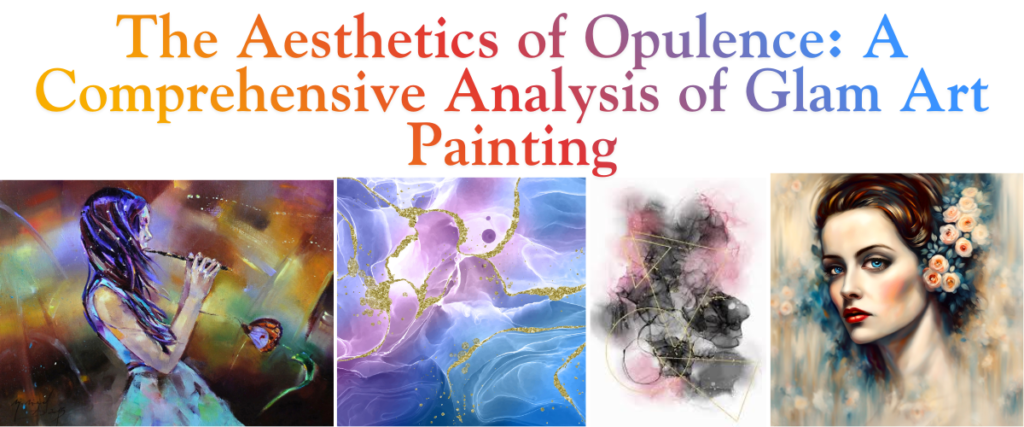
The contemporary art world has witnessed the emergence of a powerful aesthetic known as glam art painting, a movement that prioritises elegance, glitz, and unapologetic extravagance.1 This style is not merely a modern trend but a sophisticated synthesis of multiple historical movements, including Art Nouveau, Art Deco, and Pop Art, all of which contributed to the current understanding of luxury and opulence in visual media.1 Glam art serves as a visual celebration of high-end lifestyles, often utilising reflective surfaces, metallic accents, and high-fashion iconography to create pieces that function as both fine art and central decorative anchors within luxury interiors.3 The core of this aesthetic lies in its ability to interact with light and architectural space, transforming a simple wall into a dynamic statement of prestige and taste.5
The Foundations of Glamour: Historical Lineage and Artistic Evolution
To understand the nuances of glam art painting, one must examine the genealogical roots that established the standards of luxury in art. The journey begins with the late 19th-century movements that rejected the drabness of the Industrial Revolution in favour of decorative brilliance.
The Golden Phase: Art Nouveau and the Vienna Secession
The earliest manifestations of what would become the glam aesthetic are found in the work of the Vienna Secession, particularly the “Golden Phase” of Gustav Klimt.1 Klimt’s integration of gold leaf, intricate patterning, and decadent imagery provided a historical precedent for using precious materials to elevate the subject matter.1 During this period, art was not just about representation but about the creation of a sensory experience. Klimt’s work demonstrated how gold could be used to create a divine, ethereal glow, a technique that remains a staple in contemporary glam art through the use of modern metallic foils and mica powders.8
Art Nouveau, flourishing between 1895 and 1900, introduced a fascination with organic, flowing lines and nature-inspired motifs that would later be reimagined in the “Earthy Glam” and botanical art sectors.7 This movement emphasised a unified aesthetic where everything from architecture to jewellery was part of a singular, beautiful whole.2 However, as the 20th century progressed, the fluid lines of Art Nouveau began to give way to a more structured and modern definition of glamour.
The Interwar Zenith: Art Deco and the Architecture of Luxury
The most significant historical contributor to the glam art movement is undoubtedly Art Deco, which emerged in Paris in the 1910s and reached its peak between 1920 and 1940.2 Art Deco represented a definitive break from the past, embracing modernist ideas of progress, technological optimism, and the luxurious lifestyles of a new elite class.2 Unlike the organic curves of its predecessor, Art Deco was characterised by bold geometric forms, symmetry, and clean lines.7
| Movement Aspect | Art Nouveau (c. 1890–1910) | Art Deco (c. 1910–1940) |
| Dominant Forms | Sinuous, organic, asymmetrical curves 7 | Geometric, symmetrical, angular shapes 7 |
| Materiality | Stained glass, wrought iron, wood 2 | Chrome, stainless steel, exotic woods, ivory 7 |
| Cultural Driver | Reaction to industrialization 7 | Celebration of the Machine Age and speed 7 |
| Visual Texture | Fluid, floral, “whiplash” lines 11 | Streamlined, polished, repetitive patterns 7 |
| Primary Influences | Natural world, Japanese prints 2 | Cubism, Fauvism, Ancient Egyptian motifs 7 |
The Art Deco period saw the rise of the first true “glam” celebrity artists. Tamara de Lempicka, often called the “Baroness with a Brush,” epitomised this era with paintings that featured elongated, statuesque figures and a clean, precise style influenced by Cubism.2 Her work was subtle yet powerful, utilising bold colours and high-contrast lighting to create a sense of three-dimensional volume.2 This period also introduced the concept of the “luxury brand” in art, as designers like Paul Poiret and René Lalique crossed the boundaries between fashion, jewellery, and fine art, creating perfume bottles and glassware that are now considered iconic examples of Art Deco glamour.2
Pop Art and the Commercial Glamour Revolution
In the 1950s and 60s, the definition of glamour underwent another transformation with the rise of Pop Art in Britain and the United States.15 Pop Art challenged the “looseness” and personal symbolism of abstract expressionism by turning to the imagery of popular culture, advertising, and Hollywood.15 This movement identified glamour as something that was “popular, transient, expendable, and big business”.15
Andy Warhol became the central figure of this era, using silkscreen printing to replicate the faces of icons like Marilyn Monroe and Elizabeth Taylor.1 By doing so, Warhol highlighted the “banal or kitschy” elements of celebrity culture while simultaneously celebrating its power.16 Pop Art introduced a “bold, bright, and brash” visual language that remains central to modern glam art, particularly in the use of vibrant primary colours and repetitive motifs.15 The movement democratized glamour, moving it away from the exclusive materials of the Art Deco era and into the realm of mass-produced, high-energy imagery.17
The Materiality of the Gilded Canvas: Techniques and Composition
A defining characteristic of glam art painting is its innovative use of non-traditional materials to create depth, texture, and light refraction. The physical composition of these works is often multi-layered, requiring a high degree of technical precision and chemical understanding.
The Role of Reflective Additives
Contemporary glam art relies heavily on materials that interact with the viewer’s environment. Unlike traditional oil paintings, these pieces often incorporate structural elements to catch the light.
- Crushed Glass and Acrylic Diamonds: These materials are used to create a “crystalline” effect, often appearing as though the canvas is encrusted with jewels.8 Clear crushed glass is frequently applied to specific areas of a painting to provide a three-dimensional topography that changes as the viewer moves around the room.8
- Glitter and Diamond Dust: For a finer shimmer, artists use “diamond dust” or high-grade holographic glitters.8 These are often layered over paint or mixed into resin to create a surface that “twinkles” rather than just reflects.20
- Metallic Leaf and Mica Powders: Gold leaf and silver foil are applied using specialised adhesives to create large areas of solid metallic shine.8 Mica powders, which are natural minerals, are often used as an alternative to plastic glitters to provide a pearlescent or metallic shimmer when mixed into mediums like epoxy.10
Epoxy Resin: The Glass-Like Finish
The most transformative material in the modern glam artist’s arsenal is epoxy resin. When applied as a top coat, resin provides a high-gloss, glass-like finish that makes colours appear deeper and more vibrant.22 This material is also used to create “fluid art,” where pigments are suspended in the liquid resin and poured onto the canvas to create organic, swirling patterns that resemble marble or geode formations.19
The application of resin is a highly technical process. It involves an exothermic reaction where the resin and hardener must be mixed in precise ratios.24 Artists must manage the “pot life” of the mixture—the amount of time the resin remains liquid—and use heat guns or torches to remove bubbles and ensure a perfectly level, mirror-like surface.22 Once cured, the resin forms a durable, water-resistant plastic that protects the underlying artwork while adding a luxurious weight and finish to the piece.22
Fashion Illustration and the Iconography of Branding
A major sub-category of glam art focuses on the world of high fashion. This segment draws heavily from the history of fashion illustration, which saw a revival in the 1920s with artists like Benito, who used elongated silhouettes to emphasise the elegance of gowns.14 Contemporary glam art frequently features:
- Designer Motifs: Paintings often centre on the logos and product designs of heritage brands such as Chanel, Louis Vuitton, Dior, and Prada.3 The Chanel No. 5 perfume bottle is perhaps the most recurring motif, often reimagined with watercolour splashes, graffiti accents, or encrusted with crushed glass.3
- Street Art Twists: Many artists are now blending these luxury motifs with “urban flair,” using spray paint, stencils, and bold graffiti strokes to create a “modern statement” piece.3 This style represents a collision of high-culture elegance and low-culture energy, creating a dynamic contrast that appeals to modern collectors.3
| Motifs and Subjects | Symbolic Value | Material Execution |
| Interlocking Logos | Prestige, brand loyalty, timelessness 3 | Gold leafing, black-on-white high contrast 3 |
| Perfume Bottles | Femininity, sophistication, nostalgia 3 | Resin top-coats, crushed glass “liquid” 3 |
| High Heels/Shoes | Empowerment, style, social status 27 | Hand-applied glitter, diamond dust 27 |
| Abstract Geodes | Natural luxury, organic elegance 19 | Pigmented resin, metallic mica veins 19 |
| Celebrity Portraits | Cultural power, beauty standards 1 | Silkscreen, pop art palettes, neon accents 17 |
The Art of Botanical Glamour: Nature Reimagined
Beyond fashion and geometry, nature—specifically floral motifs—plays a significant role in the glam art narrative. Floral patterns have been a staple of decorative design since ancient Egypt, where the lotus flower symbolised rebirth and regeneration.28 In the context of glam art, these natural forms are elevated through stylisation and luxurious finishing.
Floral Composition and Patterning
Artists often utilise various layout structures to create dynamic floral canvases. “Mirrored floral patterns,” inspired by Art Nouveau and Damask styles, reflect motifs along a vertical axis to create a symmetrical, formal look that suits traditional glam interiors.30 Alternatively, “ditsy floral patterns” feature small, intertwined motifs that create a sense of movement and flow.30
In modern high-fashion glam, flowers are often treated with hyper-realism or used as three-dimensional embellishments. Collections from designers like Alexander McQueen and Erdem have heavily influenced this sector, integrating botanical prints that are both “romantic and modern”.11 This “floral fashion” translates to the canvas as large-scale blooms—such as peonies, which symbolise wealth and honour in Chinese culture—rendered with iridescent paints or surrounded by a halo of metallic leaf.28
The Evolution of the Botanical Motif
The historical progression of botanical art has seen a shift from the delicate, realistic veins of a leaf in the Victorian era to the bold, oversized hibiscus and jungle prints of the 1960s Lily Pulitzer designs.11 Today, glam art might feature a single, dramatic Anthurium—a flower noted for its exotic, sculpted appearance—as a focal point, often finished with a high-gloss resin to mimic the natural waxy sheen of the plant.22 This trend toward “botanical themes” in 2025 art trends suggests a growing consumer “hunger for a hint of the wild” that is still refined enough for a luxury setting.31
Strategic Interior Design: Integrating Glam Art into the Modern Home
In the professional world of interior design, glam art is treated as a “catalyst” for the entire room’s aesthetic.32 Its placement and pairing are critical to achieving a look that is opulent rather than cluttered.
Lighting and Reflection Strategies
Because glam art relies on reflective materials, lighting is the most important factor in its display. Designers often follow a “layering” approach:
- Focal Lighting: Recessed ceiling lights or spotlights are directed at the canvas to activate the glitter and crushed glass.4
- Strategic Mirroring: Placing art near mirrored furniture or using mirrored frames allows the light to “bounce” around the room, creating an “illusion of an art gallery”.4
- Dimmer Controls: Using dimmer switches allows the homeowner to adjust the “atmosphere” throughout the day, as the art will look strikingly different under soft evening light than it does in bright midday sun.4
Coordination with Textiles and Hardware
Glam interiors are an “interplay of texture and shine”.4 To balance the high-gloss surfaces of the art, designers incorporate plush materials:
- Velvet and Silk: The soft, matte finish of a velvet sofa or silk drapes provides a sophisticated contrast to the hard, reflective surface of a resin-covered painting.4
- Metallic Hardware: Brass, gold, and chrome accents in furniture legs or curtain rods should ideally echo the metallic tones found in the artwork.13
- Neutral Foundations: Designers typically start with a foundation of “elegant neutrals” like white, ivory, or grey, allowing the bold colours and metallic shine of the glam art to serve as the “pop” of visual interest.4
Scale and Placement Guidelines
Professional designers often advocate for “going big” with glam art. Oversized canvases (sometimes 4 to 6 feet in length) are used to “anchor” a room, especially when placed over a fireplace or a large tufted sofa.4 If multiple pieces are used, “diptychs” or “triptychs” (art split into two or three sections) can create a cohesive theme along a long hallway or gallery wall.5 The general rule for hanging is to maintain “eye-level” (approximately 57 inches from the ground), though if furniture is off-centre, the art should align with the furniture rather than the wall to maintain balance.5
| Design Consideration | Strategy for Glam Art | Expected Result |
| Wall Size vs Art Size | Use oversized canvases for large walls 5 | Prevents the space from feeling “squeezed” 5 |
| Furniture Alignment | Centre art to the sofa, not the wall 5 | Creates a balanced, intentional rhythm 5 |
| Color Palette | Pull accent colours from the art for pillows/rugs 6 | Ties the room together into a “moodboard” 32 |
| Lighting Angle | Use 30-degree track lights for texture 6 | Highlights “geode” depths and crystalline shimmer 19 |
Health, Safety, and the Chemistry of Creation
The production of glam art, particularly pieces utilising modern synthetic polymers, involves significant chemical risks that require stringent safety protocols.
Chemical Hazards of Epoxy Resin
The epoxy resins used to create the signature high-gloss finish of glam art contain hazardous chemicals like Bisphenol A (BPA) and epichlorohydrin.35 Prolonged exposure to resin fumes can lead to “sensitisation,” a condition where the artist develops a permanent allergic reaction to the material.24
- Respiratory Issues: Resin releases Volatile Organic Compounds (VOCs) during the mixing and curing phases. Without proper ventilation, these fumes can cause dizziness, headaches, and long-term lung damage.24
- Carcinogenic Potential: Studies suggest that components like epichlorohydrin may have carcinogenic potential, making the use of high-quality PPE (Personal Protective Equipment) essential.35
- Exothermic Reactions: When resin and hardener are mixed in large quantities, they can generate intense heat, potentially leading to smoke or fire if the batch size is not carefully managed.24
Essential Safety Protocols
Professional artists operating in this domain must maintain a “safe laboratory” environment:
- Nitrile Gloves: Unlike latex, which can break down when in contact with chemicals, nitrile provides a resilient barrier against skin irritation and dermatitis.24
- Organic Vapour Respirators: A standard dust mask is ineffective against chemical fumes. Artists must use a respirator with carbon filters specifically rated for organic vapours.24
- Ventilation: Workspaces should be equipped with exhaust fans or high-quality air purifiers with HEPA and activated carbon filters to direct fumes away from the breathing zone.24
- Wet Sanding: When finishing a resin piece, “dry sanding” produces hazardous fine dust. Artists are advised to “wet sand” and wear a P100 filter mask to prevent inhalation of microscopic plastic particles.24
Sustainability and the Ecological Future of Glam Art
As global awareness of plastic pollution grows, the glam art movement is facing an environmental reckoning. Traditional glitters and petroleum-based resins are significant contributors to the microplastic crisis.
The Problem with Microplastics
Most traditional glitters are made from PET (polyethylene terephthalate) film, which does not biodegrade. These tiny particles often wash into the water system, where they are consumed by aquatic life and move up the food chain.21 Similarly, cured epoxy resin is a “non-biodegradable and persistent” plastic that can remain in landfills for centuries.35
Eco-Friendly Alternatives and Bio-Resins
The industry is currently innovating toward more sustainable options for eco-conscious artists:
- Biodegradable Glitter: New glitters made from “eucalyptus cellulose” or sustainably sourced wood pulp are designed to break down naturally in freshwater environments.21
- Bio-Based Resins: These are derived from renewable resources like starch or oils rather than petroleum. While they currently represent a small part of the market, they offer a way to minimise the carbon footprint of high-gloss art.23
- Natural Materials: Artists are increasingly substituting plastic glitters with crushed glass, mica, or colored sand—all of which provide luxurious sparkle without the environmental “guilt” of microplastics.10
| Sustainable Material | Source / Origin | Environmental Impact |
| Cellulose Glitter | Eucalyptus wood pulp 21 | Fully biodegradable in natural settings 21 |
| Synthetic Mica | Man-made mineral 38 | Safe, heavy-metal free, biodegradable 10 |
| Bio-Resin | Plant-derived starch/oils 25 | Reduced carbon footprint, renewable 23 |
| Crushed Glass | Recycled glass products 37 | Infinite recyclability, non-toxic 37 |
Market Economics: Trends in the Luxury Art Sector (2024–2025)
The market for glam and luxury art remains resilient, though it is undergoing structural shifts as collectors become more risk-averse.
The Rise of the Power-Collector
In 2024 and 2025, there has been a notable increase in “women collectors” using their financial influence to shape the market. Dealers and auction houses are responding to this by prioritising art forms that suit these “new interests and tastes,” which often align with the polished, sophisticated aesthetic of glam art.39 Furthermore, many high-net-worth individuals are treating art as part of a “diversified investment portfolio,” allocating up to 20% of their wealth to art acquisitions in 2025, a significant increase from previous years.40
Speculative Cooling vs. Established Stability
The “ultra-contemporary” market—which saw a speculative boom between 2020 and 2022—has cooled significantly, with prices for young artists falling by over 30% in some sectors.39 In contrast, “safe bets” are currently the focus. Collectors are seeking out “market-tested” artists with strong reputations and museum histories.39
- Auction Highlights: In the 2024/2025 period, record-breaking sales were achieved for established figures like Gustav Klimt (whose Elizabeth Lederer portrait sold for $236.4 million) and Mark Rothko.40
- Private Sales Surge: Due to public market volatility, many collectors are opting for private sales, which provide “price control and flexibility”.39 Private sales at Christie’s and Sotheby’s hit multi-year highs in 2024, reflecting a preference for discreet, high-value acquisitions.39
Geographic Shifts: The Ascent of Paris
While London has faced challenges due to post-Brexit fallout, Paris has emerged as a growing centre for the global art market.41 France was the only major market centre to grow in the first half of 2025, rising by nearly 5%.41 This shift is significant for the glam art movement, as Paris remains the spiritual home of the “Art Deco” and “Haute Couture” sensibilities that inform much of the movement’s imagery.2
Future Outlook: The Convergence of Digital and Physical Glamour
Looking toward the late 2020s, the glam art movement is expected to further integrate digital technologies. While the demand for “tactile richness” and “original pieces” remains high, artists are beginning to use AI and 3D printing to create even more complex geometric patterns and textured surfaces.5 However, the “nostalgia premium”—the desire for mid-century aesthetics and the “romance of yesteryear”—is projected to remain a dominant currency, ensuring that the influence of Art Deco and vintage Hollywood glamour will continue to trade at a premium.31
The movement will also likely become more “resilient and creative” in its approach to materials, as the industry moves away from petroleum-based plastics toward ecological sustainability.31 The future “blue chip” glam artist will be one who can master the “interplay of extravagance and elegance” while navigating the complexities of modern environmental responsibility.31
Conclusion
Glam art painting represents a sophisticated evolution in the history of decorative and fine arts. By weaving together the gilded legacies of Gustav Klimt and Tamara de Lempicka with the high-energy consumerism of Andy Warhol, the movement has created a visual language that is uniquely suited to the modern luxury landscape. Its reliance on innovative materials—from the high-gloss brilliance of epoxy resin to the crystalline sparkle of crushed glass—allows it to function as a powerful architectural element, transforming interior spaces into “dazzling” havens of sophistication.4
As we move further into 2025, the movement is balancing its characteristic opulence with a newfound focus on sustainability and chemical safety. The rise of bio-resins and biodegradable glitters represents a critical step forward, ensuring that the pursuit of beauty does not come at the cost of the environment. For the collector and the designer, glam art remains a vital “visual anchor,” a store of value that combines the “romance of yesteryear” with the “modern edge” of contemporary design.3 Ultimately, glam art is a testament to the enduring human desire for elegance, a celebration of the “powerful aesthetic” that continues to define the pinnacle of style and prestige.1
Disclaimer
This report provides technical and artistic information regarding the creation and display of glam art. The use of chemical substances such as epoxy resins, pigments, and metallic leafing involves health and safety risks. Artists and practitioners should strictly adhere to Personal Protective Equipment (PPE) guidelines, including the use of nitrile gloves and organic vapour respirators in well-ventilated environments. The disposal of resin waste and synthetic glitters must comply with local environmental regulations to prevent microplastic contamination. The author and publisher assume no liability for health complications or environmental damage resulting from the improper application of the techniques described herein. Information regarding art market trends and investment should be treated as analysis and not as formal financial or investment advice.
Reference
- Glam Wall Art: Framed Prints, Paintings & Canvas Artwork | Art.com, accessed on February 12, 2026, https://www.art.com/gallery/id–b41108/glam-art-posters.htm
- Art Deco Artists Who Defined an Era of Glamour and Innovation, accessed on February 12, 2026, https://blog.artsper.com/en/a-closer-look/art-movements-en/art-deco-artists/
- Chanel Wall Art – Print & Canvas | 100% Made in USA, accessed on February 12, 2026, https://luxuryartcanvas.com/collections/chanel-wall-art
- 12 Tips to Create a Glamorous Luxury Living Room – Styldod, accessed on February 12, 2026, https://www.styldod.com/blog/glam-living-room
- 10 Ways to Incorporate Original Art Into Your Home – Decorilla …, accessed on February 12, 2026, https://www.decorilla.com/online-decorating/how-to-incorporate-original-art-in-your-home/
- How To Incorporate Art into Your Interior Design – Julian Design LLC, accessed on February 12, 2026, https://julianinc.com/how-to-incorporate-art-into-your-interior-design/
- Art Deco – Wikipedia, accessed on February 12, 2026, https://en.wikipedia.org/wiki/Art_Deco
- Bling Canvas Painting | Crushed Glass and Glitter Art | Red and Gold – YouTube, accessed on February 12, 2026, https://www.youtube.com/watch?v=yVPPeidt5i8
- DIY Gold Glitter Crushed Glass Wall Art – YouTube, accessed on February 12, 2026, https://www.youtube.com/watch?v=okQ7_9GStXA
- Best Glitter Alternatives for Mess-Free, Eco-Friendly Crafting, accessed on February 12, 2026, https://www.creativehomecrafts.com/best-glitter-alternatives/
- Nature’s Enduring Influence: A Look at Botanical Motifs in Modern Textile Design, accessed on February 12, 2026, https://nedgraphics.com/blogs/natures-enduring-influence-a-look-at-botanical-motifs-in-modern-textile-design/
- Glam Decor Style: A Complete Guide – Frame Destination, accessed on February 12, 2026, https://www.framedestination.com/blog/resources/glam-decor-style-a-complete-guide
- The Everyday Guide to Art Deco Interior Design: Achieve Timeless Glamour – Levtex Home, accessed on February 12, 2026, https://levtexhome.com/blogs/news/art-deco-interior-design
- See the Evolution of Fashion Illustration Through 10 Seminal Artists – Phaidon, accessed on February 12, 2026, https://www.phaidon.com/en-us/blogs/artspace/see-the-evolution-of-fashion-illustration
- Pop art – Tate, accessed on February 12, 2026, https://www.tate.org.uk/art/art-terms/p/pop-art
- Pop art – Wikipedia, accessed on February 12, 2026, https://en.wikipedia.org/wiki/Pop_art
- What is Pop Art? The Famous Artists, Techniques and History that Shaped the Movement, accessed on February 12, 2026, https://www.invaluable.com/blog/what-is-pop-art/
- The Evolution and Impact of Pop Art in the Digital Age – Home Art Haven, accessed on February 12, 2026, https://homearthaven.com/blogs/news/the-evolution-and-impact-of-pop-art-in-the-digital-age
- This NEW CRUSHED CRYSTAL FANTASY TECHNIQUE is BREATHTAKING! – YouTube, accessed on February 12, 2026, https://www.youtube.com/watch?v=kI-ZCHMiBw8
- DIY Glam Crushed Glass | Glitter | Metallic Acrylic Paint on Canvas Tutorial – YouTube, accessed on February 12, 2026, https://www.youtube.com/watch?v=nNCODAU59J4
- Eco-Friendly Glitter Alternatives – Raveival, accessed on February 12, 2026, https://raveival.com/eco-friendly-glitter-alternatives/
- Is Resin Bad for the Environment? A Crafter’s Guide, accessed on February 12, 2026, https://resiners.com/blogs/resiners-guide/is-resin-bad-for-the-environment
- Is Epoxy Resin Environmentally Friendly or Bad for the Environment? – KSRESIN, accessed on February 12, 2026, https://www.ksresin.com/blogs/information/is-epoxy-resin-environmentally-friendly
- Epoxy Resin Safety: Essential Safety Measures for Artists, accessed on February 12, 2026, https://paintpouracademy.com/epoxy-resin-safety-in-art/
- Create Biodegradable Resin Art with these Safe Alternatives – teravarna, accessed on February 12, 2026, https://www.teravarna.com/post/resin-art-alternatives-that-are-budget-and-environment-friendly
- Luxury Art Canvas | The Finest Luxury Wall Art, accessed on February 12, 2026, https://luxuryartcanvas.com/
- Premium Glam & Fashion Art | Oliver Gal, accessed on February 12, 2026, https://olivergal.com/collections/fashion-glam
- A guide to Floral Motifs used in Jewellery – Antique Ring Boutique, accessed on February 12, 2026, https://www.antiqueringboutique.com/en-us/blogs/all/floral-motifs
- An Insightful Guide to Flower Fashion & Its Evolution Through the Ages – Blooming Haus, accessed on February 12, 2026, https://bloominghaus.com/news/flower-fashion-through-history/
- 5 floral composition types to diversify your pattern repertoire – History Repeating, accessed on February 12, 2026, https://www.historyrepeating.se/blog/5-floral-composition-types
- The 2025 Art Trends Forecast: A Look at 7 Key Art World Projections for the Year Ahead, by Maddox CEO John Russo, accessed on February 12, 2026, https://maddoxgallery.com/news/404-2025-art-trends-forecast/
- Interior Designer Reveals How To Decorate With Art: 3 Top Tips – House Beautiful, accessed on February 12, 2026, https://www.housebeautiful.com/uk/decorate/walls/a43848498/decorate-with-art/
- Style Guide: Glam Style Shines With Luxury and Drama | The Front Door® – Furniture Row, accessed on February 12, 2026, https://www.furniturerow.com/blog/style-guide-glam-style-shines-with-luxury-and-drama
- Layering Velvet & Metallics for a Luxurious Art Deco Inspired Home Decor – Lodha Group, accessed on February 12, 2026, https://www.lodhagroup.com/blogs/design-and-architecture/tips-to-transform-your-luxury-home-with-velvet-and-metallics
- The Dark Side of Epoxy Resin: Environmental and Health Concerns, accessed on February 12, 2026, https://www.blue-bloom.com/post/the-dark-side-of-epoxy-resin-environmental-and-health-concerns
- The Craft Attack Non-yellowing Crystal Clear Epoxy Resin for Crafting Tumblers Coasters Countertops River Tables, accessed on February 12, 2026, https://thecraftattack.com/epoxy-resin-safety.html
- Alternatives to glitter : Seven eco-friendly substitutes – Sophies Barn, accessed on February 12, 2026, https://sophiesbarn.com/alternatives-to-glitter-eco-friendly/?lang=en
- Alternatives to glitter – the solution for sparkle without the plastic – Lawrence Industries, accessed on February 12, 2026, https://www.l-i.co.uk/knowledge-centre/alternatives-to-glitter-the-solution-for-sparkle-without-the-plastic/
- Spring 2025 Art Market Update: Key Trends and Analysis, accessed on February 12, 2026, https://www.pbig.ml.com/articles/art-market-spring-update.html
- Navigating the Global Art Market in 2025 – Fine Art Brokers, accessed on February 12, 2026, https://www.fineartbrokers.com/fine-art-brokers-in-the-news/navigating-the-global-art-market-in-2025
- From slump to surge: 7 trends reshaping the art market | Art Basel, accessed on February 12, 2026, https://www.artbasel.com/stories/from-slump-to-surge-7-trends-reshaping-the-art-market
- Louis Vuitton Inspired Artworks | Unique artworks on Artsper, accessed on February 12, 2026, https://www.artsper.com/us/contemporary-artworks/louis-vuitton