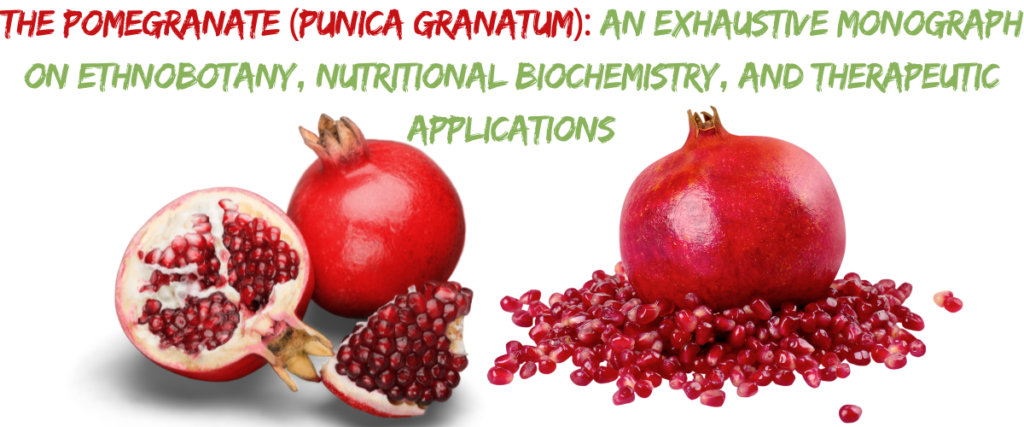
The pomegranate (Punica granatum L.) represents a convergence of ancient agricultural history and cutting-edge nutritional science. For millennia, this fruit has served as a potent symbol of fertility, abundance, and resilience across diverse civilisations, from the arid plateaus of Iran to the Mediterranean basin. In the contemporary era, the pomegranate has transcended its mythological status to become a subject of rigorous clinical investigation. This report provides a comprehensive analysis of the fruit’s botanical characteristics, its complex phytochemical profile—dominated by unique hydrolyzable tannins and conjugated fatty acids—and its multifaceted role in the management of chronic human diseases. Through an examination of cardiovascular, metabolic, neurological, and oncological pathways, we elucidate the mechanisms by which this “seeded apple” acts as a functional food. Furthermore, we explore the practicalities of its consumption, culinary integration, and the critical safety considerations regarding pharmaceutical interactions.
Ethnobotany, History, and Cultural Significance
Botanical Origins and Domestication
The pomegranate is a long-living, fruit-bearing deciduous shrub or small tree belonging to the family Lythraceae. Its history of cultivation is among the oldest in the world, rivalling the olive, the grape, the date palm, and the fig as one of the five oldest cultivated fruit crops.1 The species originated in the region extending from modern-day Iran through to northern India, a geography that dictated its resilience to drought and its preference for hot, arid summers and cool winters.1
Domestication of the pomegranate occurred in prehistoric times. Its durability allowed it to become a staple for travellers, sailors, and traders, who disseminated the fruit across the ancient world. Phoenician merchants, renowned for their maritime prowess, were instrumental in spreading the cultivar throughout the Mediterranean basin, leading the Romans to misidentify its origin. The Romans referred to the fruit as Malum Punicum, or the “Phoenician apple,” a misnomer that persists in its scientific genus name, Punica.2 The species name, granatum, is derived from the Latin for “seeded,” giving us the literal translation “seeded apple,” a morphological descriptor that remains accurate to this day.1
The tree itself is a testament to biological endurance. Specimens in France have been documented to survive for over two centuries, while in Japan, dwarf varieties have been adapted for the meticulous art of bonsai, prized as much for their ornamental beauty as for their fruit.1 The tree produces vibrant, trumpet-shaped red flowers that eventually yield the globose fruit, characterised by a hard, leathery pericarp (skin) that ranges in colour from yellow-orange to deep purple-red.3
The Mythology of the Aril
Few foods possess the symbolic weight of the pomegranate. Its internal structure—a unified sphere containing hundreds of individual, juice-filled arils—has universally represented fertility, abundance, and the multiplicity of the cosmos.
Ancient Egypt and the Afterlife
In the cosmology of Ancient Egypt, the pomegranate was far more than a source of sustenance; it was a conduit to the eternal. The fruit was revered as a symbol of prosperity and ambition. Archaeologists have discovered desiccated pomegranates in the tombs of pharaohs, including Amenhotep and Tutankhamun.4 It is hypothesised that these fruits were interred to nourish the soul during its arduous journey through the afterlife or to serve as a talisman granting immortality. Beyond the spiritual, Egyptian medical papyri document the use of the fruit as a vermifuge to expel intestinal parasites, indicating an early understanding of its bioactive properties.2
The Greek Cycle of Seasons
In Greek mythology, the pomegranate plays a pivotal role in the explanation of the seasons, serving as the fulcrum in the story of Persephone and Hades. Persephone, the daughter of Demeter (goddess of the harvest), was abducted by Hades to the Underworld. While mythological law dictated that anyone who consumed food in the land of the dead could not return to the living, Persephone consumed only a few pomegranate seeds—accounts vary between three, four, or seven seeds.4
This act bound her to the Underworld for a portion of each year. Her mother’s grief during these months manifests as winter, while Persephone’s return to the surface heralds the spring. Thus, the pomegranate represents the dual nature of existence: it is a symbol of life and fertility, yet also the binding agent of death and the underworld.6 The fruit was also sacred to Aphrodite, the goddess of love, and Hera, the goddess of marriage, further cementing its association with fertility and union.5
The Abrahamic Traditions
In the monotheistic traditions, the pomegranate retains its sacred status.
- Judaism: The fruit is deeply embedded in Jewish tradition. It is said to contain exactly 613 seeds, a number that corresponds to the 613 mitzvot, or commandments, found in the Torah.5 Consequently, it serves as a symbol of righteousness, fruitfulness, and wisdom. It is one of the “Seven Species” of fruits and grains enumerated in the Hebrew Bible as special products of the Land of Israel.
- Christianity: In Christian iconography, particularly in the Renaissance art of masters like Sandro Botticelli and Leonardo da Vinci, the pomegranate is often depicted in the hands of the Christ Child or the Virgin Mary.5 Here, the fruit bursting open to reveal its seeds symbolises the Resurrection—the bursting forth of life from the tomb—as well as the unity of the Church, where many diverse individuals are held together in one body.6
- Islam: The Qur’an mentions the pomegranate as a fruit of Paradise, and it holds a place of honour in Islamic horticulture and cuisine, often associated with spiritual sustenance.5
Nutritional Architecture and Biochemistry
To understand the pomegranate’s therapeutic effects, one must first analyse its nutritional scaffold. The fruit is not merely a source of sugar and water; it is a complex matrix of macronutrients and rare phytochemicals.
Macronutrient Profile and Fibre Dynamics
A standard medium-sized pomegranate (approximately 282 grams) or a serving of arils acts as a medium nutrient-dense food, achieving a Nutrivore Score of 256.1
Table 1: Macronutrient Composition of a Whole Pomegranate (approx. 282g)
| Nutrient Category | Value | Notes |
| Energy | 234 kcal | Primarily from carbohydrates |
| Total Carbohydrates | 52.7 g | Includes sugars and complex fibres |
| Total Sugars | 38.6 g | Natural fructose and glucose |
| Dietary Fiber | 11.3 g | ~40% of Daily Value (DV) |
| Protein | 4.7 g | Found primarily in the seeds |
| Total Fat | 3.3 g | Concentrated in the seed oil |
| Glycemic Load | 18 | Moderate |
Source Data: 1
The distinction between the whole fruit (arils with seeds) and the juice is critical. The whole fruit provides a massive 11.3 grams of fibre, which constitutes roughly 40% of the recommended daily intake.7 This fibre is largely insoluble, derived from the hard inner seed of the aril. This structural component significantly mitigates the glycemic impact of the fruit’s natural sugars. Conversely, pomegranate juice typically contains negligible fibre (0 grams per cup), leading to a faster absorption of sugars.8 While both forms offer antioxidant benefits, the whole fruit is superior for metabolic regulation and gut health due to this fibrous matrix.
The Micronutrient Spectrum
Pomegranates are a reservoir of essential vitamins and minerals that function as cofactors for numerous physiological enzymes.
- Vitamin K (Phylloquinone): A single fruit provides approximately 46.2 mcg of Vitamin K, covering between 38% and 51% of the daily requirement, depending on the demographic.7 Vitamin K is indispensable for the synthesis of proteins involved in blood coagulation (clotting) and bone mineralisation. It plays a protective role against vascular calcification, preventing calcium from depositing in the arteries.1
- Vitamin C (Ascorbic Acid): Providing nearly 30% of the Daily Value, vitamin C in pomegranate supports the immune system, facilitates iron absorption, and acts as a primary water-soluble antioxidant.1
- Copper: Often overlooked, copper is present in significant quantities (up to 31% DV).1 Copper is a critical cofactor for the enzyme superoxide dismutase (SOD), one of the body’s primary internal antioxidant defences. It is also essential for the formation of red blood cells and the maintenance of collagen and elastin in the skin.
- Folate (Vitamin B9): With over 100 mcg per fruit, pomegranate supports DNA synthesis and repair, making it a valuable food during periods of rapid cell division, such as pregnancy.7
Phytochemistry: The Polyphenol Powerhouse
The true “superfood” status of the pomegranate is derived from its secondary metabolites. The fruit possesses an antioxidant capacity estimated to be three times greater than that of red wine or green tea.9 This potency is attributed to three primary classes of phytochemicals:
- Punicalagins and Hydrolyzable Tannins:
Punicalagins are large, complex polyphenol molecules found almost exclusively in the pomegranate’s peel and the white mesocarp membranes. While these parts are bitter and inedible, the industrial pressing of whole fruit to make juice extracts these compounds. Punicalagins are responsible for more than half of the juice’s antioxidant activity. Upon ingestion, they hydrolyse (break down) into ellagic acid.11
- The Gut Connection: The human body cannot absorb punicalagins intact. They must be metabolised by colonic microbiota into urolithins (specifically Urolithin A). Urolithins are the bioactive end-products that enter circulation and have been linked to improved mitochondrial function (mitophagy) and muscle health.12 This highlights a symbiotic relationship; the benefits of pomegranate are partly dependent on the health of the consumer’s gut microbiome.
- Anthocyanins:
These are the flavonoid pigments responsible for the deep ruby-red colour of the arils. Beyond aesthetics, anthocyanins are potent antioxidants that protect vascular endothelial cells from oxidative stress and inhibit the oxidation of LDL cholesterol.13 - Punicic Acid (Omega-5):
Hidden within the woody seed of the aril is the pomegranate seed oil. Approximately 80% of this oil consists of punicic acid, a rare conjugated linolenic acid (CLnA) also known as Omega-5.14 Punicic acid is structurally similar to conjugated linoleic acid (CLA) but with three double bonds. It acts as a potent biological regulator, functioning as an agonist for Peroxisome Proliferator-Activated Receptors (PPARs), which are nuclear receptor proteins that control the expression of genes involved in inflammation, lipid metabolism, and glucose homeostasis.14
Cardiovascular Health
Cardiovascular disease (CVD) remains the leading cause of mortality globally, driven by hypertension, dyslipidemia, and oxidative stress. The pomegranate intervenes at multiple stages of the cardiovascular continuum.
Regulation of Vascular Tone and Blood Pressure
Hypertension exerts mechanical stress on arterial walls, leading to injury and plaque formation. Pomegranate juice has demonstrated a consistent ability to lower systolic blood pressure (SBP).
- Mechanism of Action: The primary mechanism appears to be the inhibition of Angiotensin Converting Enzyme (ACE). ACE is responsible for converting Angiotensin I into Angiotensin II, a potent vasoconstrictor that narrows blood vessels and raises pressure. By inhibiting ACE, pomegranate juice facilitates vasodilation, much like pharmaceutical ACE inhibitors.9
- Nitric Oxide Protection: Furthermore, the high antioxidant content of the fruit protects nitric oxide (NO) from oxidative degradation. NO is a signalling molecule that tells blood vessels to relax. By preserving bioavailable NO, pomegranate enhances endothelial function.16
- Clinical Evidence: A review of clinical trials indicated that daily consumption of pomegranate juice can reduce systolic blood pressure by approximately 5 mmHg.17 While modest, such a reduction is epidemiologically significant in reducing stroke risk.
Anti-Atherogenic Effects and Lipid Modification
Atherosclerosis is the buildup of plaque in the arteries, initiated by the oxidation of Low-Density Lipoprotein (LDL) cholesterol. Oxidised LDL is toxic to the endothelium and attracts macrophages, initiating the inflammatory cascade that forms plaque.
- Inhibition of Oxidation: Pomegranate polyphenols bind to LDL particles, protecting them from oxidation. Studies have shown a significant reduction in LDL susceptibility to oxidation following juice consumption.9
- Paraoxonase 1 (PON1) Activation: Pomegranate intake has been shown to increase the activity of PON1 by up to 83%.9 PON1 is an enzyme associated with “good” HDL cholesterol that breaks down oxidised lipids. This suggests that pomegranate not only prevents damage but may help the body repair existing oxidative lesions.
- Intima-Media Thickness: In a long-term study, patients consuming pomegranate juice for one year showed a 30% decrease in carotid intima-media thickness (a measure of arterial hardening), whereas the control group showed a 9% increase.9
- Lipid Profiles: The effect on total cholesterol levels is mixed, but pomegranate seed oil (rich in punicic acid) has been shown to lower triglycerides and improve the HDL-to-triglyceride ratio in hyperlipidemic patients, reflecting a reduced risk of coronary heart disease.9
Metabolic Regulation and Diabetes
The rise of Type 2 Diabetes (T2D) and metabolic syndrome necessitates dietary interventions that can regulate glucose without spiking insulin. Despite its natural sugar content, pomegranate exhibits anti-diabetic properties.
Glucose Homeostasis
Contrary to what one might expect from a sweet fruit, pomegranate juice does not worsen blood sugar control and may improve insulin sensitivity.
- PPAR Activation: As previously noted, punicic acid activates PPAR-gamma. This is the same biological target as the thiazolidinedione class of diabetes drugs (e.g., pioglitazone). Activation of PPAR-gamma increases the sensitivity of cells to insulin, allowing for better glucose uptake from the blood.14
- Enzymatic Inhibition: Pomegranate compounds inhibit the enzyme alpha-glucosidase in the intestine. This enzyme breaks down complex starches into simple sugars. By inhibiting it, pomegranate slows the rate of glucose absorption, blunting the post-prandial blood sugar spike.11
Adiposity and Fat Browning
Obesity is a state of chronic inflammation and energy surplus. Recent research into pomegranate seed oil suggests it may influence the type of fat stored in the body.
- White vs. Brown Fat: White adipose tissue stores energy, while brown adipose tissue burns energy for heat. Punicic acid has been shown to induce the expression of Uncoupling Protein 1 (UCP1), a marker of brown fat. This process, known as “browning,” transforms white fat into beige fat, increasing the body’s metabolic rate and potentially reducing abdominal fat deposition.18
- Reduction of Inflammation: By blocking TNF-alpha-triggered inflammation in the gut, punicic acid helps restore the intestinal barrier and reduce the systemic inflammation associated with obesity and insulin resistance.18
Oncology and Cancer Prevention
The potential of pomegranate to interfere with carcinogenesis has been explored in prostate, breast, colon, and lung cancers. The most robust clinical data exists for prostate cancer.
Prostate Cancer: The PSA Kinetic Studies
Prostate-Specific Antigen (PSA) is a protein produced by the prostate gland. After treatment for prostate cancer (surgery or radiation), a rapid rise in PSA levels (a short “PSA doubling time”) indicates aggressive recurrence.
- The Pantuck Study: In a landmark phase II clinical trial published in 2006, men with rising PSA levels consumed 8 ounces of pomegranate juice daily. The study found that the mean PSA doubling time increased dramatically from 15 months at baseline to 54 months after treatment.19 This prolongation suggests a slowing of the disease’s growth rate.
- Follow-up Research: Subsequent studies using pomegranate extracts (POMx) also showed a lengthening of PSA doubling time (e.g., from 11.9 to 18.5 months).19
- The Placebo Controversy: It is important to note that some later randomised, placebo-controlled trials showed that while pomegranate lengthened doubling time, the placebo groups also showed improvements, sometimes leading to a lack of statistical significance between the groups.21 This has led researchers to investigate whether the “placebo” effect was due to dietary changes in the control group or if the specific genetic makeup of patients (e.g., MnSOD genotype) determines who responds to pomegranate therapy.21
Mechanisms of Anti-Tumour Activity
Regardless of the debate on clinical magnitude, the biological mechanisms are well-documented in vitro:
- Apoptosis: Pomegranate extracts induce programmed cell death in cancer cells by upregulating pro-apoptotic proteins (Bax) and downregulating anti-apoptotic ones (Bcl-2).22
- Anti-Angiogenesis: Tumours need new blood vessels to grow beyond a certain size. Pomegranate inhibits Vascular Endothelial Growth Factor (VEGF), starving the tumour of its blood supply.15
- Metastasis Inhibition: The extract inhibits matrix metalloproteinases (MMPs), the enzymes that cancer cells use to dissolve tissue barriers and spread to other parts of the body.23
Neuroprotection and Cognitive Health
The brain is particularly vulnerable to oxidative stress due to its high oxygen consumption and high lipid content. Pomegranate polyphenols, particularly the gut-derived metabolite urolithin A and punicic acid, show promise in crossing the blood-brain barrier to offer neuroprotection.
Alzheimer’s Disease and Memory
- Amyloid and Tau: In animal models of Alzheimer’s, punicic acid has been shown to reduce the formation of beta-amyloid plaques and inhibit the hyperphosphorylation of tau proteins—the two primary pathological hallmarks of the disease.14
- Memory Restoration: Studies on rats with scopolamine-induced amnesia demonstrated that pomegranate seed oil could restore memory retention and preserve neuronal density in the hippocampus.24
- Human Clinical Trials: A randomised controlled trial in humans involving older adults with mild memory complaints found that drinking 8 ounces of pomegranate juice daily for 4 weeks significantly improved verbal memory scores. Functional MRI (fMRI) imaging during these tasks revealed increased cerebral blood flow and neural activation in the pomegranate group compared to placebo.12
Musculoskeletal and Dermatological Applications
Arthritis and Cartilage Protection
Osteoarthritis (OA) is characterised by the degradation of joint cartilage driven by inflammatory cytokines like IL-1beta.
- Enzyme Blockade: Pomegranate fruit extract has been shown to inhibit the expression of MMP-1, MMP-3, and MMP-13 in human chondrocytes (cartilage cells). By blocking these enzymes, pomegranate prevents the digestion of the collagen matrix that cushions the joints.23
- Clinical Outcomes: While some trials found no change in systemic inflammatory markers, patients consuming pomegranate juice reported significant improvements in physical function and reduced stiffness, suggesting a localised benefit within the joint tissue.26
Skin Health and Cosmetics
The antioxidant properties of pomegranate extend to the skin, where they combat photo-aging caused by UV radiation.
- Collagen Synthesis: Punicic acid stimulates the synthesis of collagen and inhibits the enzyme MMP-1, which breaks down collagen fibres. This mechanism improves skin elasticity and hydration.15
- Barrier Repair: Pomegranate seed oil is used in dermatological formulations to treat dry, cracked skin and conditions like eczema, aiding in the repair of the skin barrier.15
Reproductive and Sexual Health
The ancient fertility symbolism of the pomegranate is supported by modern research into endothelial physiology.
Erectile Dysfunction (ED) and Vascular Health
Erections are hydraulic events dependent on vascular health. Nitric Oxide (NO) is the chemical messenger that causes penile blood vessels to dilate.
- The NO Connection: Pomegranate juice protects NO from oxidative destruction, enhancing its biological half-life. This leads to improved vasodilation and blood flow.16
- Clinical Findings: A pilot crossover study found that 47% of men with mild to moderate ED reported improved erections after consuming pomegranate juice, compared to 31% in the placebo group.27
- A Warning on Interactions: There are documented cases of priapism (prolonged, painful erection) in men taking sildenafil (Viagra) alongside pomegranate juice. The juice likely inhibits the breakdown of the drug in the liver, leading to dangerously sustained levels. Caution is advised when combining the two.29
Male Fertility
Oxidative stress is a leading cause of sperm dysfunction. Pomegranate consumption has been linked to increased sperm motility, higher sperm count, and reduced lipid peroxidation in sperm cells. Additionally, some studies suggest a potential increase in salivary testosterone and a reduction in cortisol, creating a hormonal environment favourable for reproduction.16
Culinary Science and Practical Integration
Integrating pomegranate into the diet requires navigating the mechanics of the fruit—from selection to extraction.
Selection Physics: Identifying Ripeness
Unlike bananas or avocados, pomegranates do not ripen significantly after harvest. Selecting the right fruit at the market is crucial.
- Shape: Avoid perfectly round spheres. A ripe pomegranate should have a slightly angular, boxy shape with flattened sides. This deformation is caused by the arils inside swelling with juice and pressing against the outer rind.30
- Weight: Density is the most reliable indicator of juice content. A ripe fruit should feel heavy for its size. If it feels light or hollow, the arils may have desiccated.31
- Skin Texture: The skin should be smooth, firm, and tough like leather. Wrinkled skin suggests the fruit is old and drying out. However, minor scratches or abrasions on the surface do not affect the quality of the interior fruit.31
- Sound: Tapping the fruit should yield a metallic, solid sound. A hollow thud indicates unripeness or dehydration.34
The Mechanics of Extraction
The “mess factor” is the primary barrier to pomegranate consumption. Two methods effectively mitigate this:
- The Submersion (Water) Method:
Score the pomegranate skin into quarters from pole to pole. Submerge the entire fruit in a large bowl of cold water. Gently break the sections apart underwater and pry the arils loose with your thumbs. The physics of density works in your favour: the heavy arils sink to the bottom, while the bitter white pith and membrane float to the top. Skim off the floating pith, drain the water, and you are left with clean arils and no juice splatter.35 - The Percussive (Spoon) Method:
Slice the pomegranate in half horizontally (around the “equator”). Hold one half, cut-side down, in the palm of your hand over a large bowl, spreading your fingers slightly to allow seeds to pass through. Using a heavy wooden spoon, firmly whack the back (skin side) of the fruit. The percussive force dislodges the seeds, causing them to rain down into the bowl. This method is faster but requires practice to avoid bruising the seeds or splashing juice.35
Storage and Preservation
- Whole Fruit: Can be stored at room temperature for several days, but will last up to 2 months in the refrigerator.3
- Arils: Once extracted, arils should be stored in an airtight container in the refrigerator for up to 5 days. For long-term storage, they can be frozen. Spread them in a single layer on a baking sheet to freeze individually (preventing a frozen brick), then transfer to a bag. They maintain quality for up to one year.34
Culinary Applications
Pomegranate adds a unique sweet-tart profile and textural crunch to dishes.
- Salads: A classic pairing involves pomegranate arils, roasted squash, and greens. The acidity cuts through the richness of roasted vegetables or fatty cheeses like feta.41
- Proteins: Pomegranate juice can be reduced into a molasses or glaze for meats. It pairs exceptionally well with lamb, pork belly, and roasted chicken, where the sugars caramelise to form a sticky, tart coating.41
- Beverages: Beyond simple juice, pomegranate serves as the base for grenadine syrup (used in cocktails like the Tequila Sunrise). It is also used in smoothies and as a garnish for festive mocktails.42
- Desserts: The acidity balances the sweetness of creamy desserts like panna cotta, cheesecake, or chocolate mousse.41
Toxicology, Safety, and Drug Interactions
While a natural food, pomegranate is biochemically potent and can alter the pharmacokinetics of prescription drugs.
Cytochrome P450 Inhibition
The liver uses a family of enzymes known as Cytochrome P450 (CYP450) to metabolise and clear drugs from the body. Pomegranate juice has been shown to inhibit specific enzymes in this family, notably CYP3A4 and CYP2C9.17 When these enzymes are inhibited, drugs that are normally broken down by them accumulate in the bloodstream, potentially reaching toxic levels.
Critical Interactions:
- Warfarin (Coumadin): This anticoagulant has a narrow therapeutic window. Pomegranate may inhibit CYP2C9, slowing the breakdown of warfarin and increasing the risk of bleeding. Patients on warfarin should consult their provider and monitor their INR levels if consuming pomegranate.44
- Statins (e.g., Atorvastatin, Simvastatin): Similar to the “grapefruit effect,” pomegranate can inhibit the metabolism of statins, potentially increasing the risk of rhabdomyolysis (muscle breakdown).46
- ACE Inhibitors and Anti-hypertensives: Because pomegranate naturally lowers blood pressure, combining it with drugs like lisinopril or ramipril may result in hypotension (excessively low blood pressure).17
- Anti-arrhythmics and Calcium Channel Blockers: Drugs like amiodarone or nifedipine may also be affected, leading to irregular heart rhythms or dizziness.47
Allergies
Though rare, allergic reactions to pomegranate can occur, particularly in individuals with sensitivities to other plants. Symptoms can range from itching and swelling to respiratory difficulty and anaphylaxis.17
Conclusion
The pomegranate serves as a compelling example of how modern science often validates ancient wisdom. Once revered by the Egyptians and Greeks as a symbol of life eternal, today it is recognised by the scientific community as a powerful agent in the preservation of health.
Its therapeutic reach is vast, extending from the protection of the cardiovascular system against the ravages of hypertension and atherosclerosis to the preservation of cognitive function in the aging brain. It acts as a metabolic regulator in an era of diabetes and obesity, and it offers a potential, albeit complex, adjunctive strategy in the management of cancer. These benefits are driven by a unique arsenal of phytochemicals—punicalagins, anthocyanins, and punicic acid—that work synergistically to quell inflammation and neutralise oxidative stress.
However, the pomegranate is not a passive addition to the diet. It is a biologically active substance that demands respect, particularly regarding its interactions with pharmaceuticals. For the informed consumer, however, the pomegranate represents more than just a fruit; it is a functional tool for longevity, a culinary delight, and a tangible link to the agricultural history of humanity.
Disclaimer
This report is intended for educational and informational purposes only and does not constitute medical advice, diagnosis, or treatment. The nutritional and therapeutic claims discussed herein are based on current scientific literature, which is subject to change as research progresses. Pomegranate products, particularly juice and extracts, can interact significantly with prescription medications, including blood thinners (warfarin), statins, and blood pressure medications. Individuals with pre-existing medical conditions or those taking prescription drugs should consult with a qualified healthcare professional before incorporating significant amounts of pomegranate or pomegranate supplements into their diet.
Reference
- Pomegranate Nutrients – Nutrivore, accessed on December 11, 2025, https://nutrivore.com/foods/pomegranate-nutrients/
- A Story of CrackSense Fruits: All About Pomegranate, accessed on December 11, 2025, https://cracksense.eu/2024/04/29/a-story-of-cracksense-fruits-pomegranate/
- Pomegranates – SNAP-Ed Connection – USDA, accessed on December 11, 2025, https://snaped.fns.usda.gov/resources/nutrition-education-materials/seasonal-produce-guide/pomegranates
- Fun and Fascinating Facts About Pomegranates – Gardenia.net, accessed on December 11, 2025, https://www.gardenia.net/plants/common-names/pomegranate
- Pomegranate: history and culture of the fruit of the gods – Paesano, accessed on December 11, 2025, https://www.paesanoauthentic.com/en/blogs/news/pomegranate-history-and-culture-of-the-fruit-of-the-fruits
- A Secret, Symbolic History of Pomegranates – Literary Hub, accessed on December 11, 2025, https://lithub.com/a-secret-symbolic-history-of-pomegranates/
- Pomegranate Calories, Nutrition Facts, and Health Benefits – Verywell Fit, accessed on December 11, 2025, https://www.verywellfit.com/pomegranate-calories-carbs-and-nutrition-facts-4169513
- Pomegranate Seeds vs. Juice: Which Is Better for Heart Health, Antioxidants, and Fiber?, accessed on December 11, 2025, https://www.verywellhealth.com/pomegranate-seeds-vs-juice-11841907
- Potent health effects of pomegranate – PMC, accessed on December 11, 2025, https://pmc.ncbi.nlm.nih.gov/articles/PMC4007340/
- A daily glass of pomegranate juice may slow the progression of prostate cancer, accessed on December 11, 2025, https://www.fmhs.auckland.ac.nz/assets/fmhs/sms/nutrition/pcd/docs/is16-pomegranates.pdf
- Functional Food Powerhouse – Revealing the Multifaceted Benefits of Pomegranate, accessed on December 11, 2025, https://read.iim.health/functional-food-powerhouse-revealing-the-multifaceted-benefits-of-pomegranate/
- Pomegranate Juice Augments Memory and fMRI Activity in Middle-Aged and Older Adults with Mild Memory Complaints – PubMed Central, accessed on December 11, 2025, https://pmc.ncbi.nlm.nih.gov/articles/PMC3736548/
- Phytochemicals and pharmacology of pomegranate (Punica granatum L.): nutraceutical benefits and industrial applications: a review – Frontiers, accessed on December 11, 2025, https://www.frontiersin.org/journals/nutrition/articles/10.3389/fnut.2025.1528897/full
- Punicic Acid and Its Role in the Prevention of Neurological … – MDPI, accessed on December 11, 2025, https://www.mdpi.com/2304-8158/11/3/252
- Pomegranat Oil Punicic – BECARRE Natural, accessed on December 11, 2025, https://www.becarre-natural.com/product/214/Pomegranat-Oil-Punicic
- The Effects of Pomegranate on Male Sexual Health – Prof.Dr. Emin ÖZBEK, accessed on December 11, 2025, https://dreminozbek.com/en/the-effects-of-pomegranate-on-male-sexual-health/
- Pomegranate: Overview, Uses, Side Effects, Precautions, Interactions, Dosing and Reviews, accessed on December 11, 2025, https://www.webmd.com/vitamins/ai/ingredientmono-392/pomegranate
- Does pomegranate seed oil really help your heart? New research weighs the evidence, accessed on December 11, 2025, https://www.news-medical.net/news/20250710/Does-pomegranate-seed-oil-really-help-your-heart-New-research-weighs-the-evidence.aspx
- Pomegranate Extract Produces Mixed Results in Prostate Cancer – MDEdge, accessed on December 11, 2025, https://www.mdedge.com/content/pomegranate-extract-produces-mixed-results-prostate-cancer
- A randomized phase II study of pomegranate extract for men with rising PSA following initial therapy for localized prostate cancer – PubMed Central, accessed on December 11, 2025, https://pmc.ncbi.nlm.nih.gov/articles/PMC3549301/
- Pomegranates and Other Polyphenols: New Evidence to Share With Prostate Cancer Patients – The ASCO Post, accessed on December 11, 2025, https://ascopost.com/issues/january-25-2018/pomegranates-and-other-polyphenols-new-evidence-to-share-with-prostate-cancer-patients/
- Punicic Acid: A Versatile and Promising Nutraceutical with Potential Health Benefits, accessed on December 11, 2025, https://www.researchgate.net/publication/397987860_Punicic_Acid_A_Versatile_and_Promising_Nutraceutical_with_Potential_Health_Benefits
- Intake of Pomegranate Prevents the Onset of Osteoarthritis: Molecular Evidences – NIH, accessed on December 11, 2025, https://pmc.ncbi.nlm.nih.gov/articles/PMC4825888/
- Pomegranate Seed Oil Boosts Memory by Reducing Amyloid Plaques and Restoring Neuronal Density in Alzheimer’s Model Rats – Brieflands, accessed on December 11, 2025, https://brieflands.com/journals/jjnpp/articles/158460
- Pomegranate Fruit Shown To Slow Cartilage Deterioration In Osteoarthritis | ScienceDaily, accessed on December 11, 2025, https://www.sciencedaily.com/releases/2005/09/050901072114.htm
- The Effects of Pomegranate Juice on Proinflammatory Cytokines and Physical Function in Patients With Knee Osteoarthritis – Brieflands, accessed on December 11, 2025, https://brieflands.com/journals/jjcmb/articles/21849
- Evidence from pomegranate study not firm | NICS Well, accessed on December 11, 2025, https://www.nicswell.co.uk/health-news/evidence-from-pomegranate-study-not-firm
- POM Wonderful 100% Pomegranate Juice may improve erectile dysfunction – EurekAlert!, accessed on December 11, 2025, https://www.eurekalert.org/news-releases/770292
- Priapism, pomegranate juice, and sildenafil: Is there a connection? – PMC – NIH, accessed on December 11, 2025, https://pmc.ncbi.nlm.nih.gov/articles/PMC3355694/
- How to Tell if a Pomegranate Is Ripe – Allrecipes, accessed on December 11, 2025, https://www.allrecipes.com/article/how-to-pick-a-ripe-pomegranate/
- How to Pick the Juiciest, Ripest Pomegranate Every Time – Health, accessed on December 11, 2025, https://www.health.com/how-to-pick-best-pomegranate-11836768
- accessed on December 11, 2025, https://www.allrecipes.com/article/how-to-pick-a-ripe-pomegranate/#:~:text=Skin%20Tone%20Pomegranates%20vary%20in,seeds%20are%20full%20and%20juicy.
- How to Tell if a Pomegranate is Ripe – Evolving Table, accessed on December 11, 2025, https://www.evolvingtable.com/how-to-tell-pomegranate-ripe/
- Pomegranate Fruit Uses, Recipes and Storage – Citrus Research and Education Center, accessed on December 11, 2025, https://crec.ifas.ufl.edu/extension/pomegranates/pomegranate-recipes/
- A Pomegranate Seeding Technique You Have to Try to Believe – Food52, accessed on December 11, 2025, https://food52.com/story/21624-the-best-way-to-remove-seeds-from-a-pomegranate-hack
- How to De-seed a Pomegranate: Easy and Mess-Free – Sophisticated Gourmet, accessed on December 11, 2025, https://www.sophisticatedgourmet.com/2016/03/how-to-deseed-pomegranate/
- The Pomegranate Wooden Spoon Trick – YouTube, accessed on December 11, 2025, https://www.youtube.com/watch?v=4b8lxLJQRGA
- The Fastest Way to Cut a Pomegranate – Watch This! #shorts – YouTube, accessed on December 11, 2025, https://www.youtube.com/shorts/X74NR3QDHWw
- accessed on December 11, 2025, https://crec.ifas.ufl.edu/extension/pomegranates/pomegranate-recipes/#:~:text=Pomegranate%20keeping%20quality%20is%20similar,for%20up%20to%205%20days.
- Storing Pomegranates – Soil Born Farms, accessed on December 11, 2025, https://soilborn.org/recipe/storing-pomegranates/
- 20 Pomegranate Recipes You’ll Want to Make This Fall and Winter – Martha Stewart, accessed on December 11, 2025, https://www.marthastewart.com/274743/pomegranate-recipes
- Pomegranate recipes – BBC Good Food, accessed on December 11, 2025, https://www.bbcgoodfood.com/recipes/collection/pomegranate-recipes
- 70+ Pomegranate Recipes – Adamant Kitchen, accessed on December 11, 2025, https://adamantkitchen.com/pomegranate-recipes/
- Does pomegranate juice interact with medications? – Dr.Oracle AI, accessed on December 11, 2025, https://www.droracle.ai/articles/84400/does-pomegrant-juice-interfere-with-medications
- Fruits and Vegetables You Might Want to Limit if You’re Taking Warfarin – Everyday Health, accessed on December 11, 2025, https://www.everydayhealth.com/nutrients-supplements/fruits-that-affect-warfarin/
- Medications That May Interact With Pomegranates: What You Need to Know – Tahiro, accessed on December 11, 2025, https://tahiro.com/blogs/education/what-medications-do-pomegranates-interfere-with
- What Happens to Your Body When You Drink Pomegranate Juice Regularly?, accessed on December 11, 2025, https://www.verywellhealth.com/pomegranate-juice-11839039