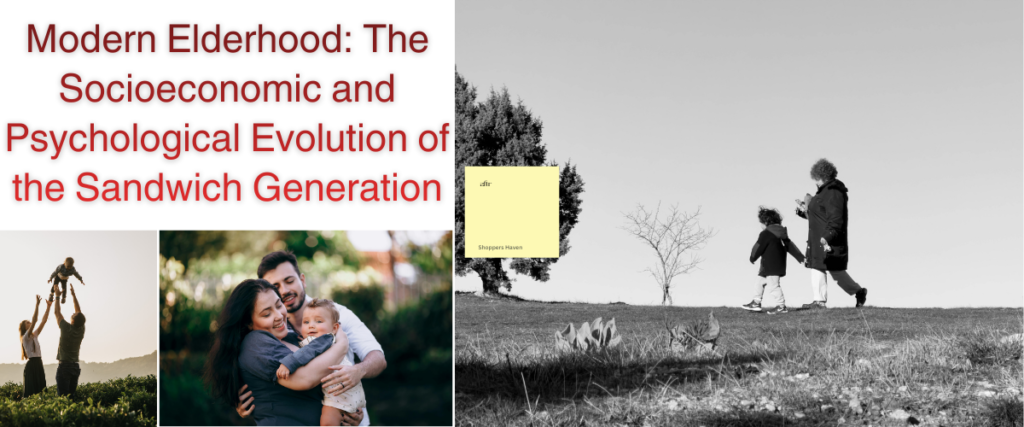
The demographic architecture of the twenty-first century is undergoing a structural transformation characterised by the convergence of two unprecedented trends: the significant expansion of human longevity and the delayed onset of traditional markers of adulthood. At the epicentre of this shift is a cohort of individuals increasingly defined as the “sandwich generation.” This group, largely comprised of middle-aged adults, exists in a state of dual-generational responsibility, providing simultaneous care and financial support to both their aging parents and their own children. By 2025, the pressures on this demographic are projected to reach a critical juncture as the population of adults aged 65 and older continues to double, while young adults increasingly rely on parental resources to establish their own financial footing in a volatile economic climate.1
The phenomenon of the sandwich generation represents more than a logistical challenge for modern families; it signifies a fundamental reshaping of the lifecycle and the social contract. As traditional boundaries between life stages blur, the concept of “Modern Elderhood” has emerged as a necessary framework for understanding the transition from midlife to a stage of life defined not by decline, but by the synthesis of wisdom, curiosity, and continued societal contribution.4 To navigate this reality, caregivers must manage a complex tapestry of financial triage, legal preparation, psychological resilience, and technological integration, all while balancing their own professional aspirations and long-term security.
The Demographic Landscape: Quantifying the Squeeze
The sandwich generation is a dynamic and expanding cohort, yet its exact contours remain difficult to measure due to overlapping definitions and the varying nature of support provided—ranging from emotional and physical care to intensive financial subsidisation. Recent data from the Pew Research Centre suggests that approximately 23% to 25% of Americans now fall into this category, representing an estimated 59 million to 61 million individuals.1 This group is primarily defined by the intersection of three factors: having a living parent aged 65 or older, raising a child under the age of 18, or providing significant financial support to an adult child.1
Generational Ownership and Transitions
While Generation X has historically been the primary face of the sandwich generation, the balance of responsibility is shifting rapidly. In 2020, the distribution of “sandwiched” caregivers was roughly equal between Millennials and Generation X. However, by 2023, the balance tilted significantly toward the Millennial generation, which now constitutes 66% of this cohort, while Generation X’s share has decreased to 23%.3 This transition is largely driven by the aging of the Baby Boomer generation, as approximately 10,000 Baby Boomers reach retirement age every day.6 As their parents enter their 70s and 80s—ages where the need for chronic disease management and long-term care typically intensifies—Millennials find themselves thrust into caregiving roles earlier in their professional lives than previous generations.3
| Statistic | Current Value | Primary Generation Affected | Source |
| Percentage of U.S. Adults in Sandwich Role | ~23% | Millennials & Gen X | 1 |
| Total Estimated Population | 59–61 Million | N/A | 1 |
| Gen X with Parent 65+ and Child Support | 54% | Generation X | 1 |
| Millennial Share of Sandwich Cohort (2023) | 66% | Millennials | 3 |
| Adults 65+ Projected Growth (by 2050) | 2x Current Levels | Boomers/Gen X | 1 |
The gender dynamics within this group have also experienced a notable shift. In 2020, caregiving was overwhelmingly female-dominated, with 64% of caregivers identifying as women. By 2023, however, the balance moved toward parity, with 55% of caregivers identifying as male and 45% as female.3 Despite this statistical shift, qualitative data suggest that women continue to shoulder a disproportionate burden of the actual time spent on caregiving tasks. Pew Research indicates that women in the sandwich generation spend an average of 45 minutes more per day on caregiving duties than their male counterparts.7 Furthermore, “sandwich moms” are more likely to report feeling that their career growth is a luxury rather than a given, with 62% feeling held back by their dual-caregiving roles.2
Ethnic and Cultural Nuances
Cultural expectations play a significant role in the structure of the sandwich generation. In Hispanic communities, for example, nearly 31% of individuals with children also have at least one parent over the age of 65.7 This creates a scenario where cultural values regarding family interdependence and the expectation of in-home care for elders clash with the financial realities of modern urban living. These caregivers often face heightened pressure to manage complex logistical and financial obligations without formal support systems, as cultural norms may discourage the use of professional assisted living or nursing care.7
The Economic Impact of Dual-Generational Support
The financial strain on the sandwich generation is multi-dimensional, encompassing direct out-of-pocket costs, opportunity costs in the workplace, and the erosion of long-term retirement security. Sandwich caregivers are twice as likely to report financial difficulty (36%) compared to their non-sandwiched peers (17%).1 This financial vulnerability is often invisible, as many caregivers prioritise the needs of their children and parents over their own fiscal health, often tapping into retirement funds or emergency savings to bridge gaps in care costs.3
Direct Costs and Out-of-Pocket Expenses
The cost of providing care for two generations is staggering. On average, family caregivers spend approximately $7,000 out-of-pocket per year on care-related expenses for their aging parents.6 For the sandwich generation, this figure can climb as high as $10,000 annually when factoring in the diverse needs of both children and elders.7 These costs include medical co-pays, home modifications (such as ramps or grab bars), specialised nutrition, and transportation.8
| Expense Type | Average Monthly/Annual Cost | Source |
| General Out-of-Pocket Caregiving | $7,000–$10,000 per year | 6 |
| Housing-Related Care Expenses | $5,538 per month | 10 |
| Medical Caregiving Expenses | $1,537 per month | 10 |
| Total Cost of Raising a Child (to age 18) | $310,605 | 11 |
| Estimated Monthly General Caregiver Costs | $3,791 | 10 |
The financial burden is exacerbated by the rising costs of childcare and the delayed independence of young adults. As of 2021, a quarter of 21-year-olds and 60% of 25-year-olds remain financially dependent on their parents.1 This creates a “double-duty” scenario where the caregiver’s peak earning years are consumed by the educational and housing costs of their offspring while simultaneously funding the healthcare needs of their parents. Consequently, 63% of sandwich generation caregivers report living paycheck to paycheck.10
The Workforce Squeeze and Opportunity Costs
Beyond direct expenditures, the professional impact of caregiving represents a high hidden cost. Roughly 70% of sandwich generation members hold full-time jobs, requiring them to manage a complex balance between professional obligations and intensive care duties.10 This “time poverty” leads to tangible career setbacks. Research indicates that 67% of working caregivers struggle to balance their jobs and caregiving duties, leading to the following professional shifts 11:
- Hours Reduction: 27% of working caregivers have shifted from full-time to part-time work to accommodate their family obligations.11
- Promotion Stagnation: 16% of caregivers have turned down a promotion, often to avoid the increased travel or hours that would disrupt their care routines.11
- Workforce Exit: 16% have stopped working entirely for a period of time, leading to gaps in their resumes and significant losses in long-term earnings potential and Social Security contributions.11
For organisations, the sandwich generation represents the fastest-growing employee segment, and failing to provide support can lead to significant business consequences, including the loss of experienced talent.2 Companies that integrate flexibility, empathy, and workplace support for caregivers are better positioned for retention and growth in a shrinking labour market.2
Modern Elderhood: A New Framework for Aging
As the sandwich generation navigates the complexities of middle age, a new philosophy is emerging that redefines what it means to grow old in the modern era. “Modern Elderhood,” a concept pioneered by Chip Conley and the Modern Elder Academy (MEA), seeks to differentiate between the traditional, often negative perception of being “elderly” and the empowered state of being an “elder”.4
Defining the Modern Elder
The distinction between “elderly” and “elder” is foundational to this new framework. While “elderly” is a chronological state often associated with dependency, social separation, and a “doormat to death” mentality, “elderhood” is defined as a life stage characterised by wisdom, relevance, and service to younger generations.4 A “modern elder” is defined by a unique alchemy: they are as curious as they are wise.4
This framework introduces the concept of “Emerging Elderhood,” a transitional life stage typically spanning the ages of 55 to 75.4 Much like “emerging adulthood” describes the transition from adolescence to adult responsibility, emerging elderhood describes the process of moving from a productivity-centred midlife to an “embodied” elderhood focused on reinvention and legacy.4
The Pillars of Midlife Mastery
The MEA framework identifies three primary pillars for navigating this transition, which are particularly relevant to the sandwich generation as they prepare for their own aging while caring for their parents 4:
- Navigating Transitions: Learning to manage the massive changes in role—from child to caregiver, and from parent to grandparent—with curiosity rather than dread. This involves shedding outdated beliefs and identities to integrate all parts of one’s experience.4
- Cultivating Purpose: Rediscovering passions that may have been sidelined by the demands of career and family raising. Purpose in the second half of life often shifts from personal achievement to societal contribution.4
- Owning Wisdom: Recognising that decades of navigating life’s twists and turns have equipped the individual with a unique capacity to lead and influence. This wisdom is a vital resource for both the individual and society.12
In the workplace, the modern elder often acts as a “mentern”—a combination of mentor and intern.5 They offer emotional intelligence and historical perspective (mentor) while remaining open to learning new technologies and social trends from their younger colleagues (intern). This intergenerational collaboration is essential in an era where power is moving younger, and the world is changing faster than ever before.5
The Psychological Burden: Time Poverty and Burnout
The emotional toll of being “sandwiched” is frequently cited as the most difficult aspect of the role. Sandwich caregivers are more likely to report substantial emotional difficulty (44%) than their non-sandwiched peers (32%).1 This burden is exacerbated by “time poverty,” where the constant demands of two generations leave zero room for the caregiver’s own physical or mental health.3
Symptoms and Mechanisms of Burnout
Caregiver burnout is not simply stress; it is a state of physical, mental, and emotional exhaustion that can lead to severe health consequences. The chronic stress associated with dual-caregiving is linked to higher rates of depression, anxiety, and faster physical decline.3 Key indicators of burnout include 3:
- Emotional Exhaustion: New feelings of anxiety, frustration, or irritability that were previously not present.
- Physical Decline: Increased frequency of illness due to a suppressed immune response, and new diagnoses of chronic conditions like heart disease.
- Behavioural Shifts: Sleep disturbances (insomnia or oversleeping), weight fluctuations, and withdrawal from social circles.
- Maladaptive Coping: Increased reliance on alcohol, drugs, or other unhealthy mechanisms to manage daily stress.
The Role of Role Reversal and Anticipatory Grief
The psychological complexity of the sandwich generation is often rooted in the direct experience of role reversal. Caring for a parent who once provided care can trigger “anticipatory grief”—a state of anxiety and sadness as the adult child awaits the parent’s eventual passing while managing their current decline.15 This is often accompanied by a sense of loss of one’s own independence, leading to a cycle of guilt and resentment.15
The psychological framework of “Emerging Elderhood” suggests that sharing these experiences is a critical pathway to healing. Engaging with support groups, therapists, or trusted peers allows caregivers to process these “big feelings” and acknowledge that perfection in caregiving is an unattainable standard.15 Clinical studies have explored the efficacy of Mindfulness-Based Stress Reduction (MBSR) in this context. MBSR programs designed for caregivers emphasise non-reactivity and present-moment awareness, helping to break the cycle of rumination and guilt that fuels burnout.16
Logistics Management: Navigating the Complexity of Care
Managing the day-to-day logistics of a three-generation household requires a level of organisation comparable to running a small business. Caregivers often spend an average of 37 hours per week on caregiving tasks on top of their professional employment.10 The complexity of scheduling medical appointments, managing medications, and maintaining household stability for two distinct generations requires specialised tools and strategies.
The Digital Caregiving Ecosystem
Technology has emerged as a vital ally for the sandwich generation, offering platforms that facilitate “cognitive offloading” and distributed care. By 2025, several specialised applications have become industry standards for managing the logistics of dual-generational support.
| Application | Primary Use Case | Key Features | Source |
| CaringBridge | Communication | Private social network for sharing health updates and coordinating visits. | 19 |
| Medisafe | Medication Management | Pillbox scheduling with “Caregiver Connect” alerts for missed doses. | 19 |
| Lotsa Helping Hands | Task Delegation | Community calendar for scheduling meals, rides, and errands. | 19 |
| Elli Cares | Cognitive Support | Video-recorded reminders and GPS “Safe Zones” for seniors with dementia. | 20 |
| Carely | Shared Scheduling | Centralised hub for family communication and appointment tracking. | 20 |
| Ianacare | Workload Distribution | Coordination of help from friends, family, and professionals in one place. | 22 |
These tools are designed to reduce “communication fatigue,” where a primary caregiver must repeat the same medical update to multiple family members.21 Apps like JubileeTV even transform the television—a familiar technology for seniors—into a communication hub, allowing for video calls and remote TV control, which reduces the barriers for elders who may be intimidated by smaller smartphone screens.22
Practical Logistics Strategies
Beyond digital tools, several “low-tech” strategies are essential for maintaining household stability. Professional organisers and geriatricians recommend the following:
- Synced Family Calendars: Maintaining a single, shared source of truth for all appointments prevents scheduling conflicts between a child’s school play and a parent’s cardiologist visit.11
- Predictable Routines: For aging parents, routine provides a sense of control and stability in a world where their physical and cognitive abilities may be declining.11
- Detailed Note-Taking: Recording notes during medical appointments is crucial, especially when burnout may be impacting the caregiver’s memory or when sharing duties with siblings who were not present.11
- Emergency Planning: Establishing clear protocols for crises—such as who picks up the children if an aging parent is rushed to the hospital—prevents cascading failures in the household system.11
Legal and Financial Safeguards: Preparing for the Unthinkable
The most significant source of stress for many in the sandwich generation is the lack of legal and financial preparation. Many families wait until a crisis occurs to discuss their parents’ financial health or end-of-life wishes, leading to expensive legal battles and depleted assets.23
The Essential Legal Checklist
Every family should have a set of core legal documents in place before they are needed. These documents ensure that the elder’s wishes are respected and that the caregiver has the legal authority to act on their behalf.
- Durable Power of Attorney (POA): This document grants a trusted person the authority to manage financial and legal affairs. It is “durable” because it remains in effect even if the individual becomes incapacitated.24
- Medical Power of Attorney (Healthcare Proxy): This designates someone to make healthcare decisions if the parent is unable to speak for themselves.25
- Living Will (Advance Healthcare Directive): Spells out specific preferences for life-sustaining treatments, such as ventilators or feeding tubes.25
- Last Will and Testament: Outlines the distribution of assets and names executors. Without a will, state laws dictate the division of property, which may not align with the family’s wishes.25
- HIPAA Authorisation: Essential for accessing medical records and speaking directly with doctors, which is otherwise prohibited by privacy laws.25
A critical distinction must be made between a “springing” POA and a “durable” POA. A springing POA only takes effect once a physician has certified that the person is incapacitated. This can cause dangerous delays in a crisis. Experts generally recommend a durable POA, which is effective immediately upon signing, allowing the caregiver to step in the moment assistance is required.24
Strategic Financial Planning
Financial triage is often the most pressing concern for the sandwich generation. Caregivers are encouraged to prioritise their own retirement savings over their children’s college funding. As the industry adage goes, “you can borrow for college, but you can’t borrow for retirement”.9
Key financial strategies for this life stage include:
- HSA and FSA Optimisation: Health Savings Accounts (HSAs) can be used to pay for a parent’s medical expenses if they qualify as a dependent, providing a significant tax advantage.9 Flexible Spending Accounts (FSAs) can similarly be used for dependent care costs for children or elders.29
- Long-Term Care Insurance: Since 70% of adults over 65 will eventually need severe long-term support, and Medicare does not cover most forms of long-term care, having appropriate insurance is the only way to protect family assets from total depletion.1
- Sibling Collaboration: Establishing a formal financial plan with siblings can prevent future disputes. This includes tracking all out-of-pocket costs and potentially discussing how the primary caregiver’s time should be accounted for in estate planning.2
The Longevity Economy: Future Trends 2025–2030
The rapid aging of the global population is giving rise to the “Longevity Economy,” a vast ecosystem of products and services valued at $8 trillion in 2024 and projected to reach $12 trillion by 2030.30 This economy encompasses healthcare, financial services, wellness, and “silver tech.”
The Evolution of Senior Living
By 2026, the standard for senior living is moving beyond simple care delivery toward “Whole-Person Well-Being”.31 Future residents are no longer just consumers of care; they are co-creators of their community culture, demanding personalisation, brain health tools, and organic social connection.31
| Trend | Outlook for 2025–2030 | Key Driver | Source |
| Aging in Place | Advancements in smart home modifications and AI monitoring make independent living easier. | Technology/Privacy | 32 |
| Intergenerational Living | Integration of senior living into mixed-age neighbourhoods with shared parks and shops. | Social Cohesion | 32 |
| AI and Robotics | Use of AI for proactive vitality management and robots for meal delivery and fall detection. | Labor Shortages | 31 |
| Sustainability | Eco-friendly designs, green energy, and locally sourced organic food in communities. | Environmental Health | 32 |
| Brain Health | Neuroplasticity programs and digital training become standard well-being expectations. | Cognitive Decline | 31 |
Intergenerational Connection as a Catalyst
The generation gap is increasingly being bridged by “Intergenerational Programming.” These programs bring together older adults and youth to share experiences and skills. For the sandwich generation, these activities provide a way to connect their children with their parents, fostering mutual understanding and reducing the isolation felt by both generations.33
Typical intergenerational activities include:
- Storytelling and Oral History: Seniors narrate family history, helping children understand their roots while stimulating the elders’ memory.35
- Technology Swaps: Younger generations teach seniors to navigate new apps and social media, while seniors teach traditional skills like gardening, knitting, or cooking.34
- Collaborative Arts: Gardening, painting, or making music together provides common ground that transcends age and cognitive ability.35
These programs are not just “nice-to-haves”; they are proven to invigorate older adults and help children see aging as a normal, positive part of life, ultimately strengthening the community fabric.35
Navigating Conflict and Sibling Dynamics
The transition into caregiving often acts as a pressure cooker for family dynamics. Disagreements over a parent’s care, financial responsibility, and the division of labour can resurface old childhood disputes and create deep-seated resentment.15
Moving Through Conflict
Research suggests that acknowledging family conflict is more productive than avoiding it. “Clear family policies” of speaking for oneself and actively listening to others have been shown to improve overall life happiness during times of crisis.23 When family discussions become particularly tense, the use of a neutral third party—such as a geriatric care manager, therapist, or mediator—can ensure that every family member feels heard and that decisions are made based on the elder’s best interest rather than historical grievances.15
Practical steps for managing family dynamics include:
- Regular Family Meetings: Scheduling dedicated times to discuss commitments and delegate tasks keeps everyone on the same page and prevents the primary caregiver from feeling solely responsible.15
- Honesty About Capacity: Being realistic about what each sibling can contribute—whether it is hands-on care, financial support, or managing logistical paperwork—is essential for preventing burnout and resentment.15
- Prioritising the Child-Parent Bond: Caregivers should make time to connect with their parent as their child—taking walks or running errands that are not related to medical care—to preserve the relationship from being entirely consumed by the “caregiver” identity.15
Conclusion: The Integrated Path Forward
The sandwich generation represents a historical first: a cohort that must simultaneously pioneer new models of “Modern Elderhood” for themselves while providing unprecedented levels of care for the generations both above and below them. The demographic shift toward longer lives and delayed independence means that the “sandwich squeeze” is not a temporary phase, but a structural feature of modern life.
Navigating this reality successfully requires a shift from reactive crisis management to proactive, integrated planning. This includes:
- Embracing Technology: Utilising the digital caregiving ecosystem to distribute the logistical burden and ensure health safety.
- Early Legal and Financial Triage: Securing POAs, medical proxies, and long-term care insurance before they are needed.
- Adopting the Modern Elder Mindset: Moving from the dread of aging to an appreciation for the wisdom and relevance that can be cultivated in the second half of life.
- Prioritising Self-Care and Mental Health: Recognising that caregiver burnout is a legitimate medical and social risk that can only be mitigated through mindfulness, support networks, and realistic standards of care.
Ultimately, the goal of the sandwich generation is to move through this period of “double duty” not with a sense of being “smushed,” but with the realisation that they are the vital bridge in a new, intergenerational society. By future-proofing their financial resilience and cultivating emotional wisdom, they can transform the burden of caregiving into a purposeful chapter of life that honours the dignity of all generations.
Disclaimer
This article is intended for informational and educational purposes only and does not constitute professional medical, legal, or financial advice. The socioeconomic trends and data points provided are based on research snippets from 2024 and 2025. Individual circumstances vary significantly, and readers are strongly encouraged to consult with qualified financial planners, elder law attorneys, and healthcare professionals before making significant decisions regarding caregiving, estate planning, or personal health. 14
Reference
- Sandwich generation stressors and how to manage them | Empower, accessed on February 3, 2026, https://www.empower.com/the-currency/life/sandwich-generation-stressors
- Career Optimism Special Report™ Series: Moms in the Sandwich Generation – AWS, accessed on February 3, 2026, https://resources1972.s3.us-east-2.amazonaws.com/moms-sandwich-generation.pdf
- Supporting the Sandwich Generation: How Aging-in-Place Organizations Can Lighten the Load – Home, accessed on February 3, 2026, https://www.dupageseniorcouncil.org/supporting-the-sandwich-generation-how-aging-in-place-organizations-can-lighten-the-load/
- The Case for a New Life Stage: Emerging Elderhood (Part 1) by …, accessed on February 3, 2026, https://www.meawisdom.com/the-case-for-a-new-life-stage-emerging-elderhood-part-1/
- Modern Elderhood: A Wisdom Workshop with Chip Conley, accessed on February 3, 2026, https://www.spiritualityandhealth.org/events/modernelderhood
- BURNING THE CANDLE AT BOTH ENDS: SANDWICH GENERATION CAREGIVING IN THE U.S., accessed on February 3, 2026, https://caringacross.org/wp-content/uploads/2024/01/NAC_SandwichCaregiving_Report_digital112019.pdf
- The Sandwich Generation: Balancing Care for Parents & Children – Caregiver Action Network, accessed on February 3, 2026, https://www.caregiveraction.org/sandwich-generation/
- How to care for an aging parent – Fidelity Investments, accessed on February 3, 2026, https://www.fidelity.com/viewpoints/personal-finance/caring-for-aging-parents
- Gen X Guide: Balancing Family and Finances in Washington D.C. – Brown, accessed on February 3, 2026, https://brownmillerwm.com/gen-x-guide-balancing-family-and-finances-in-washington-d-c/
- Double Duty: The Financial and Emotional Strain of Caring for Two Generations, accessed on February 3, 2026, https://states.aarp.org/georgia/2025-double-duty-the-financial-and-emotional-strain-of-caring-for-two-generations
- The Sandwich Generations: Challenges and Tips for Coping …, accessed on February 3, 2026, https://www.guardianlife.com/caregiving-support/sandwich-generation-challenges
- Emerging Elders – MEA Wisdom – Modern Elder Academy, accessed on February 3, 2026, https://www.meawisdom.com/emerging-elders/
- James Hollis: My Kind of Modern Elder by Chip Conley, accessed on February 3, 2026, https://www.meawisdom.com/james-hollis-my-kind-of-modern-elder/
- The sandwich generation and finances | Guardian – Guardian Life, accessed on February 3, 2026, https://www.guardianlife.com/financial-strategies-for-the-sandwich-generation
- Caregiving and the Sandwich Generation | Mental Health America, accessed on February 3, 2026, https://mhanational.org/resources/caregiving-and-the-sandwich-generation/
- Study Details | NCT07322081 | Effect of a Mindfulness-Based Stress Reduction Program on Caregivers | ClinicalTrials.gov, accessed on February 3, 2026, https://clinicaltrials.gov/study/NCT07322081
- A mindfulness-based intervention adapted to dementia … – Frontiers, accessed on February 3, 2026, https://www.frontiersin.org/journals/psychology/articles/10.3389/fpsyg.2022.1062452/full
- Study Details | NCT04977245 | Mindfulness-Based Stress Reduction in Dementia Caregivers | ClinicalTrials.gov, accessed on February 3, 2026, https://www.clinicaltrials.gov/study/NCT04977245
- Most Useful Caregiver Apps for 2026 – Caring Senior Service, accessed on February 3, 2026, https://caringseniorservice.com/blog/most-useful-caregiver-apps/
- Best Caregiver Apps for Families in 2025 – Elli Cares, accessed on February 3, 2026, https://www.elliapp.co/best-caregiver-apps-for-families-in-2025
- 5 Caregiving Apps That Help You Rally the Troops, Stay Organized, and Keep Important Info Handy | SANDWICHED KC, accessed on February 3, 2026, https://sandwichedkc.com/5-caregiving-apps-that-help-you-rally-the-troops-stay-organized-and-keep-important-info-handy/
- Top Caregiver Apps to Simplify Caregiving Tasks – JubileeTV, accessed on February 3, 2026, https://getjubileetv.com/blogs/jubileetv/best-apps-for-senior-caregivers
- 2024: The Year I Became Part of the Sandwich Generation – Mana Financial Life Design, accessed on February 3, 2026, https://www.manafld.com/blog/2024/2/23/2024-the-year-i-became-part-of-the-sandwich-generation
- 5 Legal Documents You Need for Your Elderly Loved Ones, accessed on February 3, 2026, https://elderprotectioncenter.com/legal-documents-everyone-should-have/
- Legal Documents for Seniors to Organize for Your Parent, accessed on February 3, 2026, https://springhouseliving.com/legal-documents-for-seniors/
- Getting Your Affairs in Order Checklist: Documents to Prepare for the Future, accessed on February 3, 2026, https://www.nia.nih.gov/health/advance-care-planning/getting-your-affairs-order-checklist-documents-prepare-future
- Legal Checklist for Caregivers With Aging Parents – AARP, accessed on February 3, 2026, https://www.aarp.org/caregiving/financial-legal/caregivers-legal-checklist/
- Balancing Retirement and College Savings | White Coat Investor, accessed on February 3, 2026, https://www.whitecoatinvestor.com/balancing-retirement-and-college-savings/
- Financially supporting multiple generations – UMB Blog, accessed on February 3, 2026, https://blog.umb.com/personal-banking-financially-supporting-multiple-generations/
- Longevity: Three trends that redefine how we live and work – I by IMD, accessed on February 3, 2026, https://www.imd.org/ibyimd/talent/longevity-three-trends-that-redefine-how-we-live-and-work/
- The Top 10 Well-Being Trends Shaping Senior Living in 2026 – CCL Hospitality Group, accessed on February 3, 2026, https://www.ccl-hg.com/perspectives/the-top-10-well-being-trends-shaping-senior-living-2026/
- The Future of Senior Living: Trends to Watch in 2025 – Heisinger Bluffs, accessed on February 3, 2026, https://www.hbrhc.com/blog/the-future-of-senior-living-trends-to-watch
- Bridging Generations: The Benefits of Intergenerational Programming – Area Agency on Aging of Western Michigan, accessed on February 3, 2026, https://www.aaawm.org/article/bridging-generations-the-benefits-of-intergenerational-programming
- Benefits of Intergenerational Programs – DevonHouse Senior Living, accessed on February 3, 2026, https://devonhouseseniorliving.com/all/intergenerational-programs-benefits/
- Connecting Generations – Bridging the Gap – All Seniors Care, accessed on February 3, 2026, https://allseniorscare.com/blog/connecting-generations-bridging-the-gap/
- Intergenerational Bonding: Bridging the Age Gap – Senior Helpers, accessed on February 3, 2026, https://www.seniorhelpers.com/co/littleton/resources/blogs/2024-01-09/
- Bridging the Generation Gap: Ideas for Intergenerational Activities – Grand Villa of Clearwater, accessed on February 3, 2026, https://www.grandvillaclearwater.com/senior-living/fl/clearwater/blog/bridging-the-generation-gap-ideas-for-intergenerational-activities?article=bridging-the-generation-gap-ideas-for-intergenerational-activities