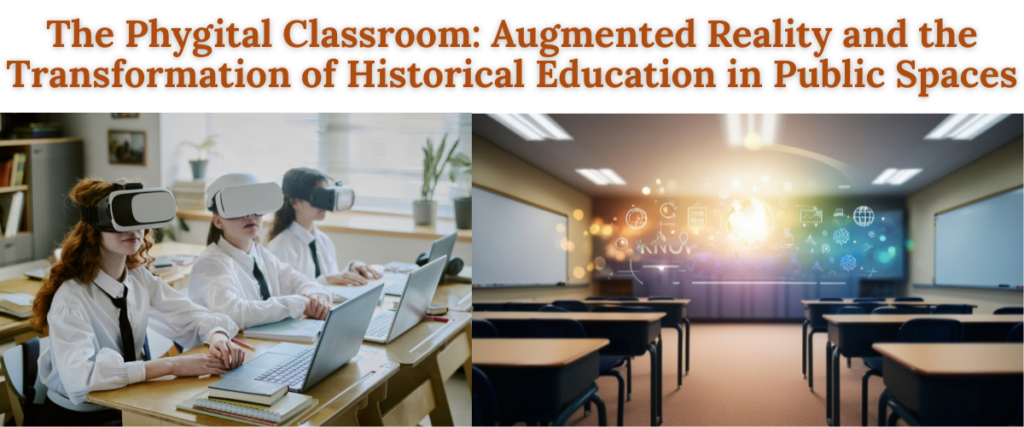
The landscape of modern education is undergoing a profound metamorphosis as the physical boundaries of the classroom dissolve into the digital infrastructure of the 21st century. This evolution is best encapsulated by the emergence of “phygital” learning, an instructional model defined by the seamless interaction between a physical space and a digital environment.1 By leveraging connected virtual and augmented reality tools, educators are creating immersive experiences where physical sensors and digital outputs operate in a continuous feedback loop, ensuring that the movements of a learner—such as interacting with a historical hologram—trigger meaningful educational responses.1 This shift represents more than just a technological upgrade; it is a fundamental reimagining of the educational space, moving away from static, four-walled environments toward dynamic, situated learning ecosystems that encompass local parks and heritage sites.2
The integration of Augmented Reality (AR) into history education serves as the vanguard of this movement. By overlaying digital reconstructions of the past onto the physical geography of the present, AR brings history to life in ways that traditional textbooks or static lectures cannot achieve.4 When students engage with these phygital classrooms in local parks, they are not merely passive recipients of information; they become active participants in a narrative that is both spatially and contextually relevant.6 This transition is driven by the necessity to meet the evolving needs of a society where the distinction between the physical and digital worlds is increasingly blurred.3
The Conceptual Architecture of Phygital Learning
At its core, phygital learning is a hybrid approach that combines the structure and human connection of traditional, teacher-led instruction with the flexibility and personalisation offered by digital tools.8 Unlike online-only models, which often struggle with student isolation and screen fatigue, the phygital classroom preserves the essential social and emotional components of schooling.9 In this model, teachers remain central to the process, guiding students through digital explorations while providing immediate feedback and guidance.9 The physical community of the school is not replaced but is instead enhanced by digital resources that improve clarity and engagement.9
The term “phygital” itself is a contraction of “physical” and “digital,” reflecting a synergy where real-world experiences are enriched by interactive technology such as the Internet of Things (IoT).1 In a phygital environment, desks may evolve into interactive devices, and walls may become protagonists in the interaction between students and educational content.3 This transformation is particularly relevant for history education, which often relies on abstract concepts that students find difficult to visualise. By turning a local park into a phygital classroom, educators can provide “holographic” or AR-based immersions that allow students to see, touch, and experience history in an authentic way.3
| Feature | Traditional Classroom | Online Learning | Phygital Classroom |
| Interaction | Face-to-face, physical | Digital, remote | Hybrid, real-time situated |
| Environment | Static, four walls | Virtual, screen-based | Augmented physical space |
| Teacher Role | Direct instruction | Facilitator (often remote) | Central guide using digital tools |
| Student Engagement | Passive/Active mixed | Screen-focused | Immersive, experiential |
| Resource Type | Textbooks, physical media | Digital files, videos | 3D models, AR, IoT sensors |
| Context | General, abstract | Highly digital | Location-specific, situated |
The shift toward these “smart learning ecosystems” is supported by pedagogical frameworks like “learning by being,” which emphasise the development of competencies through project-based and process-based learning.2 These ecosystems are characterised by their openness to the territory, flexibility in function, and the ability to foster well-being among all participants.2 As schools embrace this point of view, the phygital revolution begins to impact every aspect of the learning experience, from the configuration of school grounds to the way students interact with the history of their local community.3
The Pedagogical Power of Outdoor AR Learning
The decision to move history lessons into local parks is grounded in extensive research regarding the benefits of outdoor education. Natural surroundings—characterised by fresh air, green spaces, and the diverse stimuli of the environment—have been shown to improve student focus, reduce stress, and increase overall participation.10 When students are surrounded by nature, they engage with content on a sensory level, which strengthens memory through experience-based learning.10 This is particularly effective for history, as it allows students to link abstract educational content to tangible examples in the world around them.10
The educational impact of this shift is measurable. Research indicates that immersive technologies like AR and VR can achieve a 75% retention rate, significantly higher than the 10% achieved through reading or the 5% through traditional lectures.4 This is largely because AR aligns with Experiential Learning Theory, which suggests that learning is most effective when it involves direct experience and reflection.4 By providing a hands-on, multi-sensory environment, AR captures student attention and encourages the type of exploration that leads to deeper cognitive engagement.4
| Metric | Traditional (Lecture/Reading) | Immersive (AR/VR/Outdoor) | Improvement Factor |
| Information Retention | 5% – 10% | 75% – 90% | ~7.5x – 9x |
| Learning Speed | Standard | 4x Faster | 4x |
| Focus Level | Low (50% feel disconnected) | 4x More Focused | 4x |
| Academic Performance | Baseline | Up to 30% Improvement | 1.3x |
| Emotional Connection | Low | High (Scenario-based) | Significant |
The psychological benefit of “emotional connection” cannot be overstated. Immersive scenarios and storytelling evoke emotions that make information more memorable.4 When a student stands in a park and uses an AR app to witness a historical event unfolding on the exact spot where they are standing, the experience creates a lasting impression that a textbook simply cannot replicate. This is especially vital in engaging the “digital generation,” 80% of whom teachers worry are unable to stay engaged with traditional methods.4
Furthermore, outdoor learning supports holistic development by encouraging physical movement and social interaction.10 Collaborative projects in a park setting, such as team-based historical scavenger hunts using AR, foster cooperation, empathy, and communication skills.10 These shared experiences allow learners to practice teamwork without the pressure of a traditional classroom, building confidence and stronger peer connections over time.10
Bringing History to Life: Mechanisms and Global Examples
The practical application of AR in historical education is already being demonstrated through various global initiatives. These projects use different mechanisms—from GPS-triggered audio to sophisticated 3D overlays—to turn public spaces into interactive history books.
Sydney’s Interaction with Country and Heritage
In Sydney, Australia, researchers at the University of Sydney are leading the way in integrating Indigenous stories into the urban landscape.6 Led by Dr. Luke Hespanhol, the project uses a GPS-enabled app to weave Elders’ yarns and natural soundscapes into specific locations.6 This approach respects cultural protocols by sharing stories orally and contextually, reflecting the traditional practice of Elders sharing knowledge while on Country.6 The technology, provided by Soundtrails, triggers narrated stories automatically as users move through public spaces, creating a powerful connection between the modern visitor and the ancient knowledge hidden in the land.6
The Sydney City Digital AR Story Trail, developed by Imvizar, offers another model for urban history education.7 This project identifies key narratives—such as the histories of the statues of Cook and Bligh or the transformation of The Rocks—and uses 3D models and historical photographs to create a self-guided journey.7 By overlaying “then and now” imagery, the app allows visitors to see the historical evolution of the city in real-time.7
| Site/Project | Historical Focus | Technology Used | Educational Goal |
| Awabakal Country | Indigenous Lore & Yarns | GPS-triggered Soundtrails | Truth-telling & Reconciliation |
| The Rocks, Sydney | Urban Transformation | 3D Overlay & Photos | Historical Evolution |
| Prince Alfred Park | 1868 Royal Visit/Exhibition | AR Narratives | Understanding Local Identity |
| Cadman’s Cottage | Colonial Life | 3D Historical Characters | Immersive Biography |
| Lake Macquarie | Indigenous Knowledge | Co-designed Oral History | Cultural Authenticity |
Global Case Studies in Phygital Heritage
Beyond Australia, the use of AR in parks and heritage sites is flourishing. In the United States, the New Philadelphia National Historic Site uses an AR app to guide visitors along a quarter-mile trail, where animated people and buildings appear in the landscape.14 This site, the first town in the US to be platted and registered by an African American, uses AR to share stories of founders Free Frank and Lucy McWorter, exploring themes of slavery, abolition, and multicultural community.14 The app provides audio narration and text transcripts at 11 different stops, ensuring the lesson is accessible even in a remote park environment.14
In the United Kingdom, the “Victorian Vauxhall” trail in Vauxhall Pleasure Gardens provides an example of successful community engagement. Originally launched with seven stops, its popularity led to an expansion with five additional stops a year later.15 Similarly, the “In Gravesham Footsteps” trail uses simple QR-code technology to trigger experiences, such as firing a muzzle-loading cannon at New Tavern Fort or seeing the ruined Gravesend Blockhouse reconstructed as a 3D model.15 This project was funded by the “Welcome Back Fund” specifically to encourage the public to return to high streets and local heritage sites post-pandemic.15
Other notable examples include the Palace of Knossos in Greece, where “AR Portals” allow students to walk through digital doors into ancient rooms, and the “England’s Historic Cities” app, which brings locations like Hadrian’s Wall and Shakespeare’s New Place to life with 360-degree panoramas and 3D reconstructions.16
Designing the Phygital Infrastructure: Logistics and Standards
Implementing a phygital classroom in a local park requires more than just an app; it requires a comprehensive understanding of the physical and technical infrastructure necessary to support outdoor learning. Schools and local governments must collaborate to ensure that these sites are safe, accessible, and technologically viable.
Site Analysis and Square Footage
Educational facilities must be responsive to the district’s educational program.18 In states like California, site size standards were updated to reflect changes in technology and the need for smaller class sizes.19 For example, an elementary school of 500 pupils is recommended to have a site size of 10 acres to allow for adequate outdoor physical education and walkways.19 When these spaces are extended into local parks, the planning must consider “developed grounds to building area” ratios to ensure students have enough space for movement and small-group work.19
| School Level | Standard Enrollment | Recommended Site Size | Min. Sq. Ft. per Pupil |
| Elementary | 500 | 10 Acres | 59 |
| Middle | 1,000 | 25 Acres | 80 |
| High | 2,000 | 35-40 Acres | Variable |
| Classroom (K-3) | 20-30 | 960 – 1,350 sf | ~32 – 45 |
In an outdoor context, the physical layout is dictated by the limitations of human senses. For instance, a teacher’s voice typically does not carry beyond 20–25 feet without amplification.20 Therefore, outdoor seating clusters in a park should be designed to be as compact as possible while respecting physical distancing.20 Seating should face north (away from the sun) so that students are not blinded by glare when looking at the teacher or their digital devices.20
Maintenance and Utility Considerations
A park used as a phygital classroom must be vetted for safety and maintenance. This includes identifying tripping hazards, ensuring adequate lighting, and testing for cell phone reception and Wi-Fi availability.14 The New Philadelphia site, for example, provides public Wi-Fi specifically to facilitate the downloading of its AR app, using the password “Frank1836”.14 Maintenance schedules for irrigation and mowing must be coordinated with the school schedule to avoid disruption.21
Furthermore, the stability of any temporary shelters—such as gazebos or tents used to provide shade for AR screen visibility—must be assessed by fire marshals and meet engineering codes for the region.21 Accessibility is a critical legal requirement; the path of travel and seating must be ADA-compliant, and the proximity of restrooms is a primary concern for educators taking students off-site.20
Technical Foundations: From Smartphones to Spatial Computing
The success of the phygital classroom is inextricably linked to the hardware and software used to deliver the AR experience. Currently, most AR lessons are delivered via smartphones and tablets, which must meet specific certification standards to ensure effective real-time calculations.23
Device Certification and Performance
For a device to be certified for AR (e.g., via ARCore for Android), it must pass checks on its camera quality, motion sensors, and CPU performance.23 This ensures that digital objects remain “pinned” to the physical environment accurately. As of late 2025, over 87% of active AR-compatible devices support the Depth API, which allows virtual objects to be occluded by real-world objects, significantly enhancing the illusion of reality.23
| Hardware Component | Requirement for AR | Impact on Phygital Learning |
| CPU | Powerful, integrated with hardware | Enables real-time physics and 3D rendering |
| Motion Sensors | High-quality Accelerometer/Gyro | Prevents “drifting” of virtual historical figures |
| Camera | High resolution, 60 fps support | Ensures visual clarity against natural backgrounds |
| OpenGL ES | Version 3.0 or 3.2 | Supports advanced graphics and textures |
| Depth API | Supported in 87%+ of devices | Allows digital objects to go “behind” physical trees/walls |
The Rise of Wearable AR and Spatial Computing
The next frontier of the phygital classroom is the transition from handheld screens to wearable AR glasses. These devices, which are becoming lighter and more socially acceptable, provide hands-free access to information directly in the user’s line of sight.25 Spatial computing AR glasses are sophisticated, sensor-packed computers that use LiDAR, depth sensors, and cameras to create a “digital twin” or 3D mesh of the environment.27
This technology will transform parks into truly interactive classrooms. Instead of looking at a phone, a student wearing AR glasses might see glowing navigation paths on the grass leading to a historical marker, or witness a life-size 3D reconstruction of a 19th-century streetscape that perfectly aligns with current architecture.27 Advanced displays like micro-LEDs and waveguides ensure that these digital images are sharp and visible even in bright outdoor sunlight.27
Market data suggests that the AR/VR in education market will grow from $2.4 billion in 2024 to $22.5 billion by 2030.29 This growth is fueled by advancements in 5G connectivity and AI, which will allow for real-time data processing and more natural user interactions, such as gesture control and eye-tracking.28 Companies like Apple, Meta, and XREAL are investing heavily in this space, with the goal of replacing smartphones with spatial computing devices by the end of the decade.25
The Ethics of the Phygital Park: Privacy and Safety
The expansion of AR into public spaces for education introduces novel concerns regarding data privacy and user safety. Because AR devices gather significant amounts of personal information—including geolocation, biometric data, and even inferred information about a user’s intentions—strict regulatory frameworks must be applied.31
Student Data Privacy and Regulatory Compliance
In the United States, educational AR apps must comply with the Children’s Online Privacy Protection Act (COPPA), which requires parental consent before collecting data from children under 13, and the Family Educational Rights and Privacy Act (FERPA), which protects student education records.32 Globally, the General Data Protection Regulation (GDPR) in the EU imposes strict limits on the collection of biometric data.32
Schools must adopt a “privacy-by-design” principle, integrating data protection into the architecture of their AR platforms from the start.32 This includes:
- Anonymisation: Using anonymous avatars instead of hyper-realistic representations that reveal physical identity.31
- Encryption: Ensuring all data transmissions are protected from spyware or “man-in-the-middle” attacks.32
- Access Control: Locking devices with multi-factor authentication and maintaining master lists of passwords for IT staff.34
- Vetting: Identifying all apps being used and ensuring they meet WCAG 2.1 Level AA accessibility standards.33
Physical Safety and Bystander Privacy
Using AR in a public park also presents physical risks. Users may become so immersed in the digital content that they lose awareness of their surroundings, leading to trips or collisions.36 Designers must ensure that digital characters do not appear too close or move too fast toward a user’s face to prevent disorientation or nausea.36
Bystander privacy is another emerging issue. As AR glasses become more common, the potential for recording individuals in public spaces without their consent increases.37 Policymakers are currently debating whether existing laws are sufficient to address these concerns or if new regulations are needed to define “reasonable expectations of privacy” in a hybrid reality.37
Governance, Funding, and the Role of Local Historians
The successful integration of AR into local parks is often the result of complex partnerships between schools, local governments, and historical societies. In states like Arkansas, the Certified Local Government (CLG) program provides a framework for this collaboration, offering grants and technical assistance to preserve and promote historic resources.38
The Historian as Cultural Curator
Local government historians play a vital role in this process. Their primary responsibility is the research and interpretation of the past, which involves gathering evidence and creating narratives for a general audience.40 In a phygital context, they serve as content consultants for AR exhibit planners, ensuring that the digital storytelling is historically accurate and inclusive of multiple perspectives.40
| Stakeholder | Role in Phygital AR Project | Funding/Support Mechanism |
| Local Government | Site maintenance, zoning, permits | RETT funds, CLG grants 38 |
| School District | Pedagogy, student safety, and hardware | State partnership assistance 41 |
| Historical Society | Archive access, narrative creation | Media grants, private endowments 38 |
| Tech Provider | Software development, AR integration | Venture capital, service contracts 43 |
| Indigenous Elders | Cultural Lore, oral history recording | Heritage Development Initiatives 6 |
Historical Marker Programs, such as the one established in Arkansas in 2017, are being reimagined for the digital age. While traditional markers commemorate people and places at least 50 years old, modern “digital markers” (QR codes or AR hotspots) allow for a longer, more detailed story to be told, often incorporating different text on each “digital panel” or immersive 3D content.44 These programs rely on community sponsorship and a split-cost model between the division of heritage and the local sponsor.44
Economic and Community Impact
The benefits of these projects extend beyond education. AR trails are designed to increase footfall in town centres and historic sites, deepening the community’s connection to their local heritage.15 By highlighting areas of particular interest and fostering a sense of ownership and pride, phygital parks can even stimulate local economies through tourism and increased engagement with local businesses.15 In Gravesham, the AR trail specifically aimed to “reinvigorate” the high street after the pandemic by making people aware of the town’s diverse history.15
Conclusion: The Future of the Situated Classroom
The phygital classroom in local parks is not merely a trend; it is the inevitable conclusion of the convergence between technology and the physical world. By leveraging AR, educators can bridge the gap between abstract historical theory and the lived reality of the local landscape. This model addresses the engagement crisis in modern schooling by providing authentic, emotional, and multi-sensory experiences that lead to significantly higher retention and understanding.
However, the journey toward a fully realised phygital ecosystem requires careful navigation. It demands robust infrastructure, from certified hardware to ADA-compliant parks, and a steadfast commitment to student privacy and ethical data practices. It also requires the active participation of local historians and community leaders to ensure that the stories we tell in these digital layers are accurate, inclusive, and respectful of the land.
As we move toward 2030, the maturation of spatial computing and AI will likely make these immersive experiences as common as the traditional whiteboard once was. The park will no longer be just a place for recreation; it will be a living repository of history, where every tree and every path has a story to tell to those who know how to look. By embracing this phygital future, we can unlock the full potential of our students, providing them with a balanced, engaging, and deeply fulfilling educational experience that honours both the past and the future.
Disclaimer
This article is based on research and industry data available as of January 2026. The information provided is for educational and professional planning purposes only and does not constitute technical or legal advice. Implementation of AR programs in public spaces involves complex considerations of local law, safety codes, and data privacy regulations (such as COPPA, FERPA, and GDPR), which vary by jurisdiction. Mention of specific brands or products does not imply endorsement. Educators and administrators should conduct their own audits and consult with legal and IT professionals before deploying AR technologies in a school or public park setting. The projections for market growth and technological advancements are subject to the inherent uncertainties of the tech sector. Responsibility for site safety and student supervision remains with the implementing institution.
Reference
- phygital learning | CEDEFOP – European Union, accessed on January 28, 2026, https://www.cedefop.europa.eu/en/tools/vet-glossary/glossary/phygital-leren
- Phygital learning ecosystems and places beyond 2030 – IxD&A, accessed on January 28, 2026, https://ixdea.org/64_1/
- The classroom of the future, a new phygital space – Acer for Education, accessed on January 28, 2026, https://acerforeducation.acer.com/education-trends/education-technology/the-classroom-of-the-future-a-new-phygital-space/
- VR and AR in Education: How to Implement for Student Success, accessed on January 28, 2026, https://www.classvr.com/resource-hub/blog/transforming-learning-environments-3-examples-of-ar-education/
- What Can Augmented Reality Do to Bring Heritage to Life? – MuseumNext, accessed on January 28, 2026, https://www.museumnext.com/article/what-can-ar-do-to-bring-heritage-sites-to-life/
- Augmented reality brings Indigenous stories about Country to life in …, accessed on January 28, 2026, https://www.sydney.edu.au/news-opinion/news/2025/07/07/augmented-reality-brings-indigenous-stories-about-country-to-life.html
- Sydney City AR Trail | Immersive Historical Journey – Imvizar, accessed on January 28, 2026, https://www.imvizar.com/case-studies/sydney-city-digital-ar-story-trail
- Unlocking the Potential of Phygital Learning and Education – Experion Technologies, accessed on January 28, 2026, https://experionglobal.com/unlocking-potential-of-phygital-learning/
- Why Phygital Learning Is the Future of School Education …, accessed on January 28, 2026, https://navneettoptech.com/blog/why-phygital-learning-is-the-future-of-school-education
- The Role of Outdoor Classrooms in Boosting Student Engagement – Eastside Academy, accessed on January 28, 2026, https://eastsideacademy.org/outdoor-classrooms-boosting-student-engagement/
- How Outdoor Learning Enhances Student Engagement and Learning, accessed on January 28, 2026, https://activelearningcentres.co.uk/blog/how-outdoor-learning-enhances-student-engagement-and-learning/
- Importance of Outdoor Learning Spaces for Students | NGLC, accessed on January 28, 2026, https://www.nextgenlearning.org/articles/outdoor-learning-spaces
- Teaching Stage 1 History: the past in the present | State Library of New South Wales, accessed on January 28, 2026, https://www.sl.nsw.gov.au/learning/teaching-stage-1-history-past-present
- Take a Self-Guided Augmented Reality Tour! (U.S. National Park …, accessed on January 28, 2026, https://www.nps.gov/thingstodo/augmented-reality-tour.htm
- Discover Zubr’s AR Trails: Augmented Reality Adventures, accessed on January 28, 2026, https://zubr.co/ar-trails/
- Museums bring history and culture to life with AR technology – Blooloop, accessed on January 28, 2026, https://blooloop.com/museum/in-depth/museum-ar/
- Visiting Heritage Sites in AR and VR – MDPI, accessed on January 28, 2026, https://www.mdpi.com/2571-9408/6/3/131
- Arkansas Public School Academic Facility Manual State of Arkansas June 27, 2016 Division of Public School Academic Facilities an – Arkansas.gov, accessed on January 28, 2026, https://adecm.ade.arkansas.gov/Attachments/COM-16-093–FINAL_RULES_–_Effective_6-27-16.pdf
- Guide to School Site Analysis and Development – School Facilities (CA Dept of Education), accessed on January 28, 2026, https://www.cde.ca.gov/ls/fa/guideschoolsite.asp
- OUTDOOR INFRASTRUCTURE PLANNING STRATEGIES FOR TAKING LEARNING OUTSIDE AS SCHOOLS REOPEN – Green Schoolyards America, accessed on January 28, 2026, https://sharon-danks.squarespace.com/s/20-12-31_GSA-SitePlanning-Guidance.pdf
- Assessing Suitability of Potential Outdoor Learning Spaces Offsite – Green Schoolyards America, accessed on January 28, 2026, https://www.greenschoolyards.org/assess-offsite-locations
- Enhancing Accessibility Awareness in Arkansas State Parks, accessed on January 28, 2026, https://arch.astate.edu/cgi/viewcontent.cgi?article=1071&context=nhp-ot-cap
- ARCore supported devices – Google for Developers, accessed on January 28, 2026, https://developers.google.com/ar/devices
- Augmented Reality (AR) Training Systems for First Responders – Homeland Security, accessed on January 28, 2026, https://www.dhs.gov/sites/default/files/2024-02/24_02_16_st_artrainingsystemsmsr_0.pdf
- AR Glasses: The Shift From Smartphones To Spatial Computing – Forbes, accessed on January 28, 2026, https://www.forbes.com/councils/forbesbusinesscouncil/2025/09/18/ar-glasses-the-shift-from-smartphones-to-spatial-computing/
- The Future of Augmented Reality in 2025: Trends – Reydar, accessed on January 28, 2026, https://www.reydar.com/exploring-the-future-of-augmented-reality-trends-technology-and-impact/
- Spatial Computing AR Glasses: Redefining Reality and Reshaping …, accessed on January 28, 2026, https://inairspace.com/blogs/learn-with-inair/spatial-computing-ar-glasses-redefining-reality-and-reshaping-human-interaction
- Discover Spatial Computing’s Game-Changing Potential In 2025 – Epicsoft Technologies, accessed on January 28, 2026, https://epicsoft360.com/discover-spatial-computing-potential-2025/
- Global AR/VR In Education Market Projected to Experience Substantial Growth Reaching $22 Billion By 2030 – PR Newswire, accessed on January 28, 2026, https://www.prnewswire.com/news-releases/global-arvr-in-education-market-projected-to-experience-substantial-growth-reaching-22-billion-by-2030-302584064.html
- Smart Glasses: The Future of Wearable Technology – Stellarix, accessed on January 28, 2026, https://stellarix.com/insights/blogs/smart-glasses-future-of-wearable-technology/
- Balancing User Privacy and Innovation in Augmented and Virtual Reality, accessed on January 28, 2026, https://www2.itif.org/2021-ar-vr-user-privacy.pdf
- Privacy in Augmented and Virtual Reality Platforms: Challenges and Solutions for Protecting User Data | TrustArc, accessed on January 28, 2026, https://trustarc.com/resource/privacy-augmented-virtual-reality-platforms/
- 6 Steps to Protect Student Data Privacy – Edutopia, accessed on January 28, 2026, https://www.edutopia.org/article/protecting-student-data-privacy/
- Schools Can Protect Student Privacy in Augmented, Virtual and Extended Reality Tools, accessed on January 28, 2026, https://edtechmagazine.com/k12/article/2023/10/schools-can-protect-student-privacy-augmented-virtual-and-extended-reality-tools
- Fact Sheet: New Rule on the Accessibility of Web Content and Mobile Apps Provided by State and Local Governments | ADA.gov, accessed on January 28, 2026, https://www.ada.gov/resources/2024-03-08-web-rule/
- Benefits and Challenges of AR Experience – AREA, accessed on January 28, 2026, https://thearea.org/area-safety-infographic/benefits-and-challenges-of-ar-experience/
- How to Address Privacy Questions Raised by the Expansion of Augmented Reality in Public Spaces | ITIF, accessed on January 28, 2026, https://itif.org/publications/2020/12/14/how-address-privacy-questions-raised-expansion-augmented-reality-public/
- DAH – HISTORIC PRESERVATION – Arkansas Department of Finance and Administration, accessed on January 28, 2026, https://www.dfa.arkansas.gov/wp-content/uploads/0877_dah_historic_preservation_2011.pdf
- Certified Local Government – Arkansas Heritage, accessed on January 28, 2026, https://www.arkansasheritage.com/preservation/certified-local-government
- Elevating History: How Local Government Historians Help to Sustain Communities | The New York State Museum, accessed on January 28, 2026, https://nysm.nysed.gov/research-collections/state-history/news/elevating-history-how-local-government-historians-help
- COMMISSION FOR ARKANSAS PUBLIC SCHOOL ACADEMIC FACILITIES AND TRANSPORTATION RULES GOVERNING THE ACADEMIC FACILITIES PARTNERSHIP, accessed on January 28, 2026, https://www.sos.arkansas.gov/uploads/rulesRegs/Arkansas%20Register/2008/mar_apr_2008/203.00.08-003.pdf
- Historic Preservation – Encyclopedia of Arkansas, accessed on January 28, 2026, https://encyclopediaofarkansas.net/entries/historic-preservation-2105/
- XTI Aerospace Drone Nerds Expands into Wearable Augmented Reality Technology with XREAL AR Glasses – PR Newswire, accessed on January 28, 2026, https://www.prnewswire.com/news-releases/xti-aerospace-drone-nerds-expands-into-wearable-augmented-reality-technology-with-xreal-ar-glasses-302670018.html
- Arkansas Historical Marker Program Grants, accessed on January 28, 2026, https://www.arkansasheritage.com/arkansas-preservation/programs/historic-marker-program/arkansas-historical-marker-program-grants