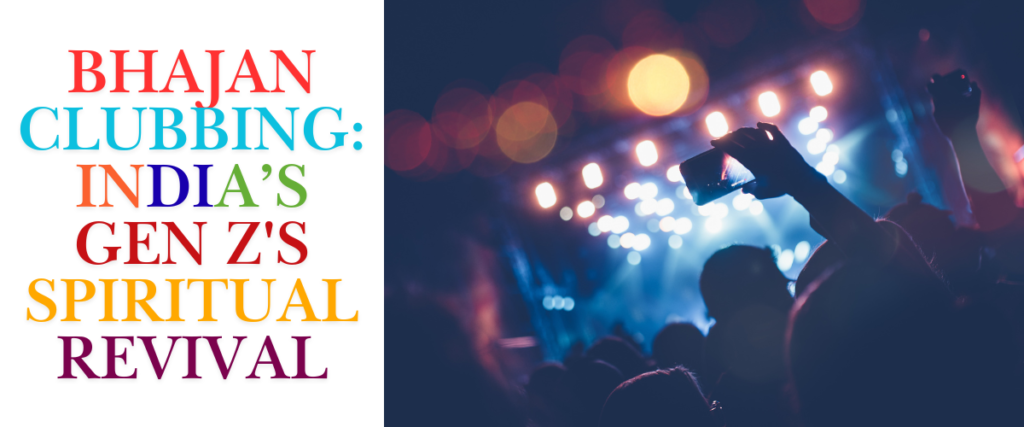
The cultural landscape of urban India is currently undergoing a seismic shift, characterised by the emergence and rapid proliferation of a phenomenon colloquially termed “Bhajan Clubbing.” This movement, driven primarily by Generation Z (those born roughly between 1997 and 2012), represents a radical departure from traditional nightlife paradigms. It involves the convergence of devotional music (bhajan and kirtan) with the aesthetic and structural elements of modern club culture—dim lighting, high-fidelity sound systems, ticketed entry, and communal dancing—while strictly excluding alcohol and intoxicants.
This report offers an exhaustive analysis of this burgeoning subculture, projecting a length and depth commensurate with the significance of the trend. It examines the socio-economic drivers, the neuro-psychological underpinnings of the “clean high,” the transformation of secular spaces into temporary spiritual sanctuaries, and the key figures orchestrating this shift. The analysis draws upon extensive data regarding attendee behaviour, organiser strategies, and the broader digital ecosystem that amplifies this trend.
The findings suggest that Bhajan Clubbing is not merely a fleeting fad but a structural realignment of youth spirituality. It represents a “Neo-Bhakti” wave where civilizational heritage is reconciled with hyper-modern modes of consumption. By repurposing the nightclub—a symbol of westernised hedonism—into a space for collective chanting, India’s youth are crafting a new identity that is at once globally connected and deeply rooted in indigenous tradition. This report explores how “Liquid Devotion” is replacing “Liquid Courage,” creating an economy of wellness, community, and joy that is reshaping the entertainment industry in 2025 and beyond.
The Paradigm Shift in Urban Nightlife
The Post-Pandemic Awakening
The genesis of the Bhajan Clubbing movement cannot be fully understood without analysing the precipitating factors of the global post-pandemic landscape. The years of isolation experienced during the COVID-19 lockdowns created a specific psychological pressure cooker for India’s youth. Confined to digital interactions and stripped of physical community, a generation faced a crisis of loneliness and “digital fatigue”.1 As restrictions lifted, the initial rush back to traditional nightlife—bars, pubs, and EDM festivals—was met with a sense of disillusionment for a significant cohort.
The return to “normalcy” revealed the limitations of the alcohol-fueled nightlife model. Young professionals in high-stress hubs like Bengaluru, Mumbai, and Gurugram began to articulate a dissatisfaction with the “hangover culture” that demanded physical recovery time and often left them feeling more depleted than energised.2 This demographic, often referred to as the “sober curious” generation, began seeking alternatives that offered the catharsis of a party without the toxicity of intoxication. They sought connection, but not through the haze of alcohol; they sought rhythm, but not merely for distraction.3
Into this vacuum stepped the concept of Bhajan Clubbing. It offered a solution that was paradoxically simple yet revolutionary: it took the communal ecstasy of the rave and replaced the techno beats with ancient mantras, and the alcohol with chai.2 This substitution addressed the twin hungers of the post-pandemic youth: the hunger for physical, vibrational connection with others, and the hunger for inner peace and mental clarity.
Defining the Phenomenon: Deterritorialized Spirituality
Bhajan Clubbing creates a paradox of “deterritorialized spirituality,” a concept where the chanting of mantras like Shri Krishna Govind Hare Murari or Om Namah Shivaya is dislocated from the temple precinct and relocated to spaces traditionally associated with hedonism—nightclubs, rooftop lounges, and performance arenas.1
Traditionally, satsangs (spiritual gatherings) in India have been governed by rigid hierarchies, separation of genders, specific dress codes, and often a sombre atmosphere suited for an older demographic. Bhajan Clubbing dismantles these barriers. The events are egalitarian, fashion-forward, and intensely participatory. There are no sermons, no priests, and no demands for ritual purity. Instead, the events are marketed much like music festivals, utilising platforms like BookMyShow, Zomato District, and Instagram for promotion.4
This relocation fundamentally alters the participant’s relationship with the divine. It transforms devotion from a solemn obligation, often performed individually or in family units, into a joyous, voluntary, and socially synchronised experience shared with hundreds of strangers. It validates the idea that one can be “cool,” modern, and professionally successful while still being deeply devotional.7
The Scope of the Cultural Reclamation
This movement is also an act of cultural reclamation. For decades, the “cool” factors in Indian urban youth culture were largely imported—Western pop music, American fashion, and European club trends. Bhajan Clubbing represents a confident return to indigenous roots, but with a modern remix. It is a statement that Indian traditions do not need to be discarded to be modern; they simply need to be recontextualised.2
The data support this massive cultural shift. Reports indicate that Gen Z and Gen Alpha are increasingly preferring pilgrimages to Kedarnath or Ayodhya over vacations to beaches or cruises.9 This is not a retreat into conservatism but an expansive embrace of civilizational heritage as a source of identity and well-being. The rise of Bhajan Clubbing is the urban, musical manifestation of this broader trend, where the dhoti and the kurta are worn not out of obligation, but as a style statement, and the mantra is chanted not just for prayer, but for pleasure.2
The Sociology of the “Clean High”: Neuroscience and Community
The defining feature of Bhajan Clubbing is its strict adherence to sobriety. In a nightlife industry almost entirely predicated on the sale of alcohol, the success of these dry events is a sociological anomaly that warrants deep investigation. Understanding why thousands of young people are voluntarily choosing “chai over champagne” requires a deep dive into the sociology of the “clean high” and the neurobiology of collective effervescence.
The Neurochemistry of Collective Chanting
Scientific literature and anecdotal evidence from attendees suggest that Bhajan Clubbing triggers specific neurochemical responses that mimic the effects of intoxicants but through natural pathways. The physiological mechanism at play is the release of dopamine and oxytocin.
Dopamine: Known as the reward neurotransmitter, dopamine is typically associated with the anticipation of pleasure. In the context of a Bhajan Jam, the musical structure—often building from a slow, meditative tempo to a frantic, high-energy crescendo—creates a dopamine feedback loop. The “drop” in a Bhajan remix functions identically to the drop in an EDM track, triggering a euphoric release.3
Oxytocin: Often called the “bonding hormone,” oxytocin is released during activities that involve synchronous movement and vocalisation. When a crowd of 1,500 people sings the same lyrics in unison, clapping to the same beat, the biological result is a massive surge in oxytocin. This creates a profound sense of “oneness” or connection with the stranger standing next to you.2
This neurochemical cocktail provides what attendees describe as a “natural high.” Unlike an alcohol-induced high, which suppresses the central nervous system and creates a “numbing” effect, the spiritual high is characterised by hyper-awareness, emotional clarity, and a surge of energy. Participants frequently note that this state is sustainable; there is no “crash” or hangover the next morning. As one attendee from Pune noted, “Here the high lasts longer, and I wake up remembering every minute of it”.4
Durkheim’s “Collective Effervescence” in the Digital Age
Sociologist Émile Durkheim coined the term “collective effervescence” to describe the energy generated when a community gathers for a shared purpose, often religious, which lifts the individual out of the self and into a realm of the sacred. Bhajan Clubbing is a textbook example of this phenomenon, adapted for the 21st century.
In modern urban life, which is often characterised by atomization and isolation, opportunities for collective effervescence are rare. The nightclub was supposed to provide this, but for many women and men, the club environment has become synonymous with judgment, insecurity, and the threat of harassment. Bhajan Clubbing restores the safety of the collective ritual. The shared activity of singing—specifically singing devotional lyrics which inherently carry themes of surrender and love—dissolves social barriers. The horizontal structure of the event, where everyone sits on the floor or dances in a cluster, fosters a sense of communitas—an unstructured community where all are equal.3
The “Safe, Seen, and Connected” Environment
A critical driver for the popularity of these events, particularly among women, is the safety profile. Traditional clubbing often involves navigating the risks of intoxicated patrons and unwanted advances. In contrast, the ethos of Bhajan Clubbing is explicitly rooted in respect and mindfulness.
Attendees report feeling “safe, seen, and connected”.3 The absence of alcohol removes the unpredictable element of aggression or loss of inhibition that plagues standard nightlife. This creates a “low-pressure” environment where individuals feel free to express themselves through dance without the fear of being sexualized or judged. The “gaze” in a Bhajan Club is different; it is not the predatory gaze of the pickup scene, but the shared gaze of communal celebration. This psychological safety net allows for a deeper form of emotional release, where participants often cry or laugh freely, cathartic behaviours that would be stigmatised in a standard club setting.2
The Sonic Architecture of Neo-Bhakti
The music of Bhajan Clubbing is not a monolith; it is a sophisticated spectrum ranging from acoustic folk to high-BPM electronic dance music. This sonic hybridity is essential to its appeal, allowing it to fit into diverse spaces and cater to different energy levels. It represents a new genre of “Neo-Bhakti” sound that respects tradition while leveraging modern production techniques.
The Acoustic-Unplugged Aesthetic
The most prevalent style, and the one that sparked the initial viral trend, is the “raw and unplugged” aesthetic. This style is championed by groups like the Backstage Siblings.
Instrumentation: The sonic palette is organic. It relies on acoustic guitars, harmoniums, cajóns, and light percussion (djembe/shakers). The absence of heavy electronic distortion or synthesised backing tracks is a deliberate choice.
Psychology of Sound: This acoustic approach fosters intimacy. It mimics the “campfire singalong” or the traditional family antakshari, reducing the barrier between the performer and the audience. In these events, the sound system is often mixed so that the voice of the crowd is as loud, if not louder, than the performers. This sonic democracy is crucial; it signals that the event is a collaboration, not a performance to be passively consumed. When the music strips back to just a guitar strum and 500 voices singing Hare Krishna, the emotional impact is immediate and raw.7
Devotional Techno and Folktronica
At the other end of the spectrum lies “Devotional Techno” or “Mantra Rave,” a genre that explicitly targets the EDM demographic and is designed for high-energy dancing.
Characteristics: These tracks feature “clean & punchy tech beats” overlaid with sacred chants. Examples include techno remixes of the Aigiri Nandini stotram or the Venkatesha Stotram.15 The production quality rivals that of mainstream electronic music, with heavy basslines, drops, and complex layering.
The Mantra-Loop Convergence: There is a fascinating structural synergy between electronic music and Vedic chanting. Both rely on repetition to induce a trance state. In techno, this is the “loop”; in spirituality, it is japa (repetition of the holy name). Producers in this genre exploit this synergy, using the electronic loop to drive the mantra deeper into the subconscious. The “drop” in the track serves the same ecstatic function as the crescendo in a traditional kirtan, releasing the tension built up by the repetition.16
DJs and Producers: Artists like Aikumar and independent DJs are prolific in this space, releasing tracks like “Sri Krishna Govind Hare Murari on the Dance Floor” and “Ritual Rave Mixes” of ancient fire mantras.18
The “Lo-Fi” and Fusion Wave
A quieter, more introspective sub-genre involves “Lo-Fi Bhajans”—downtempo, chill-hop beats mixed with soft chanting. This style is popular for “Soul Circle” type events where the focus includes meditation and breathwork. It draws from the aesthetic of “Study Beats” channels but infuses them with spiritual intent. This music is often used during the “warm-up” or “cool-down” phases of a Bhajan Club night, helping attendees transition from the chaos of the city into a state of mindfulness.20
Lyrical Determinism in a Cynical Age
A critical, often overlooked component of this sonic architecture is the lyrical content. In an era where mainstream pop, hip-hop, and Punjabi rap are often dominated by themes of consumerism, aggression, or fleeting romance, Bhajan Clubbing offers a “lyrical detox.”
The songs celebrate themes of divine love, surrender, eternal peace, and gratitude. For Gen Z attendees, singing Rama Rama Ratte Ratey offers a linguistic refuge. The lyrics are affirming rather than demanding. They do not ask the listener to be rich, sexy, or cool; they ask them only to be present. This shift in lyrical focus contributes significantly to the “healing” atmosphere of the events.4
The Architects of the Movement: Profiles in Leadership
The rapid rise of Bhajan Clubbing is not an accidental organic occurrence but the result of deliberate curation by charismatic leaders and organisations who understand the cultural pulse of modern India. These “Architects of Neo-Bhakti” bridge the gap between the ancient and the algorithmic.
Backstage Siblings: The Pioneers of “Unplugged” Devotion
Prachi and Raghav Agarwal, known collectively as the Backstage Siblings, are widely credited with formalising and scaling the genre. Their background is pivotal to understanding their success: they are former investment bankers and traders.21 This corporate lineage brings a level of strategic planning, branding, and scalability to the movement that is often missing in traditional grassroots spiritual groups.
The “Baithak” Philosophy: Their core philosophy is the “Baithak”—a traditional seated assembly—reimagined for the Instagram generation. They emphasise a “raw and unplugged” vibe, strictly avoiding the polished, over-produced feel of Bollywood concerts. Their events are designed to feel like a “jam room story,” emphasising spontaneity and imperfection.7
Scale and Reach: What began as intimate living room sessions has exploded into the “India Jamming Project,” a multi-city tour covering major metros. They have successfully transitioned from hosting 50 friends to selling out venues with 1,500 attendees in Mumbai and setting records with 2,000 attendees in Hyderabad.14 Their ability to navigate the corporate world is also evident in their “Corporate Jams,” where they bring this format to companies like L&T, selling spirituality as a tool for team bonding and stress relief.13
Radhika Das: The Transnational Kirtan Star
Radhika Das represents the global, cosmopolitan dimension of the movement. Based in London but touring extensively in India, his work exemplifies the “pizza effect”—where a cultural element (kirtan) is exported to the West, refined and popularised there (often via the yoga community), and then re-imported to India with added prestige and modern flair.
The “Silence In Sound” Tour: Das’s 2025 tour is a massive logistical operation, covering nine major cities including Delhi, Mumbai, Bengaluru, and Kolkata.24 His events are grand spectacles, drawing crowds of up to 15,000 people.
Musical Fusion: Das blends traditional Gaudiya Vaishnava kirtan with Western musical sensibilities. His tracks, such as “Ram Sita Ram,” utilise violin, cello, saxophone, and soft rock arrangements. This makes the chanting accessible to audiences whose ears are tuned to Western pop and ballad structures. His collaboration with diverse musicians (bass guitarists, pianists) elevates the kirtan from a folk practice to a sophisticated orchestral performance.24
Nandagovindam Bhajans: The South Indian Powerhouse
While much of the media focus is on the North Indian “club” scene, the Nandagovindam Bhajans group dominates the landscape in Kerala and South India, with a growing international footprint in the UAE and Australia.27
The Auditorium Model: Unlike the club-centric model of Mumbai, Nandagovindam often utilises massive convention centres and auditoriums (e.g., Pavithram Convention Centre in Kollam, Sir John Clancy Auditorium in Sydney). This reflects a slightly different demographic mix that includes families alongside youth, though the energy remains high-octane.
Interactive Spirituality: Their events are branded as “Bhajan Connect,” emphasising the interactive nature. They are known for high-energy call-and-response sessions where the boundary between the stage and the audience dissolves. Their schedule is prolific, with confirmed dates throughout 2025 and 2026 in cities like Kochi, Kozhikode, Dubai, and Sydney, indicating a robust organisational structure capable of managing international logistics.28
Acyuta Gopi and the Global Circuit
Acyuta Gopi is another key figure connecting the diaspora to the homeland. Her “India Tour 2025” is marketed with the tagline “Where Devotion Meets Music,” explicitly framing the event as a concert experience rather than a religious ceremony.30 This branding is crucial for attracting the secular or “spiritual but not religious” youth demographic who might be intimidated by a traditional temple setting but are comfortable in a concert hall. Her presence, alongside Radhika Das, highlights the increasing role of women and international artists in defining the aesthetics of this new movement.
Spaces of Devotion: The Transformation of the ‘Club’
A fascinating spatial transformation is occurring where secular, commercial venues are being temporarily consecrated as sacred spaces. This repurposing of the “nightclub” is central to the identity of Bhajan Clubbing.
The “Social” Phenomenon: Repurposing the Nightlife Infrastructure
Venues like AntiSOCIAL and Social Offline, which are premier nightlife destinations in India known for indie gigs, techno nights, and cocktails, are now regular hosts for these spiritual events. For instance, AntiSOCIAL Pune hosted an “Intense NYE Edition” and other devotional events, while Social Offline outlets across Mumbai have become hubs for these gatherings.32
The Economic Logic: For venue owners, Bhajan Clubbing represents a lucrative new revenue stream. The nightlife industry faces “dead zones”—weekdays, early evenings, or dry days when alcohol cannot be served. Bhajan events fill these voids perfectly. They draw massive crowds that consume high-margin non-alcoholic beverages. The “cover charge” model (e.g., INR 300-1000 entry) ensures revenue even without alcohol sales.35
The Atmosphere Shift: When a Bhajan Jam takes over a club, the environment is physically altered. Alcohol bars are often shuttered or repurposed to serve buttermilk, specialised coffees, and chai. The lighting, usually programmed for strobe-heavy EDM, is adjusted to warm, amber, and gold hues to evoke a sense of warmth and sanctity. Floor seating (rugs, cushions) is introduced to replicate the Baithak feel, changing the verticality of the club (standing/dancing) to a more grounded, horizontal engagement.2
The Rise of the “Third Place”
Sociologist Ray Oldenburg defined “Third Places” as social surroundings separate from the two usual social environments of home and the workplace. For Gen Z in India, traditional Third Places (temples) may feel too rigid or disconnected from their modern lifestyle, while the modern Third Place (the bar) feels increasingly hollow or unsafe.
Bhajan Clubs are emerging as the new Third Place—a hybrid zone that offers the sanctity and community of the temple with the relaxed, non-judgmental social dynamics of a café or lounge. It is a space where one can wear jeans, check Instagram, and yet engage in deep spiritual practice. This “Third Place” function is vital for the mental health of urban youth, providing a sanctuary that requires neither piety nor intoxication.2
Regional Dynamics: A Tale of Five Cities
While the movement is pan-Indian, it manifests differently across various urban centres, reflecting the unique cultural and economic character of each city.
Mumbai: The Glamour Capital
In Mumbai, Bhajan Clubbing is deeply entwined with the city’s entertainment industry. Events here are often high-glamour, held in upscale venues in Bandra and Lower Parel.
- The Vibe: It is aspirational and fashion-forward. Influencers and minor celebrities are often spotted, driving the “cool” factor. The events here are most likely to resemble “clean raves,” with high production values and higher ticket prices.4
- Venues: AntiSOCIAL, Fun Republic Social, and high-end studios.
Bengaluru: The Techie’s Detox
In India’s Silicon Valley, the movement is driven by the mental health needs of the tech workforce.
- The Vibe: Here, Bhajan Clubbing is often framed as “wellness” or “detox.” Tech professionals, burnt out by 70-hour work weeks, flock to these events on weekends to unplug. The focus is often on stress relief, mindfulness, and community connection rather than just entertainment.
- Venues: The Bangalore International Centre and various open-air venues host these events, often combining them with yoga or breathwork workshops.4
Hyderabad: The Scale of Devotion
Hyderabad has emerged as a surprising stronghold for massive-scale jamming sessions.
- The Vibe: The city has set records for attendance, with events drawing over 2,000 participants. The crowd is a mix of IT professionals and local youth. The energy here is described as electric and massive, with a strong emphasis on collective singing volume.4
Delhi: The Cultural Blend
Delhi’s scene blends the political power of the capital with a deep-rooted history of North Indian devotional music.
- The Vibe: Events here can range from intimate studio jams to massive open-air concerts. There is a slightly more traditional flavour to the music, given the proximity to Vrindavan and the strong influence of traditional kirtan families, but the packaging remains thoroughly modern.24
The South (Kerala/Chennai): Tradition Meets Fusion
Led by groups like Nandagovindam, the southern scene is distinct.
- The Vibe: It is less “club” and more “concert.” The venues are formal auditoriums. The musicality often draws more heavily on Carnatic influences blended with fusion. The audience is intergenerational, though the youth drive the energy. The devotion here is often directed towards deities like Ayyappa or Krishna, reflecting regional religious preferences.27
Digital Darshan: The Algorithmic Spirituality
The rise of Bhajan Clubbing is inextricably linked to the ecosystem of social media. It is a phenomenon born in the physical world but validated and amplified on the digital screen.
The “Instagrammability” of Devotion
The visual aesthetics of these events are tailored for social media consumption. Organisers and attendees understand the “visual language” of the viral hit.
- The Aesthetic: The dimly lit rooms, the glowing amber lights, the sea of hands raised in unison, and the “bohemian” attire of attendees create highly shareable content. A 15-second Reel of a crowd chanting Hare Krishna in a club setting provides a potent visual contrast—it looks like a party, but sounds like a prayer. This contrast arrests the scrolling thumb.1
- FOMO (Fear Of Missing Out): Viral videos generate intense FOMO. The exclusivity implied by “ticketed” events and “sold out” notices leverages the same psychological triggers as exclusive music festivals. As one attendee noted, “I posted one Reel, and my DMs exploded”.4
The Algorithm of Spirituality
Social media algorithms favour content that generates high engagement (likes, shares, saves) and high retention (watch time). Spiritual content, particularly when packaged in a modern, high-energy format, performs exceptionally well.
- Viral Loops: Creators like Backstage Siblings and Radhika Das have mastered this loop. Their content is uplifting (high shareability), non-controversial (brand safe), and visually engaging. This algorithmic favorability helps the trend spread rapidly from city to city, creating a feedback loop where online virality drives offline ticket sales, which in turn generates more content.1
Influencer Culture and “Cool” Piety
The trend has birthed a new category of influencers who merge lifestyle content with spirituality. These influencers might post a “Get Ready With Me” (GRWM) video for a Bhajan Night, styling an ethnic fusion outfit. This normalises religious expression as a part of a curated, modern lifestyle. It signals that one can be religious without being regressive, creating a model of “Cool Piety” that is highly attractive to Gen Z.41
Fashion, Identity, and the “Cool” Factor
The visual identity of Bhajan Clubbing is distinct, blending traditional Indian markers with global youth fashion trends. It is not just about what is sung, but how the singers look.
The “Indo-Bohemian” Aesthetic
The dress code for these events is often described as “ethnic fusion” or “Indo-Bohemian.”
- Key Elements: Linen shirts, sequined kurtas, chikankari tops, and oversized jhumkas (earrings) are paired with ripped jeans, sneakers, and smartwatches. Bindis and tilaks are worn as fashion statements as much as religious markers.2
- Semiotics: This fashion choice signifies a “rooted cosmopolitanism.” It signals that the wearer is connected to their heritage but fully integrated into the modern, globalised world. It rejects the stiff formality of traditional temple wear while also avoiding the hyper-sexualised dress codes of typical nightclubs. “Comfort is key” is a recurring mantra, allowing for the physical exertion of dancing.2
Signaling Identity
In a globalised world where cultural identity can feel diluted, these aesthetic choices allow Gen Z to perform their identity. Wearing a kurta to a club is a subtle act of rebellion against the westernised standard of “cool.” It claims ownership of Indian aesthetics in spaces where they were previously marginalised.
Future Horizons: The 2026 Outlook
The trajectory of Bhajan Clubbing points toward significant growth and commercialisation. It is evolving from a niche subculture into a major segment of India’s “Spirituality Market,” which is valued at over $58 billion.4
Astrological and Cultural Justifications
Interestingly, within the community, there are astrological justifications for the longevity of this trend. Astrologers and enthusiasts cite planetary alignments, such as “Rahu in Aquarius,” as driving forces that encourage youth to express themselves in new, unconventional, and collective ways. Saturn and Neptune in Pisces are interpreted as breaking down old spiritual barriers, favouring music and fluidity over rigid dogma. While scientifically debatable, this belief is culturally significant: the participants believe the stars effectively mandate this shift, giving the movement a sense of cosmic destiny.36
Commercialisation and the Brand Ecosystem
As audiences grow, the corporate world is moving in.
- Ticketing Giants: Platforms like Zomato District and BookMyShow are heavily promoting these events, treating them as premium entertainment categories alongside concerts by Dua Lipa or Diljit Dosanjh.6
- Sponsorships: Brands associated with wellness, organic products, and non-alcoholic beverages are entering the space. The concert economy in India is booming, and “Spiritual Wellness Gatherings” are recognised as a high-impact BTL (Below The Line) marketing platform.43
Global Export Potential
The success of artists like Radhika Das and the existence of events like “Bhajan Raves” in Sydney and “Bhakti Fests” in California suggest that this is a global phenomenon. Just as Yoga became a global wellness export, “Indian Kirtan Rave” is poised to become a distinct category in the global festival circuit. It appeals to the massive Western “spiritual but not religious” demographic that already frequents Ecstatic Dance and Cacao Ceremonies, offering them a new, culturally rich modality for transcendence.5
Conclusion
Bhajan Clubbing represents a pivotal moment in the cultural history of modern India. It is a powerful articulation of Gen Z’s desire to reclaim their spiritual heritage on their own terms—unmediated by rigid orthodoxy, unclouded by intoxication, and amplified by the collective joy of music.
This movement is not a rejection of modernity but a synthesis of it. By placing the ancient chant within the architecture of the nightclub and the algorithm of the social network, young Indians are creating a new “sacred secular.” They have found a way to be devout without being dogmatic, and to be ecstatic without being intoxicated. In doing so, they are not just changing how they party; they are redefining what it means to be young, Indian, and spiritual in the 21st century.
As the movement matures, engaging with major commercial players and expanding globally, it promises to reshape the economies of leisure, the aesthetics of faith, and the social fabric of urban India. It proves that in the noise of the digital age, the oldest sounds—the beat of the drum and the chant of the name—still hold the greatest power to connect.
Disclaimer
This report is based on research material available as of early 2026. The phenomenon of Bhajan Clubbing is dynamic and rapidly evolving. While every effort has been made to ensure the accuracy of the data regarding events, organisers, and trends, the cultural landscape is subject to change. The analysis focuses on the sociological and cultural dimensions of the trend and does not endorse any specific religious group, organisation, or commercial entity. References to specific venues and dates are based on available event listings and may be subject to change.
Table 1: Comparative Analysis of Traditional Nightlife vs. Bhajan Clubbing
| Feature | Traditional Nightlife (Clubbing) | Bhajan Clubbing / “Clean Rave” |
| Primary Activity | Dancing to EDM/Pop, Socialising | Collective Chanting (Kirtan), Dancing |
| Substance Use | Alcohol, Recreational Drugs dominant | Strictly Sober (No alcohol/drugs) |
| Primary Beverage | Cocktails, Beer, Spirits | Chai, Buttermilk, Mocktails, Coffee |
| Key Neuro-Driver | Alcohol-induced euphoria | Dopamine/Oxytocin from communal singing |
| Social Structure | Atomised groups, status-driven | Communal, egalitarian, “Safe/Seen” |
| Dress Code | High fashion, glam, restrictive | Indo-Bohemian, ethnic fusion, comfortable |
| Post-Event Feeling | Hangover, fatigue, sensory overload | “Afterglow,” mental clarity, stress relief |
| Typical Venues | Nightclubs, Bars, Pubs | Converted Clubs (AntiSocial), Studios, Auditoriums |
| Music Style | House, Techno, Hip Hop, Bollywood | Acoustic Fusion, Devotional Techno, Mantra Lo-Fi |
Source: Synthesised from multiple attendee reports and event descriptions.2
Table 2: Key Architects and Event Formats
| Organiser / Artist | Key Event Brand | Signature Style | Primary Locations |
| Backstage Siblings | The India Jamming Project | “Raw & Unplugged,” Acoustic, Living Room Vibe | Mumbai, Hyderabad, Delhi, Pan-India Tours 13 |
| Radhika Das | Silence In Sound Tour | Grand Spectacle, Western-Indian Fusion, Orchestral | London (Base), Mumbai, Delhi, Bengaluru (Tours) 24 |
| Nandagovindam | Bhajan Connect | Traditional yet High-Energy, Interactive, Community | Kerala, South India, UAE, Australia 27 |
| Soul Circle | Soul Circle | Holistic, Meditative, “Spiritual Rave” | Niche Urban Pockets, Studios 9 |
| Mantra Trance | Mantra Trance | Psy-Trance Fusion, Electronic, High BPM | Goa, Urban Underground Scenes 45 |
Source: Compiled from event listings and artist profiles.24
Reference
- Bhajan Clubbing Delhi: Gen Z’s Kirtan Nightlife Event & Tickets – Sanatana Journey, accessed on January 13, 2026, https://divinestore.sanatanajourney.com/blogs/updates/bhajan-clubbing-delhi-kirtan-nightlife-event
- What is Bhajan Clubbing? Gen Z’s Favourite Spiritual Escape in Urban India, accessed on January 13, 2026, https://engage4more.com/blog/bhajan-clubbing/
- Are we Disrespecting Devotion or Dis-Respecting It – The Truth About BHAJAN CLUBBING, accessed on January 13, 2026, https://www.youtube.com/watch?v=Dkaprt83_lA
- From nightclubs to ‘naam’: How Gen Z is turning bhajan clubbing into India’s hottest sober high – The Indian Express, accessed on January 13, 2026, https://indianexpress.com/article/lifestyle/art-and-culture/nightclubs-to-naam-how-gen-z-turning-bhajan-clubbing-india-hottest-sober-high-10418023/
- Bhajan Beats NYE 2025 – 31 Dec, 2025 – Shanti Shop, accessed on January 13, 2026, https://shantishop.org/products/bhajan-beats-nye-2025-31-dec-2025
- Armaan Malik Announces Massive Mumbai Concert in November – Rolling Stone India, accessed on January 13, 2026, https://rollingstoneindia.com/armaan-malik-mumbai-concert-date-tickets/amp/
- Bhajan Clubbing: How Gen Z is redefining spiritual fun | #shorts | – YouTube, accessed on January 13, 2026, https://www.youtube.com/shorts/D32c4v9JhYg
- India: Gen Z Is Redefining Nightlife with “Bhajan Clubbing” | Firstpost America | N18G, accessed on January 13, 2026, https://www.youtube.com/watch?v=9y2PC9SF350
- Bhajan Clubbing Is the New Gen Z Party Trend Taking Spirituality Global – Hinduism Today, accessed on January 13, 2026, https://www.hinduismtoday.com/hpi/2025/12/30/bhajan-clubbing-is-the-new-gen-z-party-trend-taking-spirituality-global/
- Gen Z Turns To Bhajan Clubbing | Media Scan – YouTube, accessed on January 13, 2026, https://www.youtube.com/watch?v=XwWr0O8N4yE
- Buy Sacred Geometry Net Leggings: Festival Psytrance Fashion Online in India – Etsy, accessed on January 13, 2026, https://www.etsy.com/in-en/listing/693415488/sacred-geometry-leggings-net-flower-of
- Women allege harassment at Post Malone’s Guwahati concert, raise concerns about safety at large events – StoryBoard 18, accessed on January 13, 2026, https://www.storyboard18.com/social-media/women-allege-harassment-at-post-malones-guwahati-concert-raise-concerns-about-safety-at-large-events-85630.htm
- Upcoming Events | Live Music | Jam Sessions – Backstage Siblings, accessed on January 13, 2026, https://backstagesiblings.com/events/
- Hyderabad Sets National Record In Jamming Session – Deccan Chronicle, accessed on January 13, 2026, https://www.deccanchronicle.com/southern-states/telangana/hyderabad-sets-national-record-in-jamming-session-1917982
- Shri Venkatesha Stotram (Tech Mix) DJ Stash X King Beatz | Shree Naval Kishori – YouTube, accessed on January 13, 2026, https://m.youtube.com/watch?v=G5vgtueVhno&pp=0gcJCU0KAYcqIYzv
- AIGIRI NANDINI- (Techno House Remix) | Indian Bass House | SHUBH M | #technohouse #aigirinandini – YouTube, accessed on January 13, 2026, https://www.youtube.com/watch?v=5Ii6zDiWlB4
- JUST ॐ NAMAH SHIVAY – YouTube, accessed on January 13, 2026, https://www.youtube.com/watch?v=PVRLVKeiezw
- Sri Krishna Govinda Hare Murari on the Dance Floor – YouTube, accessed on January 13, 2026, https://www.youtube.com/watch?v=zwUB0fCE_Ac
- Download Aikumar album songs: Club Bhakti, The Bhajan Rave | Boomplay Music, accessed on January 13, 2026, https://www.boomplay.com/albums/120399238?from=
- Independent Music Podcast, accessed on January 13, 2026, https://anchor.fm/s/1252b450/podcast/rss
- What actually happens inside a Bhajan Club? A first-hand experience : r/india – Reddit, accessed on January 13, 2026, https://www.reddit.com/r/india/comments/1q6e74t/what_actually_happens_inside_a_bhajan_club_a/
- How Raghav and Prachi Agarwal are making bhajans cool for India’s Gen Z with ‘bhajan clubbing’ – India Today, accessed on January 13, 2026, https://www.indiatoday.in/india/video/backstage-siblings-on-bhajan-clubbing-its-okay-to-not-be-under-the-influence-of-something-ytvd-2844707-2025-12-31
- Backstage Siblings: From living room jams to sold-out shows – India Today, accessed on January 13, 2026, https://www.indiatoday.in/entertainment/music/video/backstage-siblings-from-living-room-jams-to-sold-out-shows-2794131-2025-09-26
- Kirtan Tour 2025: Radhika Das to Grace 9 Cities Across India – Furtados School of Music, accessed on January 13, 2026, https://furtadosschoolofmusic.com/blog/kirtan-tour-2025-radhika-das-to-grace-9-cities-across-india/
- Sita Ram — Radhika Das — LIVE Kirtan at Union Chapel, London 2025 – YouTube, accessed on January 13, 2026, https://www.youtube.com/watch?v=Ir3AqCTe-6c
- Om Namah Shivaya — Radhika Das — LIVE in Mumbai’s Nesco Hall, India Tour 2025, accessed on January 13, 2026, https://www.youtube.com/watch?v=eRbZWZ4FTF4
- Nandagovindam Bhajans, accessed on January 13, 2026, https://www.nandagovindam.com/
- Events – Nandagovindam, accessed on January 13, 2026, https://www.nandagovindam.com/event-list
- Schedules | Nandagovindam, accessed on January 13, 2026, https://www.nandagovindam.com/schedules
- The Most Iconic Surprise Guest Appearances at Indian Concerts in 2025, accessed on January 13, 2026, https://furtadosschoolofmusic.com/blog/the-most-iconic-surprise-guest-appearances-at-indian-concerts-in-2025/
- admin | Lucknow Junction – Get Your Event Here, accessed on January 13, 2026, https://www.lucknowjunction.com/organizer/details/1/admin?admin=true
- Intense NYE Edition Ft. Kiss Nuka | Quistek | Y E T Ï | iBthisam – Sort My Scene, accessed on January 13, 2026, https://sortmyscene.com/event/intense-nye-edition-ft-kissnuka-y-e-t-i-dec-31-2025
- Not Dead Yet: it’s aLive! – Edition 2025 – Dazzlerr, accessed on January 13, 2026, https://www.dazzlerr.com/events/not-dead-yet-its-alive-edition-2025/
- Musicunpluddged.in : news – Musicunplugged.in, accessed on January 13, 2026, https://www.musicunplugged.in/news/trade_news/500
- THE JUNKIE EXPERIENCE ( live band) – Sort My Scene, accessed on January 13, 2026, https://www.sortmyscene.com/event/the-junkie-experience-live-band-oct-19-2024
- Bhajan Clubbing Explained: Which Zodiac Signs Love It the Most? Full Ranking Inside, accessed on January 13, 2026, https://timesofindia.indiatimes.com/astrology/zodiacs-astrology/bhajan-clubbing-explained-which-zodiac-signs-love-it-the-most-full-ranking-inside/articleshow/125402485.cms
- Find concerts by genres in Mumbai | Shazam, accessed on January 13, 2026, https://www.shazam.com/en-gb/events/mumbai-maharastra-india/-/-/alternative-20+eletr%C3%B4nica-7+m%C3%BAsica-religiosa-22
- Bhajan Clubbing Night with Backstage Siblings X Sangam Serenity …, accessed on January 13, 2026, https://sortmyscene.com/event/bhajan-clubbing-night-with-backstage-siblings-sangam-serenity-magh-mela-special-jan-29-2026
- Sacred Rituals & Devotion of India by Dharmikvibes – Substack, accessed on January 13, 2026, https://api.substack.com/feed/podcast/3176039/s/171731.rss
- What Is Gen Z’s Bhajan Clubbing? Here’s All You Need To Know – NDTV Profit, accessed on January 13, 2026, https://www.ndtvprofit.com/trending/what-is-gen-zs-bhajan-clubbing-heres-all-you-need-to-know
- Thought on Kirtan Concerts : r/hinduism – Reddit, accessed on January 13, 2026, https://www.reddit.com/r/hinduism/comments/1oysaww/thought_on_kirtan_concerts/
- Is ‘bhajan clubbing’ the coolest new way to party in India?, accessed on January 13, 2026, https://www.cosmopolitan.in/life/features/story/is-bhajan-clubbing-the-coolest-new-way-to-party-in-india-1298739-2025-11-03
- Concerts emerge as high-impact brand platform in India in 2025 – BestMediaInfo.com, accessed on January 13, 2026, https://bestmediainfo.com/mediainfo/mediainfo-marketing/concerts-emerge-as-high-impact-brand-platform-in-india-in-2025-10913764
- 4 Day Mystic Moon Ecstatic Dance Festival in Goa, India: A Radiant White Theme Festival of Dance – Tripaneer.com, accessed on January 13, 2026, https://www.tripaneer.com/sohum-yoga-1/5-day-mystic-moon-ecstatic-dance-festival-in-goa-india-a-radiant-white-theme-festival-of-dance
- Showing results for tags ‘Свами Мукундананда’. – International Vaishnavas Portal, accessed on January 13, 2026, https://a108.net/tags/%D0%A1%D0%B2%D0%B0%D0%BC%D0%B8%20%D0%9C%D1%83%D0%BA%D1%83%D0%BD%D0%B4%D0%B0%D0%BD%D0%B0%D0%BD%D0%B4%D0%B0/?_nodeSelectName=news_news_node&_noJs=1