Art

The Life, Art, and Legacy of Margaret Olley: A Comprehensive Biographical Study

The Life, Art, and Legacy of Margaret Olley: A Comprehensive Biographical Study

Margaret Hannah Olley (1923–2011) occupies a paramount position in the cultural and artistic heritage of Australia. Over a career spanning more than six decades, Olley established herself as the nation’s preeminent painter of still life and domestic interiors, capturing the imagination of both the public and the critical establishment. Yet, to categorise Olley solely by her artistic output is to fundamentally understate her influence. She was a towering figure in the post-war Australian art scene, an unparalleled philanthropist who enriched the country’s public institutions with world-class masterpieces, and a legendary muse who anchored the works of Australia’s finest portraitists across multiple generations.

The Life, Art, and Legacy of Margaret Olley: A Comprehensive Biographical Study Read More »
The Life, Art, and Legacy of Katsushika Hokusai

The Life, Art, and Legacy of Katsushika Hokusai

The history of art contains few figures as restless, prolific, and globally influential as Katsushika Hokusai. Born in 1760 in Edo (modern-day Tokyo), Japan, Hokusai emerged as a towering figure of the Edo period, mastering the ukiyo-e (pictures of the floating world) genre and eventually pushing it beyond its traditional boundaries to capture the majesty of the Japanese landscape, the daily lives of commoners, and the intricate details of the natural world. While his contemporaries focused on the ephemeral pleasures of kabuki actors and courtesans, Hokusai turned his gaze outward, revolutionising the medium and ensuring its global relevance.

The Life, Art, and Legacy of Katsushika Hokusai Read More »

The Life, Legacy, and Visual Revolution of Raja Ravi Varma

The Life, Legacy, and Visual Revolution of Raja Ravi Varma

Raja Ravi Varma (29 April 1848 – 2 October 1906) stands as one of the most transformative figures in the history of Indian art. Widely recognised as the father of modern Indian art, Varma executed a pivotal cultural transition during the nineteenth century by bridging the structural aesthetics of European academic realism with the iconography and narrative depth of traditional Indian mythology. Prior to his emergence, Indian visual traditions were predominantly localised, characterised by flat dimensionalities, stylised forms, and courtly miniature styles. Varma disrupted these traditional conventions by introducing oil painting, realistic perspective, and dramatic chiaroscuro to portray sacred Hindu scriptures, classical literature, and contemporary socio-cultural life.

The Life, Legacy, and Visual Revolution of Raja Ravi Varma Read More »

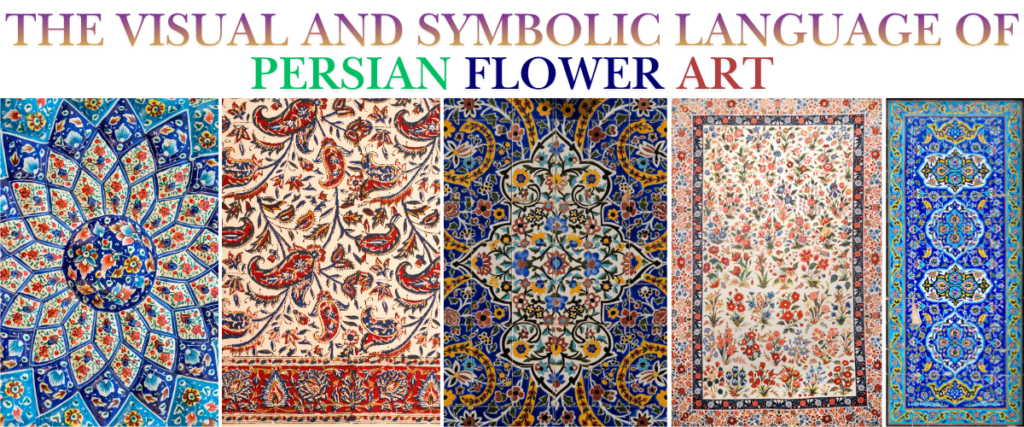
The Visual and Symbolic Language of Persian Flower Art

The Visual and Symbolic Language of Persian Flower Art

The floral traditions of Persian visual culture represent one of the most sophisticated integrations of aesthetics, philosophy, and botanical symbolism in world art history. Across millennia, the depiction of flowers in Persia has transcended simple ornamentation, operating as a multi-layered visual language that conveys cosmological order, mystical devotion, political prestige, and poetic metaphor. From the monumental stone reliefs of the Achaemenid and Sasanian empires to the illuminated manuscripts of the Timurid era, the silk weaving of Safavid looms, and the vibrant tilework of the Qajar period, Persian flower art reflects a continuous dialogue between humanity, nature, and the divine.

The Visual and Symbolic Language of Persian Flower Art Read More »

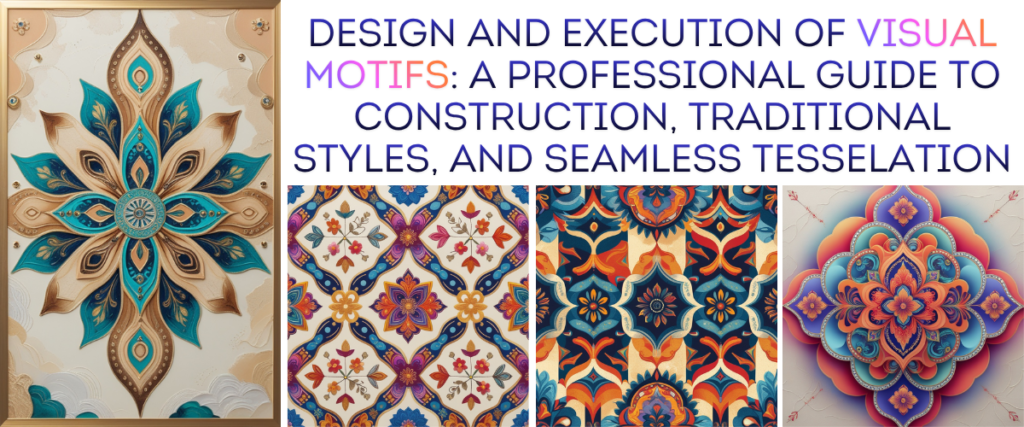
Design and Execution of Visual Motifs: A Professional Guide to Construction, Traditional Styles, and Seamless Tesselation

Design and Execution of Visual Motifs: A Professional Guide to Construction, Traditional Styles, and Seamless Tesselation

Conceptual Foundations of the Visual Motif

In the lexicon of visual arts and decorative design, a motif represents a fundamental, recurring element of an image that establishes structural harmony, thematic rhythm, and symbolic meaning. Unlike the main subject of a narrative painting, which typically depicts a singular, non-repeating event, a motif is a discrete design unit engineered for repetition and adaptation. It can manifest as a simple geometric shape, an abstracted natural form, or a complex figurative illustration. When deployed systematically across a surface, a motif ceases to be merely an isolated drawing; it organises the surrounding negative space, creating a pattern that guides the viewer’s eye and imbues the medium with structural unity.

Design and Execution of Visual Motifs: A Professional Guide to Construction, Traditional Styles, and Seamless Tesselation Read More »

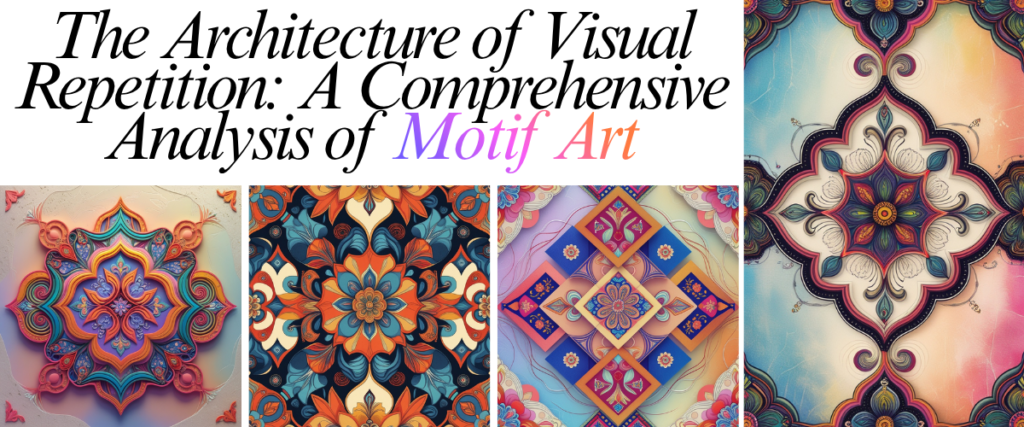
The Architecture of Visual Repetition: A Comprehensive Analysis of Motif Art

The Architecture of Visual Repetition: A Comprehensive Analysis of Motif Art

In the study of art history, iconography, and decorative design, a motif is a foundational structural element that establishes composition, visual rhythm, and thematic depth. Derived from the French word for a dominant or driving idea, a motif is defined as a recurring visual fragment, shape, subject, or conceptual device that unifies a single artwork or connects a broader body of creative work. Rather than acting as mere surface embellishment, motifs are visual anchors. They bridge the gap between simple formal elements—such as line, shape, and colour—and the abstract thematic inquiries that define human expression.

An examination of motif art reveals its role in how artists across cultures and eras impose order on spatial environments, preserve sacred myths, and articulate complex psychological states.

The Architecture of Visual Repetition: A Comprehensive Analysis of Motif Art Read More »

Scroll to Top